Have you ever written a sentence and stopped to wonder whether you should use grate or great? You are not alone.
These two words sound exactly the same when spoken, which makes them easy to confuse.
Many people search for grate vs great because they want to avoid spelling mistakes in emails, social media posts, school assignments, and professional writing.
The confusion happens because grate and great are homophones. Homophones are words that sound alike but have different meanings and spellings.
For example, you might ask, “Is it grate or great for good?” or “Is it great or grate day?” Even native English speakers sometimes make these mistakes.
This guide explains the grate vs great meaning, pronunciation, origins, examples, and common mistakes. You will also learn which spelling to use, see comparison tables, and discover practical examples from everyday life.
By the end of this article, you will know exactly when to use grate and when to use great with confidence.
Grate vs Great means
The difference is simple:
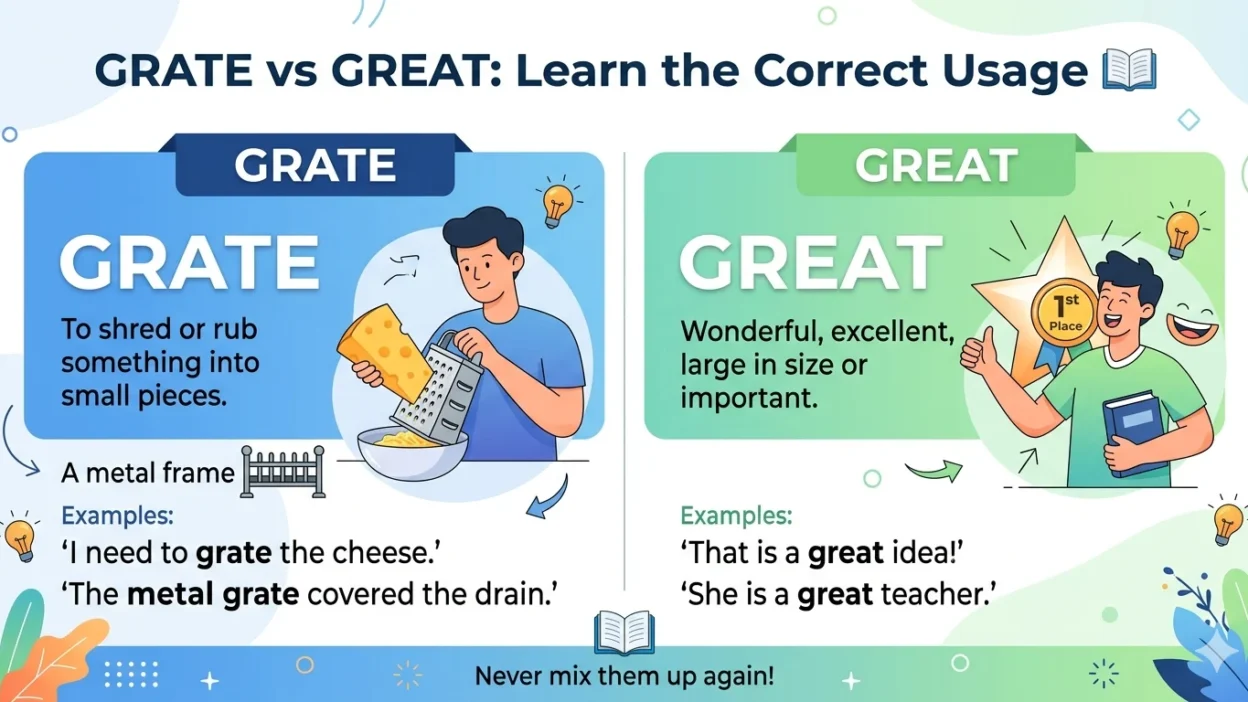
| Word | Meaning | Example |
|---|---|---|
| Grate | To shred food into small pieces or to irritate | Please grate the cheese for the pizza. |
| Great | Excellent, large, important, or very good | You did a great job today. |
Examples
- Please grate the carrots before cooking.
- The metal grate covers the drain.
- We had a great vacation.
- She is a great teacher.
Is it grate or great for good?
The correct word is great.
✅ The movie was great.
❌ The movie was grate.
Is it great or grate day?
The correct phrase is:
✅ Have a great day.
❌ Have a grate day.
The Origin of Grate vs Great
Understanding the history of these words helps explain why they are often confused.
Origin of Grate
The word grate comes from the Latin word gratare, meaning “to scrape.” Over time, it became associated with scraping or shredding food using a kitchen tool called a grater.
Examples:
- Grate cheese.
- Grate coconut.
- Grate vegetables.
It can also mean to annoy or irritate.
Example:
- His constant complaints began to grate on my nerves.
Origin of Great
The word great comes from the Old English word great, meaning large, powerful, or important.
Examples:
- A great leader.
- A great achievement.
- A great opportunity.
Because both words evolved separately but ended up sounding alike, spelling confusion became common.
British English vs American English Spelling
Unlike many English words, grate and great have the same spelling in both British and American English.
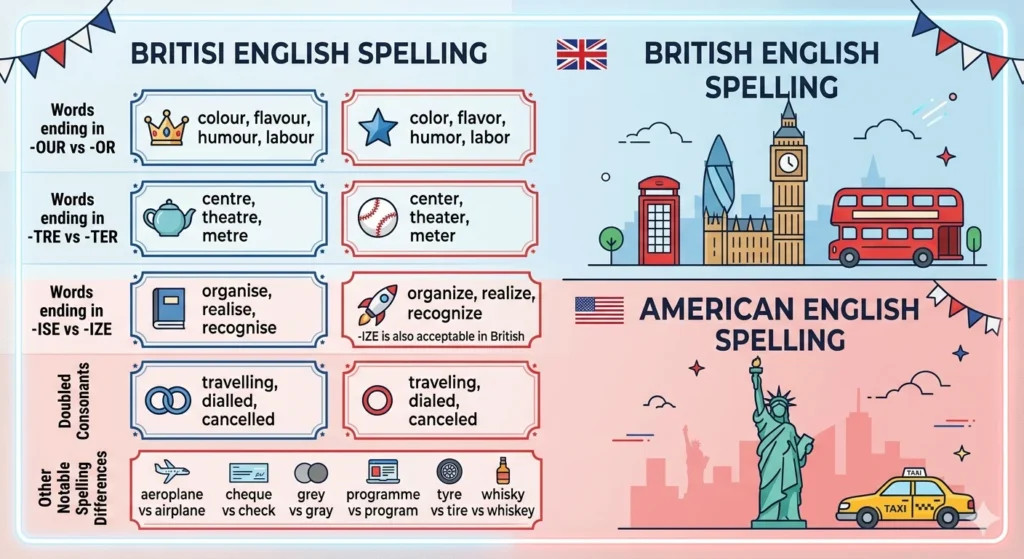
However, usage patterns may vary slightly.
| Context | American English | British English |
|---|---|---|
| Excellent | Great | Great |
| Large or important | Great | Great |
| Shred food | Grate | Grate |
| Metal covering | Grate | Grate |
Examples
American English
- That’s a great idea.
- Grate the cheese before serving.
British English
- Have a great weekend.
- Grate some cheddar for the recipe.
There is no spelling difference between the two regions.
Which Spelling Should You Use?
The correct choice depends on the meaning you want.
Use “Great” When You Mean:
- Excellent
- Wonderful
- Large
- Important
- Impressive
Examples:
- She is a great singer.
- We had a great time.
- That was a great success.
Use “Grate” When You Mean:
- Shred food
- Scrape a surface
- Irritate someone
- A metal framework
Examples:
- Grate the cheese.
- The noise began to grate on me.
- Water flowed through the grate.
Audience-Based Advice
| Audience | Recommended Word |
|---|---|
| US readers | Use the meaning that fits the context |
| UK readers | Use the meaning that fits the context |
| Commonwealth countries | Same rule applies |
| Global audience | Great for “excellent”; Grate for “shred” |
Common Mistakes with Grate vs Great
Many people confuse these words because of pronunciation.
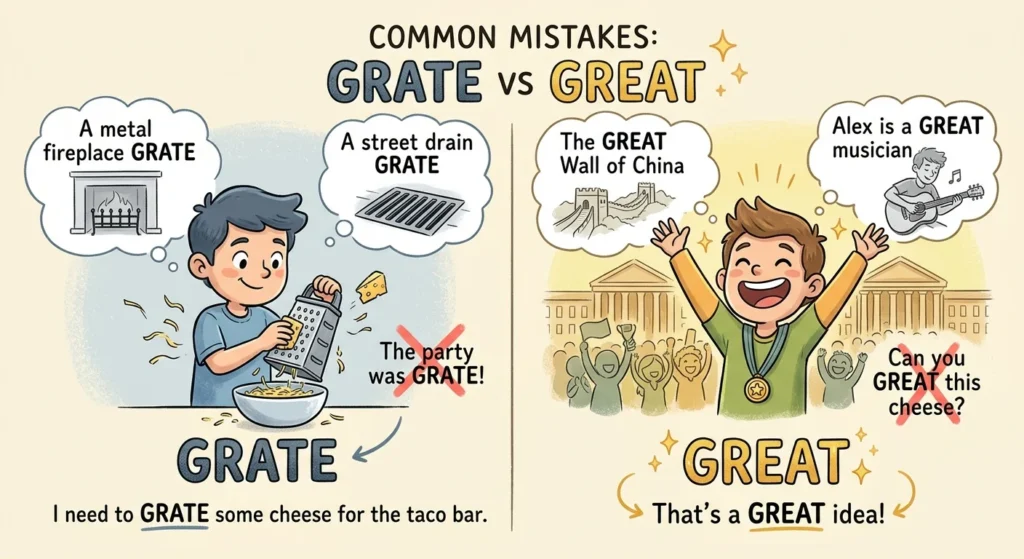
Mistake 1
❌ Have a grate day.
✅ Have a great day.
Mistake 2
❌ She is a grate teacher.
✅ She is a great teacher.
Mistake 3
❌ Please great the cheese.
✅ Please grate the cheese.
Mistake 4
❌ What a grate performance!
✅ What a great performance!
Easy Memory Trick
- Great = Good
- Grate = Scrape
If you mean something positive, use great.
Grate vs Great in Everyday Examples
Here are practical grate vs great examples.
In Emails
- Have a great weekend.
- Thank you for your great support.
In News Headlines
- Great victory for the national team.
- Great economic growth reported this year.
In Social Media
- Had a great day with friends.
- This restaurant has great food.
In Cooking Instructions
- Grate the cheese.
- Grate the carrots into a bowl.
In Formal Writing
- The project achieved great success.
- The invention had great importance.
Grate vs Great Pronunciation
One reason people confuse these words is that they sound exactly alike.
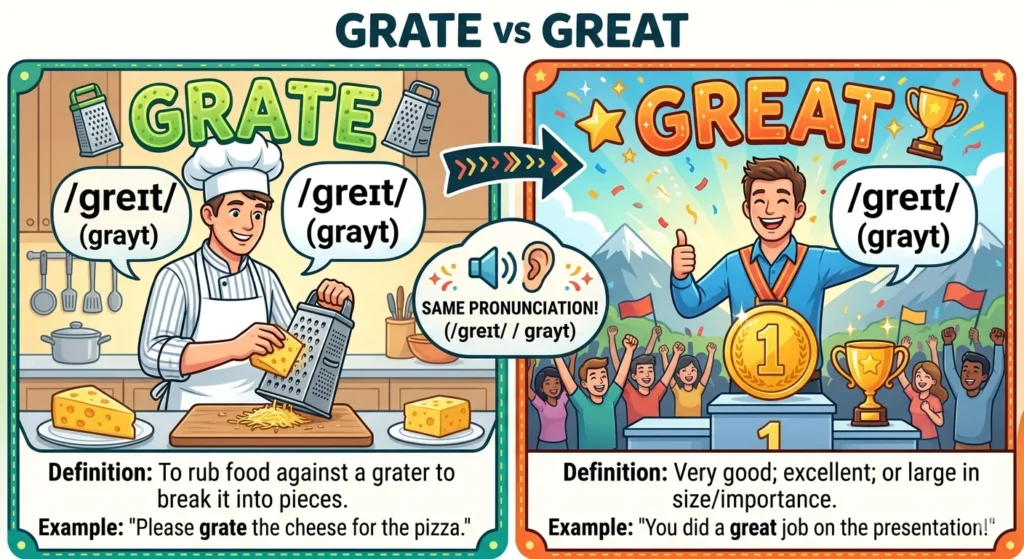
| Word | Pronunciation |
|---|---|
| Grate | /ɡreɪt/ |
| Great | /ɡreɪt/ |
This makes them homophones.
Grate Great Homophone Sentences
- Please grate the cheese before serving; it tastes great on pasta.
- The vegetables were easy to grate, and the meal turned out great.
- I can grate carrots quickly, and they taste great in salad.
Grate vs Great Meaning
Grate Meaning and Sentence
Meaning: To shred, scrape, or irritate.
Examples:
- Please grate the cheese.
- The rough sound began to grate on my nerves.
Great Meaning and Sentence
Meaning: Excellent, impressive, large, or important.
Examples:
- She did a great job.
- We had a great experience.
Grate vs Great Synonyms
Synonyms of Grate
- Shred
- Scrape
- Rub
- Grind
What Is a Better Word for Grate?
Depending on the context:
- Shred
- Scrape
- Grind
Synonyms of Great
- Excellent
- Wonderful
- Fantastic
- Amazing
- Outstanding
Great vs Grateful
People also confuse great and grateful.
Great
Means excellent or impressive.
Example:
- You did a great job.
Grateful
Means thankful.
Example:
- I am grateful for your help.
Difference Between Great and Grate in Hindi
| Word | Hindi Meaning |
|---|---|
| Great | महान, बहुत अच्छा, शानदार |
| Grate | कद्दूकस करना, घिसना |
Examples
- Great teacher = महान शिक्षक
- Grate cheese = पनीर कद्दूकस करना
Grate vs Great – Google Trends & Usage Data
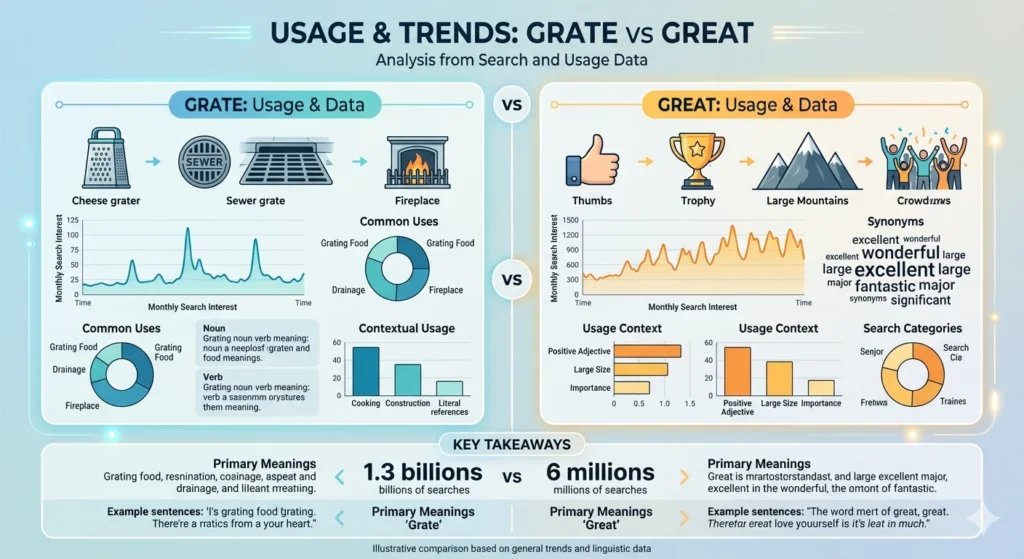
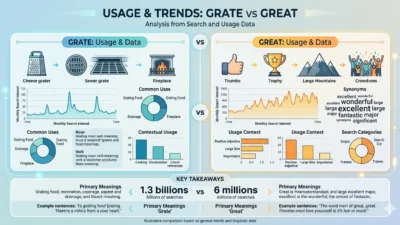
Search data shows that great is far more common than grate because it appears in daily conversations, business communication, education, and media.
Popular Usage by Context
| Word | Common Context |
|---|---|
| Great | Compliments, reviews, business, education |
| Grate | Cooking, kitchen tools, construction |
Popular Countries
Both words are commonly searched in:
- United States
- United Kingdom
- Canada
- Australia
- India
Most searches happen because people want to know the correct spelling in phrases like:
- Is it grate or great for good?
- Is it great or grate day?
- Grate vs great meaning
Comparison Table: Grate vs Great
| Feature | Grate | Great |
|---|---|---|
| Part of Speech | Verb/Noun | Adjective |
| Meaning | Shred, scrape, irritate | Excellent, impressive |
| Pronunciation | Great | Great |
| Positive Meaning | No | Yes |
| Used in Cooking | Yes | No |
| Used as Compliment | No | Yes |
| Example | Grate the cheese | Have a great day |
FAQs
1. What is the difference between grate and great?
Grate means to shred or scrape, while great means excellent or impressive.
2. Is it grate or great for good?
The correct word is great because it means very good.
3. Is it grater or greater?
A grater is a kitchen tool used for shredding food. Greater means larger or more important.
4. Is it great or grate day?
The correct phrase is great day.
5. Why do people confuse grate and great?
Because they are homophones and have the same pronunciation.
6. What is a better word for grate?
Depending on context, you can use shred, scrape, or grind.
7. How do I remember the difference?
Remember:
- Great = Good
- Grate = Scrape
Conclusion
The difference between grate vs great is easy once you understand their meanings. Although both words sound the same, they serve completely different purposes. Great is used when describing something excellent, impressive, important, or enjoyable. It is the correct choice in phrases such as “Have a great day,” “great job,” and “great idea.” On the other hand, grate refers to shredding food, scraping a surface, irritating someone, or a metal framework.
Because these words are homophones, many people accidentally use the wrong spelling. A simple way to remember the distinction is that great is connected to positive ideas and compliments, while grate is associated with scraping or shredding. Whether you are writing emails, social media posts, professional documents, or cooking instructions, choosing the correct word helps improve clarity and professionalism.
When in doubt, ask yourself what you mean. If you mean “excellent,” choose great. If you mean “shred” or “scrape,” choose grate. Following this rule will help you avoid one of the most common English spelling mistakes.

“George Gissing, a humor-loving writer at PunsBlast, crafting witty puns and playful word magic to make readers laugh every single day.”