Many English words look almost the same but have very different meanings. One common example is moral vs morale.
These two words differ by only one letter, yet they describe completely different ideas.
People often search for moral vs morale meaning, moral vs morale pronunciation, and moral vs morale examples because they are unsure which word to use in writing, school assignments, business communication, or insurance discussions.
The confusion becomes even greater when terms like moral vs morale hazard, moral vs morale in insurance, and moral vs morale support appear in professional contexts.
Understanding the difference can help you avoid mistakes and communicate more clearly.
Whether you are writing an email, reading a news article, studying insurance concepts, or trying to understand the moral vs morale of the story, this guide will explain everything in simple language.
In this article, you’ll learn the meanings, origins, pronunciation differences, insurance applications, common mistakes, examples, and practical advice on choosing the correct word every time.
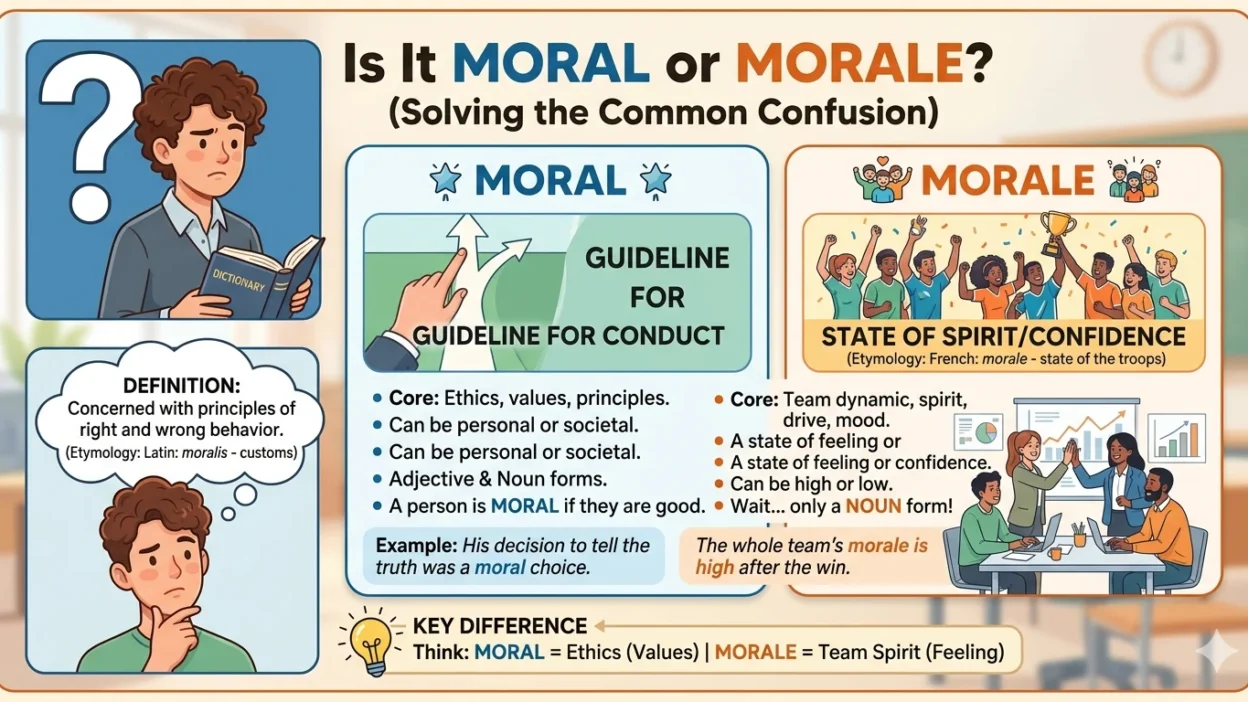
Moral vs Morale means
The difference is simple:
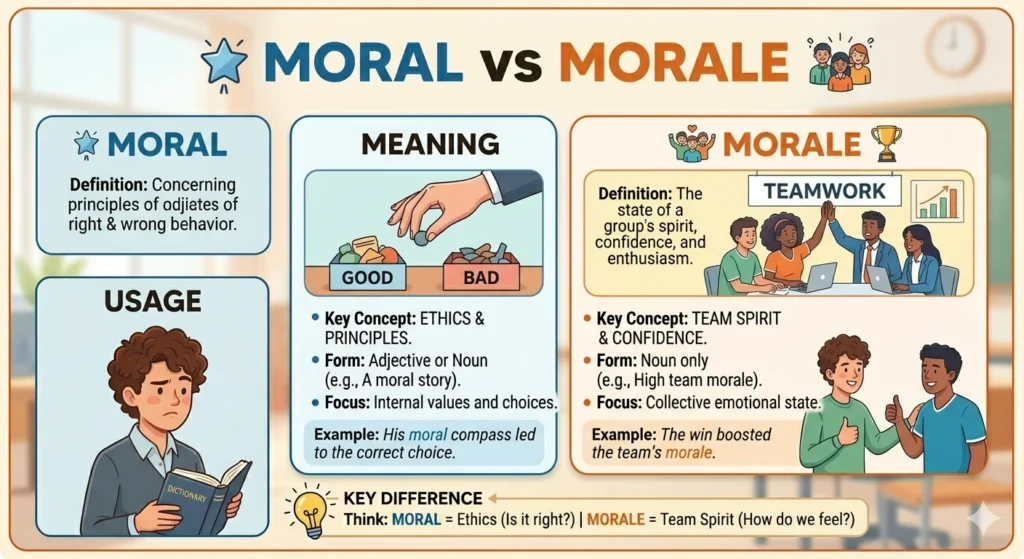
- Moral relates to right and wrong behavior, values, ethics, or a lesson learned.
- Morale refers to confidence, enthusiasm, motivation, or team spirit.
Examples
Moral:
- The moral of the story is to always tell the truth.
- She has strong moral values.
Morale:
- Employee morale improved after the company increased benefits.
- The coach worked hard to boost team morale.
Quick Comparison
| Word | Meaning | Example |
|---|---|---|
| Moral | Ethics, values, lesson | The moral of the story is honesty. |
| Morale | Confidence and motivation | Team morale is very high. |
The Origin of Moral vs Morale
Understanding moral vs morale etymology helps explain why these words are so similar.
Moral
The word moral comes from the Latin word moralis, meaning “related to manners, character, or proper behavior.”
Over time, it became associated with ethics and the distinction between right and wrong.
Morale
The word morale comes from the French word morale, meaning “mental condition” or “state of confidence.”
English borrowed this spelling to describe the spirit and confidence of individuals or groups.
Why the Spelling Difference Exists
Although both words share historical roots connected to behavior and mindset, they evolved differently:
- Moral focuses on ethics and principles.
- Morale focuses on emotional confidence and motivation.
That small “e” at the end changes the meaning completely.
British English vs American English Spelling
Unlike many English words, moral and morale are spelled the same in both British and American English.
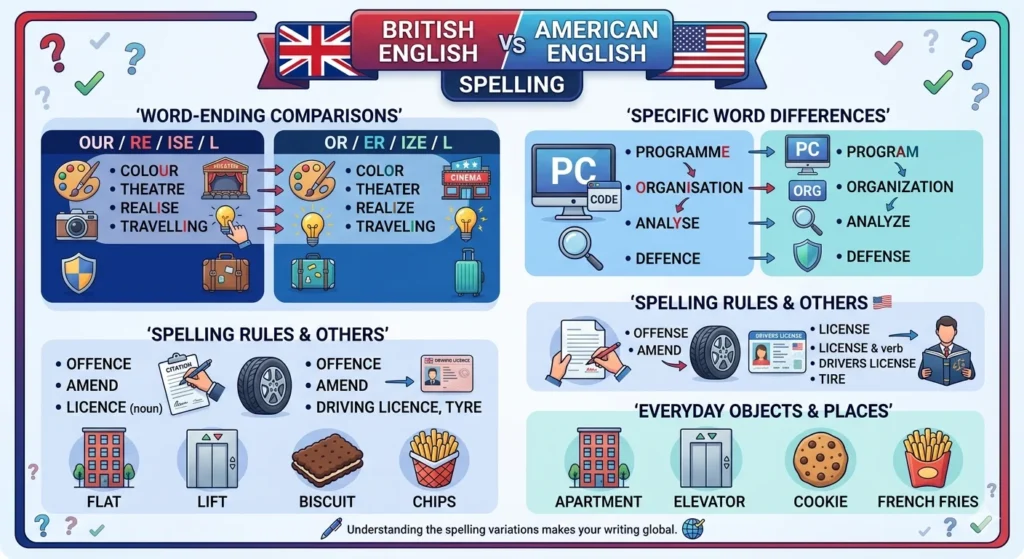
There is no US-versus-UK spelling variation.
Comparison Table
| Concept | American English | British English |
|---|---|---|
| Ethics | Moral | Moral |
| Team Spirit | Morale | Morale |
| Moral Hazard | Moral Hazard | Moral Hazard |
| Employee Morale | Employee Morale | Employee Morale |
Examples
American English:
- Employee morale increased this year.
British English:
- Employee morale increased this year.
Both versions are identical.
Which Spelling Should You Use?
The correct choice depends on the meaning you want.
Use Moral When:
- Talking about ethics
- Discussing right and wrong
- Referring to values
- Explaining a lesson from a story
Examples:
- The moral of the story is kindness.
- He made a moral decision.
Use Morale When:
- Discussing motivation
- Talking about confidence
- Describing team spirit
- Measuring workplace satisfaction
Examples:
- Staff morale is improving.
- High morale helps productivity.
Audience-Based Advice
| Audience | Recommended Word |
|---|---|
| US readers | Use the meaning that fits the context |
| UK readers | Use the meaning that fits the context |
| Commonwealth countries | Same usage applies |
| Global audience | Clarify context if needed |
Common Mistakes with Moral vs Morale
Many writers accidentally use one word instead of the other.
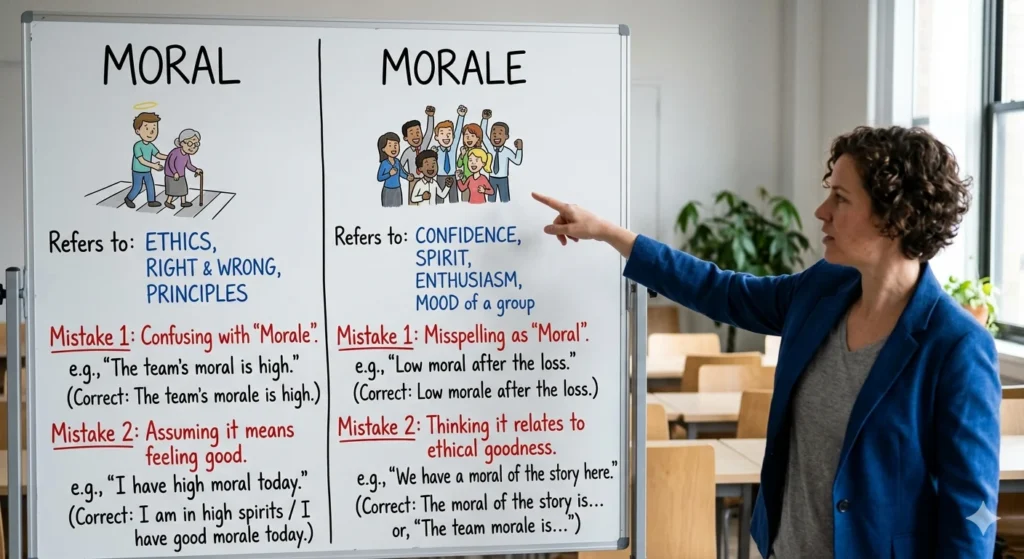
Mistake #1
❌ Employee moral is low.
✅ Employee morale is low.
Reason: Confidence and motivation require “morale.”
Mistake #2
❌ The morale of the story is honesty.
✅ The moral of the story is honesty.
Reason: Lessons from stories use “moral.”
Mistake #3
❌ She has strong morale values.
✅ She has strong moral values.
Reason: Ethics and principles require “moral.”
Mistake #4
❌ The team’s moral improved after winning.
✅ The team’s morale improved after winning.
Reason: Team spirit means “morale.”
Moral vs Morale in Everyday Examples
Understanding moral vs morale examples becomes easier when seen in real situations.
In Emails
Moral
- We must follow our moral responsibilities.
Morale
- The event helped improve employee morale.
In News Articles
Moral
- Leaders debated the moral implications of the decision.
Morale
- The victory boosted national morale.
On Social Media
Moral
- Always do the moral thing, even when it’s difficult.
Morale
- Great teamwork can improve morale.
In Formal Writing
Moral
- The research raises moral questions.
Morale
- Workplace morale directly affects performance.
Moral vs Morale Support
A common mistake is writing “moral support.”
Interestingly, moral support is actually correct.
“Moral support” means encouragement or emotional backing.
Example:
- My friends gave me moral support during the interview.
Although “morale” relates to confidence, the accepted phrase is moral support.
Moral vs Morale Pronunciation
Many people search for moral vs morale pronunciation because the words sound similar.
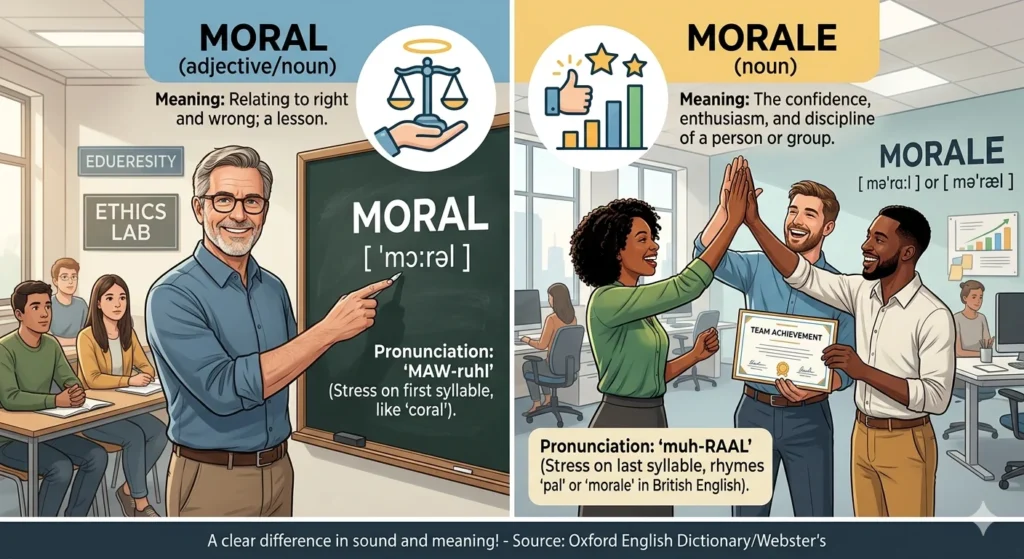
| Word | Pronunciation |
|---|---|
| Moral | MOR-uhl |
| Morale | muh-RAL |
Pronunciation Tip
- Moral sounds shorter.
- Morale places stronger emphasis on the second syllable.
Examples:
- Moral → MOR-uhl
- Morale → muh-RAL
Moral vs Morale Meaning
A quick summary of moral vs morale meaning:
| Word | Meaning |
|---|---|
| Moral | Ethics, principles, lesson |
| Morale | Confidence, enthusiasm, spirit |
Remember:
- Right and wrong = Moral
- Motivation and confidence = Morale
Moral vs Morale in Insurance
Many insurance professionals study moral vs morale in insurance because both terms affect risk.
Moral vs Morale Hazard
The concept of moral vs morale hazard is important in risk management.
Moral Hazard Definition
A moral hazard occurs when someone behaves dishonestly because they are protected from consequences.
Example:
A person intentionally causes damage because insurance will pay for it.
This is the standard moral hazard definition used in insurance.
Morale Hazard Definition
A morale hazard occurs when someone becomes careless because insurance protection exists.
Example:
A homeowner becomes less careful about locking doors because losses are insured.
Moral vs Morale Hazard Examples
| Hazard Type | Example |
|---|---|
| Moral Hazard | Filing a fraudulent insurance claim |
| Morale Hazard | Being careless because insurance covers losses |
Moral vs Morale Hazard Insurance Comparison
| Factor | Moral Hazard | Morale Hazard |
|---|---|---|
| Intentional? | Yes | No |
| Dishonest? | Usually | No |
| Carelessness? | Not necessarily | Yes |
| Insurance Impact | High | Moderate |
CPCU Moral vs Morale Hazard Definition
Insurance education programs often teach:
- Moral hazard = Intentional dishonesty.
- Morale hazard = Unintentional carelessness.
This distinction is important in underwriting and risk assessment.
Moral vs Morale Risk
Insurance companies evaluate both types of risk because they increase claim frequency and financial losses.
Moral vs Morale Persona 4
Many gamers search for moral vs morale Persona 4 when discussing character choices, ethics, and team dynamics in the game.
In these discussions:
- Moral usually refers to ethical decisions.
- Morale refers to group confidence or team spirit.
The meanings remain the same as standard English usage.
Moral vs Morale – Google Trends & Usage Data
Search data shows that moral vs morale remains a popular query worldwide because of spelling confusion.
Countries Where Searches Are Common
- United States
- United Kingdom
- Canada
- Australia
- India
Common Search Intent
Users frequently search:
- moral vs morale meaning
- moral vs morale pronunciation
- moral vs morale examples
- moral vs morale hazard
- moral vs morale in insurance
- moral vs morale support
Usage Contexts
| Context | More Common Word |
|---|---|
| Ethics | Moral |
| Stories | Moral |
| Business | Morale |
| Workplace | Morale |
| Insurance | Both |
| Education | Moral |
Comparison Table: Moral vs Morale
| Feature | Moral | Morale |
|---|---|---|
| Part of Speech | Noun/Adjective | Noun |
| Main Meaning | Ethics and values | Confidence and motivation |
| Used in Stories | Yes | No |
| Used in Team Spirit | No | Yes |
| Used in Insurance | Moral Hazard | Morale Hazard |
| Example | Moral values matter. | Team morale is high. |
FAQs
1. What is the difference between morals and morale?
Morals are beliefs about right and wrong. Morale is a person’s or group’s confidence and enthusiasm.
2. How do you use morale and moral in a sentence?
Moral: The moral of the story is honesty.
Morale: Employee morale improved after the meeting.
3. What is an example of morale?
A sports team feeling confident and motivated after several wins is an example of high morale.
4. What is the difference between moral and morale in insurance?
Moral hazard involves intentional dishonest behavior, while morale hazard involves careless behavior due to insurance protection.
5. Is moral support or morale support correct?
“Moral support” is the correct phrase in standard English.
6. Which word relates to ethics?
“Moral” relates to ethics, principles, and right versus wrong behavior.
7. Which word relates to confidence and motivation?
“Morale” relates to confidence, enthusiasm, and team spirit.
Conclusion
The distinction between moral vs morale is simple once you understand the core meanings. Moral relates to ethics, values, principles, and lessons about right and wrong. It often appears in discussions about behavior, philosophy, decision-making, and the moral of a story. Morale, on the other hand, refers to confidence, motivation, enthusiasm, and group spirit. It is commonly used in workplaces, sports teams, military organizations, and business environments.
The confusion becomes more noticeable in professional fields such as insurance, where terms like moral hazard and morale hazard have specific meanings. Moral hazards involve intentional dishonest actions, while morale hazards involve carelessness caused by a sense of protection.
A simple memory trick can help: if you’re talking about ethics, choose moral. If you’re talking about confidence or motivation, choose morale. Understanding this difference will improve your writing, help you avoid common mistakes, and ensure your message is clear in both casual and professional communication.

“M.R. James, a playful storyteller at PunsBlast, crafting sharp puns and clever humor that turn everyday words into unforgettable laughs.”