Have you ever written a sentence and stopped to wonder, “Which is correct lose or loose?” You are not alone. The confusion between loose vs lose is one of the most common spelling mistakes in English.
These two words look very similar, but they have completely different meanings. Many people search questions like “Do you lose or loose weight?”, “Is it lose or loose money?”, and “Do you loose or lose someone?” because they are unsure which spelling to use.
The mistake often happens because the word loose has an extra “o,” while lose has a different pronunciation than many people expect. As a result, writers, students, bloggers, and even professionals sometimes use the wrong word.
This guide explains the loose vs lose meaning, pronunciation, grammar, spelling differences, and real-life examples. By the end, you will know exactly when to use each word and how to avoid this common error forever.
Loose vs Lose means
The quick answer is simple:
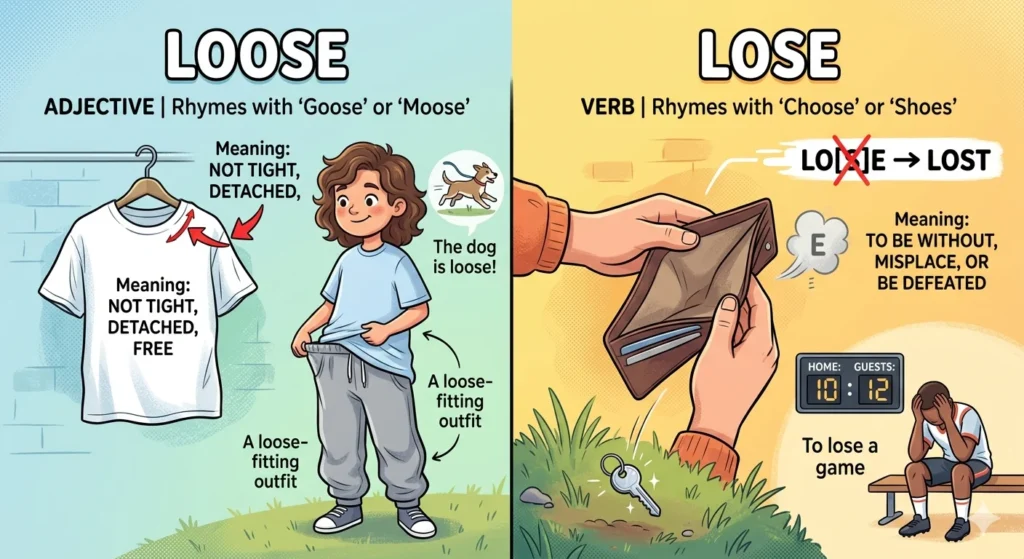
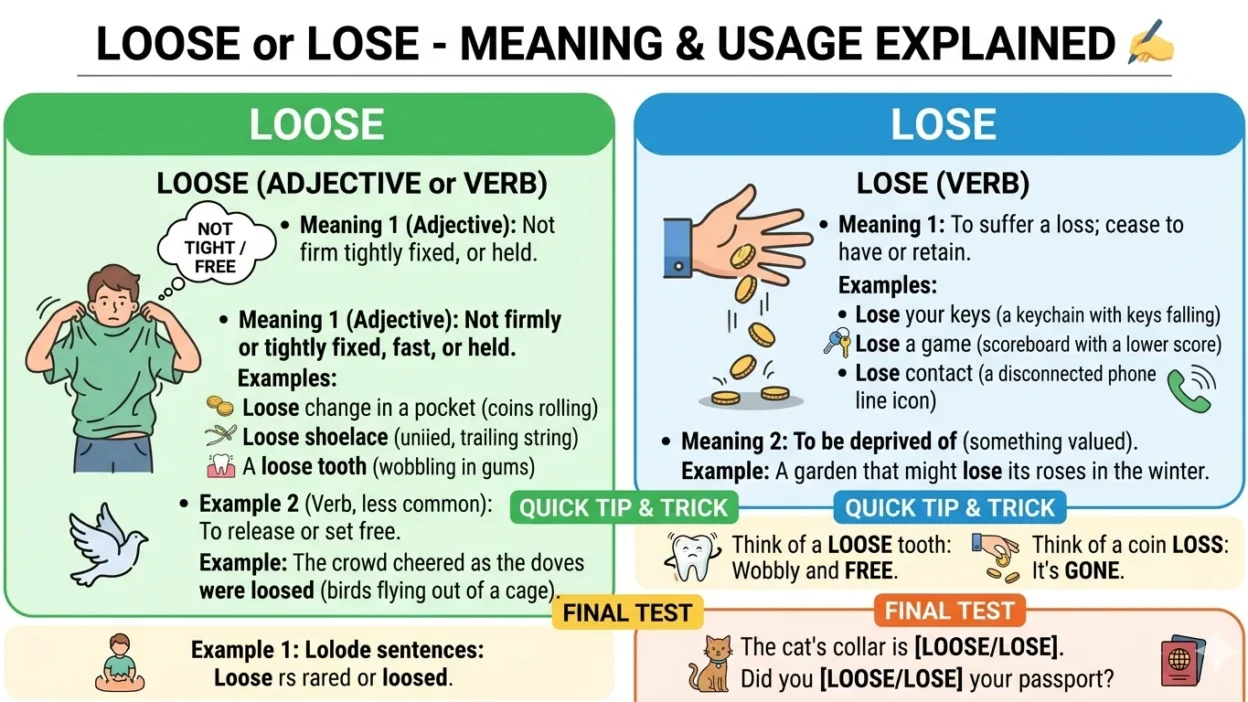
- Lose = to no longer have something.
- Loose = not tight, free, or relaxed.
Examples
✅ I do not want to lose my keys.
✅ She hopes to lose weight this year.
✅ The dog is loose in the yard.
✅ These pants are too loose.
If you are talking about losing money, weight, a game, or a person, the correct word is lose.
Common Questions
| Question | Correct Answer |
|---|---|
| Which is correct lose or loose? | Depends on meaning |
| Do you lose or loose weight? | Lose weight |
| Is it lose or loose money? | Lose money |
| Do you loose or lose someone? | Lose someone |
| Loose or lose a game? | Lose a game |
The Origin of Loose vs Lose
Understanding the history of these words helps explain the confusion.
Lose Meaning
The word lose comes from the Old English word losian, meaning “to perish” or “to be deprived of something.”
Over time, it developed into the modern meaning:
- To misplace something
- To fail to keep something
- To suffer a loss
Examples:
- Lose money
- Lose a game
- Lose interest
- Lose your phone
Loose Meaning
The word loose comes from the Old Norse word lauss, meaning “free” or “not bound.”
Today it means:
- Not tight
- Not fixed in place
- Free from restriction
Examples:
- Loose clothing
- Loose screws
- Loose hair
The spelling differences exist because the two words come from different language roots even though they now look similar.
British English vs American English Spelling
Unlike many English words, loose vs lose spelling is the same in both British and American English.
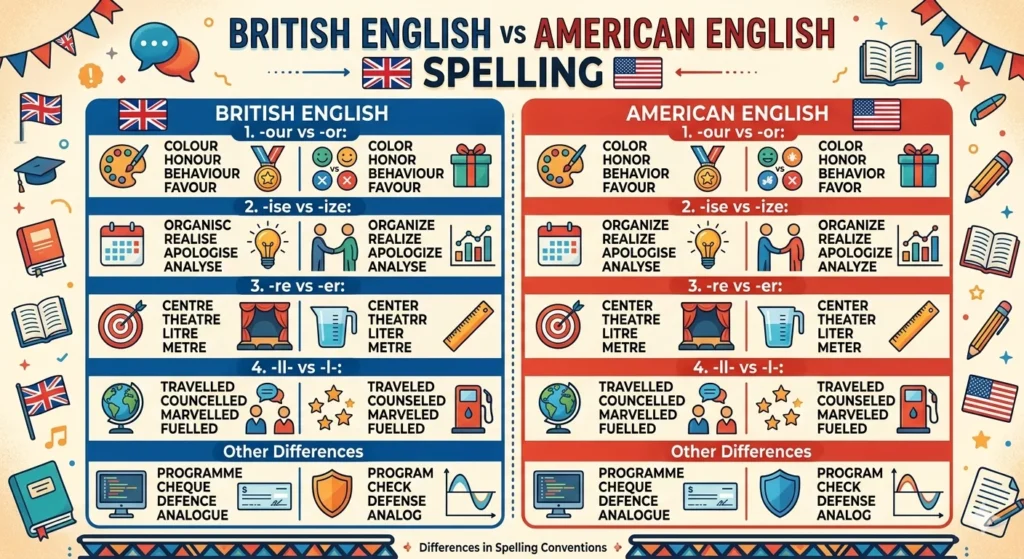
There is no regional difference.
Comparison Table
| Meaning | American English | British English |
|---|---|---|
| Not tight | Loose | Loose |
| Misplace something | Lose | Lose |
| Weight reduction | Lose weight | Lose weight |
| Fail to win | Lose a game | Lose a game |
| Free clothing fit | Loose clothing | Loose clothing |
Examples
American English:
- I want to lose weight.
- My shirt feels loose.
British English:
- I want to lose weight.
- My shirt feels loose.
The spelling remains identical in both versions of English.
Which Spelling Should You Use?
The answer depends entirely on the meaning.
Use “Lose” When:
You mean:
- Misplace something
- Fail to win
- Reduce weight
- Stop having something
Examples:
- Lose money
- Lose a game
- Lose interest
- Lose someone
- Lose weight
Use “Loose” When:
You mean:
- Not tight
- Free
- Unattached
Examples:
- Loose pants
- Loose tooth
- Loose screw
Advice by Audience
| Audience | Recommended Usage |
|---|---|
| US readers | Lose and Loose |
| UK readers | Lose and Loose |
| Commonwealth countries | Lose and Loose |
| Global audience | Follow standard meanings |
Common Mistakes with Loose vs Lose
Many writers accidentally add an extra “o.”
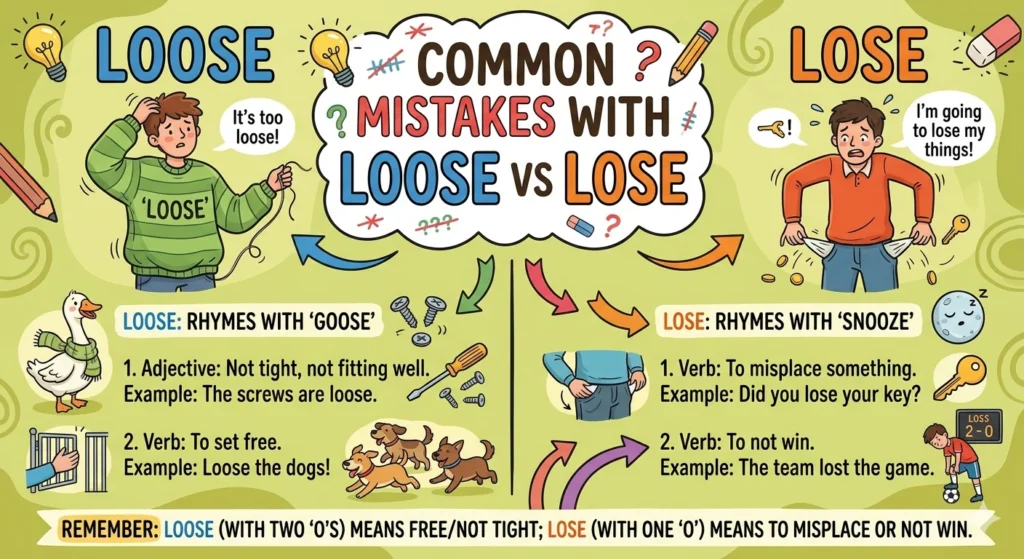
Incorrect vs Correct
❌ I want to loose weight.
✅ I want to lose weight.
❌ We might loose the match.
✅ We might lose the match.
❌ Did you loose your wallet?
✅ Did you lose your wallet?
❌ She does not want to loose money.
✅ She does not want to lose money.
Why This Happens
People often assume that because the pronunciation sounds longer, the word should have two “o” letters.
However:
- Lose = one “o”
- Loose = two “o” letters
How to Remember Loose vs Lose
A simple trick:
- Loose has an extra “O” because it has extra room.
- Lose has one “O” because something is missing.
This is one of the easiest ways to remember how to remember loose vs lose.
Loose vs Lose in Everyday Examples
Understanding real-world usage helps build confidence.
Emails
✅ We may lose the contract if we miss the deadline.
✅ The connection became loose during installation.
News Headlines
✅ Local Team Loses Championship Final
✅ Authorities Warn About Loose Animals on Highway
Social Media
✅ Trying to lose weight before summer.
✅ My new hoodie is a little loose.
Formal Writing
✅ The company could lose market share.
✅ Inspect all loose components before operation.
Loose vs Lose in a Sentence
- I do not want to lose my passport.
- These shoes feel loose.
- She might lose interest soon.
- The handle became loose after years of use.
Loose vs Lose – Google Trends & Usage Data
Search data shows that loose vs lose remains one of the most searched grammar questions online.
People commonly search:
- Which is correct lose or loose?
- Loose vs lose definition
- Loose vs lose meaning
- Loose vs lose pronunciation
- Loose vs lose grammar
- Loose vs lose spelling difference
- Loose vs lose someone
- Loose vs lose weight
Popular Search Contexts
| Phrase | User Intent |
|---|---|
| Loose vs lose weight | Fitness writing |
| Loose vs lose interest | Grammar check |
| Loose vs lose someone | Emotional writing |
| Loose vs lose grammar | Educational learning |
| Loose vs lose pronunciation | Speaking correctly |
Usage by Country
The confusion appears frequently in:
- United States
- United Kingdom
- Canada
- Australia
- India
Because English is widely used worldwide, this spelling mistake remains common across many countries.
Loose vs Lose Comparison Table
| Feature | Loose | Lose |
|---|---|---|
| Part of Speech | Adjective | Verb |
| Meaning | Not tight | To no longer have |
| Pronunciation | Loos | Looz |
| Example | Loose shirt | Lose money |
| Weight phrase | ❌ Loose weight | ✅ Lose weight |
| Game phrase | ❌ Loose a game | ✅ Lose a game |
| Interest phrase | ❌ Loose interest | ✅ Lose interest |
| Person phrase | ❌ Loose someone | ✅ Lose someone |
Loose vs Lose Pronunciation
Many people search for loose vs lose pronunciation because the spellings seem backward.
Loose
Pronounced: Loos
Rhymes with:
- Moose
- Goose
Lose
Pronounced: Looz
Rhymes with:
- Choose
- News
Even though the words look similar, the ending sounds are different.
Loose vs Lose vs Loss
These words are related but different.
| Word | Meaning |
|---|---|
| Lose | Verb |
| Loss | Noun |
| Loose | Adjective |
Examples:
- I might lose the game.
- The loss was disappointing.
- My shirt is loose.
Loose vs Lose vs Lost
| Word | Meaning |
|---|---|
| Lose | Present tense |
| Lost | Past tense |
| Loose | Adjective |
Examples:
- I do not want to lose my keys.
- I lost my keys yesterday.
- My pocket is loose.
Loose vs Lose vs Loss vs Lost
| Word | Type | Example |
|---|---|---|
| Lose | Verb | Lose money |
| Lost | Past tense verb | Lost money |
| Loss | Noun | Financial loss |
| Loose | Adjective | Loose clothing |
FAQs
1. Which is correct lose or loose?
Both are correct words, but they have different meanings. Use lose when something is gone and loose when something is not tight.
2. Do you lose or loose weight?
The correct phrase is lose weight.
3. Is it lose or loose money?
The correct phrase is lose money.
4. Do you loose or lose someone?
The correct phrase is lose someone.
5. What is the difference between loose and lose?
Loose means not tight. Lose means to no longer have something.
6. How do you remember loose vs lose?
Remember that loose has an extra “o” because it has extra space.
7. Is loose a verb?
Usually no. Loose is commonly an adjective. Lose is the verb most people mean.
8. Where can I find a loose vs lose worksheet?
Many grammar websites and English-learning platforms offer a loose vs lose worksheet for practice exercises.
Conclusion
The difference between loose vs lose is simple once you understand the meanings. Lose is a verb that means to no longer have something, fail to win, or experience a reduction. You lose money, lose weight, lose interest, and lose a game. On the other hand, loose is usually an adjective that means not tight, free, or unattached. You can have loose clothing, a loose screw, or a loose tooth.
Many people confuse these words because they look similar, but remembering their roles can help you avoid mistakes. A useful memory trick is that loose has an extra “o,” which represents extra room or space. If something is missing, the correct word is usually lose.
Whether you are writing emails, articles, social media posts, academic papers, or business documents, using the right spelling improves clarity and professionalism. When in doubt, ask yourself: “Am I talking about something not being tight, or am I talking about losing something?” The answer will guide you to the correct word every time.

“Witty McGiggles, PunsBlast’s resident pun master, spins clever wordplay and playful humor to turn every moment into a laugh.”