Many people confuse eminent vs imminent because the words look almost the same. They sound similar too.
But their meanings are very different. One word talks about fame and respect. The other talks about something that is about to happen soon.
This confusion is common in schools, emails, blogs, business writing, and even news reports.
Many writers search for eminent vs imminent meaning, define eminent vs imminent, or eminent vs imminent difference because they want to avoid mistakes. A small spelling error can completely change a sentence.
For example:
- “An eminent doctor” means a famous and respected doctor.
- “An imminent storm” means a storm will happen very soon.
These words are also confused with another word: immanent. That is why many people search for eminent vs imminent vs immanent online.
This guide explains everything in simple English. You will learn meanings, pronunciation, origins, examples, grammar tips, common mistakes, and professional writing advice. By the end, you will know exactly when to use each word with confidence.
Eminent vs Imminent means
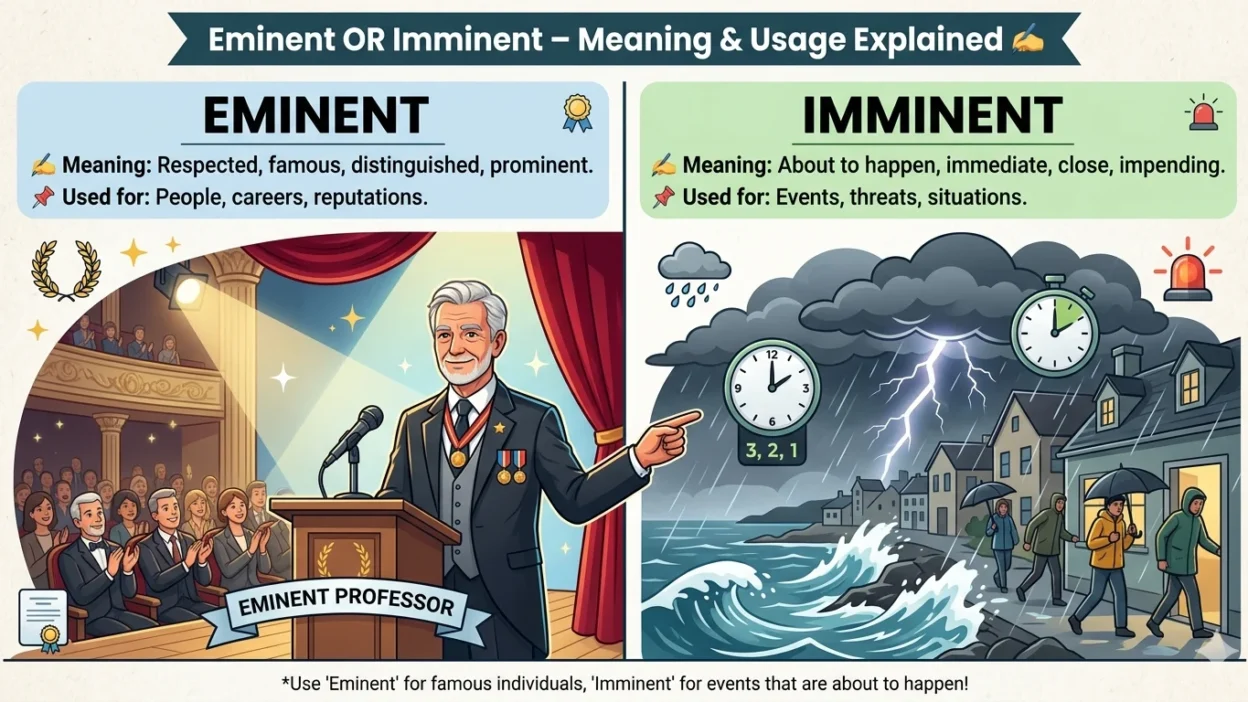
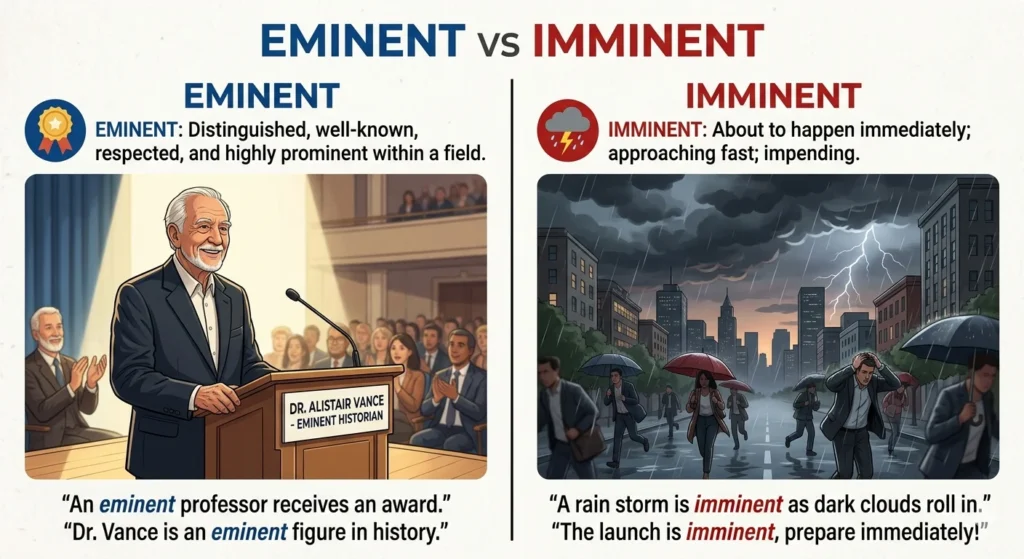
The difference between eminent vs imminent is simple:
| Word | Meaning | Example |
|---|---|---|
| Eminent | Famous, respected, important | She is an eminent scientist. |
| Imminent | About to happen soon | Rain is imminent. |
What does “eminent” actually mean?
Eminent means highly respected, famous, or important.
Examples:
- An eminent lawyer won the case.
- The eminent professor gave a speech.
- She became an eminent author.
The word is often used for experts, leaders, scholars, doctors, and public figures.
Imminent meaning
Imminent means something will happen very soon.
Examples:
- The danger is imminent.
- A storm is imminent.
- The company faces imminent closure.
When people ask, “How soon is imminent?”, the answer is usually: very soon or about to happen immediately.
The Origin of Eminent vs Imminent
The confusion between eminent vs imminent started because both words come from Latin roots and have similar spellings.
Origin of Eminent
The word eminent comes from the Latin word eminere.
It means:
- “to stand out”
- “to rise above”
That is why eminent people are seen as important or respected above others.
Example:
- An eminent judge stands out because of skill and reputation.
Origin of Imminent
The word imminent comes from the Latin word imminere.
It means:
- “to overhang”
- “to threaten”
This explains why imminent events feel close or about to happen.
Example:
- Imminent danger feels near and threatening.
Why the spelling difference exists
Only one letter changes:
- Eminent
- Imminent
But the meanings are unrelated.
A useful memory trick:
- Eminent → starts with “E” for expert
- Imminent → has double “mm” like a ticking countdown
British English vs American English Spelling
Good news: there is no spelling difference between British English and American English for these words.
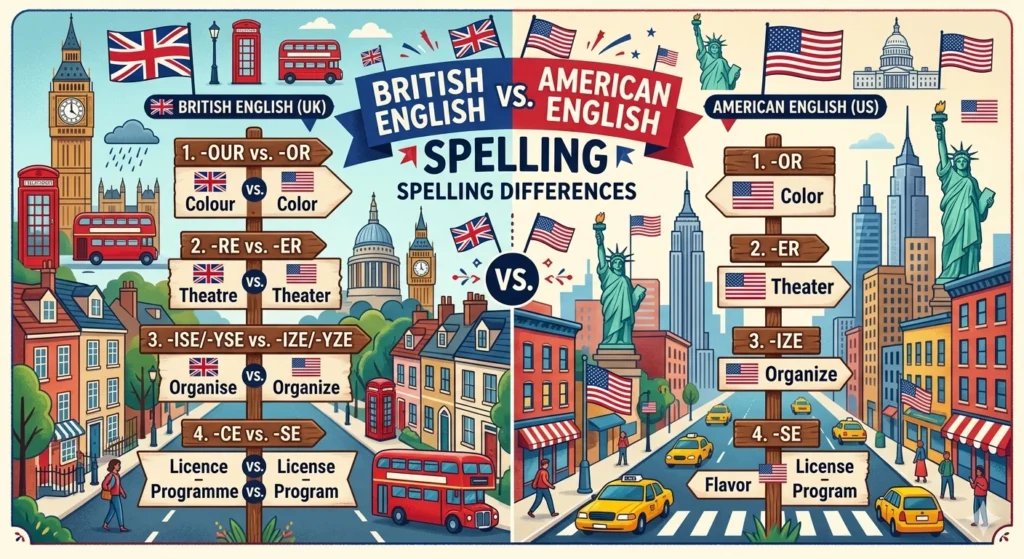
Both countries use:
- Eminent
- Imminent
However, usage style can vary slightly.
British English Examples
- The eminent barrister spoke in court.
- Economic problems are imminent.
American English Examples
- The eminent doctor appeared on television.
- Severe weather is imminent.
Comparison Table
| Feature | British English | American English |
|---|---|---|
| Eminent spelling | Eminent | Eminent |
| Imminent spelling | Imminent | Imminent |
| Pronunciation style | Slightly softer vowels | Stronger vowel sounds |
| Common use | Academic and formal writing | Media and business writing |
Eminent vs imminent pronunciation
Eminent pronunciation
EM-uh-nent
Imminent pronunciation
IM-uh-nent
The starting vowel sound changes:
- Eminent → “Eh”
- Imminent → “Ih”
Which Spelling Should You Use?
The answer depends on meaning, not country.

Use “eminent” when talking about respected people
Correct examples:
- An eminent scientist
- An eminent historian
- An eminent businessman
This word works best in:
- Academic writing
- Professional emails
- News reports
- Formal essays
Use “imminent” when talking about events happening soon
Correct examples:
- Imminent danger
- Imminent arrival
- Imminent changes
This word works best in:
- Weather reports
- News headlines
- Emergency alerts
- Business communication
Advice by audience
| Audience | Best Word Choice |
|---|---|
| US readers | Standard spelling |
| UK readers | Standard spelling |
| Commonwealth countries | Standard spelling |
| Global audience | Use based on meaning |
Common Mistakes with Eminent vs Imminent
Many writers mix these words because they look and sound alike.
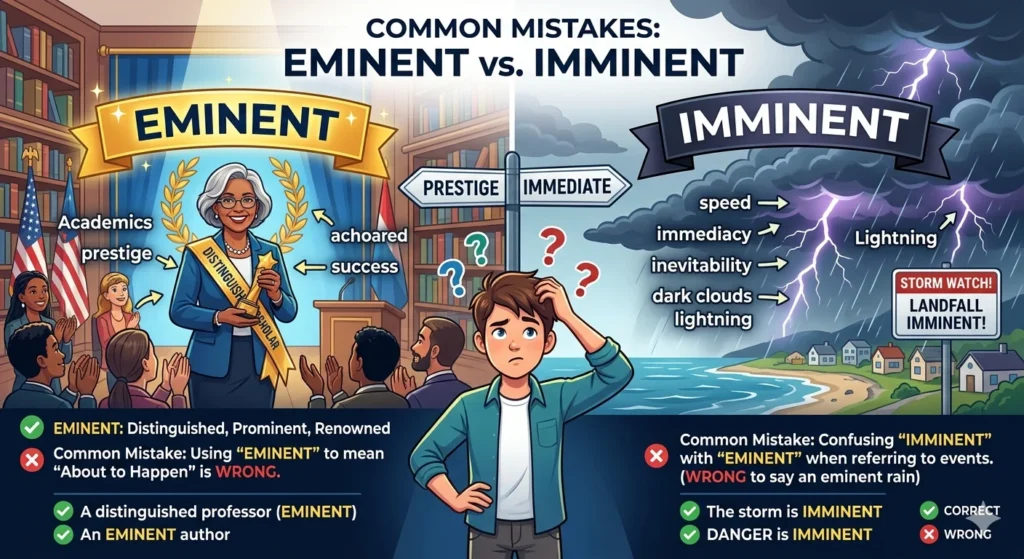
Mistake 1: Using eminent for danger
❌ The storm is eminent.
✔ The storm is imminent.
Storms are not respected or famous. They happen soon.
Mistake 2: Using imminent for famous people
❌ She is an imminent lawyer.
✔ She is an eminent lawyer.
Lawyers can be respected, not “about to happen.”
Mistake 3: Confusing eminent vs imminent vs immanent
This is a very common grammar problem.
| Word | Meaning |
|---|---|
| Eminent | Famous or respected |
| Imminent | About to happen |
| Immanent | Existing within something |
Immanent example:
- Some religions believe God is immanent in nature.
Mistake 4: Wrong pronunciation
People often say both words the same way.
Correct sounds:
- Eminent → “EM”
- Imminent → “IM”
Eminent vs imminent quiz
Choose the correct word:
- The hurricane is ______.
- She is an ______ professor.
- Financial collapse seems ______.
- The school invited an ______ speaker.
Answers:
- imminent
- eminent
- imminent
- eminent
Eminent vs Imminent Examples
Learning through examples is the easiest method.
Eminent and imminent in a sentence
Eminent sentence examples
- The eminent surgeon saved many lives.
- We met an eminent artist.
- The university hired an eminent researcher.
Imminent sentence examples
- Flooding is imminent.
- The launch is imminent.
- War seemed imminent.
Eminent vs Prominent
Many people also compare eminent vs prominent.
Both words describe important people, but there is a small difference.
| Word | Meaning |
|---|---|
| Eminent | Highly respected |
| Prominent | Well-known or visible |
Example:
- An eminent scientist is respected for expertise.
- A prominent influencer may simply be famous online.
Eminent often sounds more formal and prestigious.
Imminent vs Inevitable
Another common question is:
What is the difference between inevitable and imminent?
These words are different.
| Word | Meaning |
|---|---|
| Imminent | Happening very soon |
| Inevitable | Certain to happen eventually |
Examples
Imminent
- The train’s arrival is imminent.
Inevitable
- Aging is inevitable.
Imminent vs inevitable explained simply
Something can be:
- imminent but not inevitable
- inevitable but not imminent
Example:
- A market crash may be imminent.
- Death is inevitable.
What is the difference between immanently and imminently?
These adverbs are also confused.
| Word | Meaning |
|---|---|
| Immanently | Existing within |
| Imminently | About to happen soon |
Examples
Immanently
- The idea exists immanently within the system.
Imminently
- The decision will arrive imminently.
How Soon Is Imminent?
People often ask: How soon is imminent?
The answer depends on context.
Usually, imminent means:
- within minutes
- within hours
- very soon
- about to happen
Examples
| Situation | Meaning of imminent |
|---|---|
| Weather warning | Storm arriving soon |
| Business closure | Shutdown close |
| Medical emergency | Danger immediate |
| Travel announcement | Departure near |
Imminent creates urgency.
Eminent vs Imminent in Everyday Examples
These words appear everywhere.
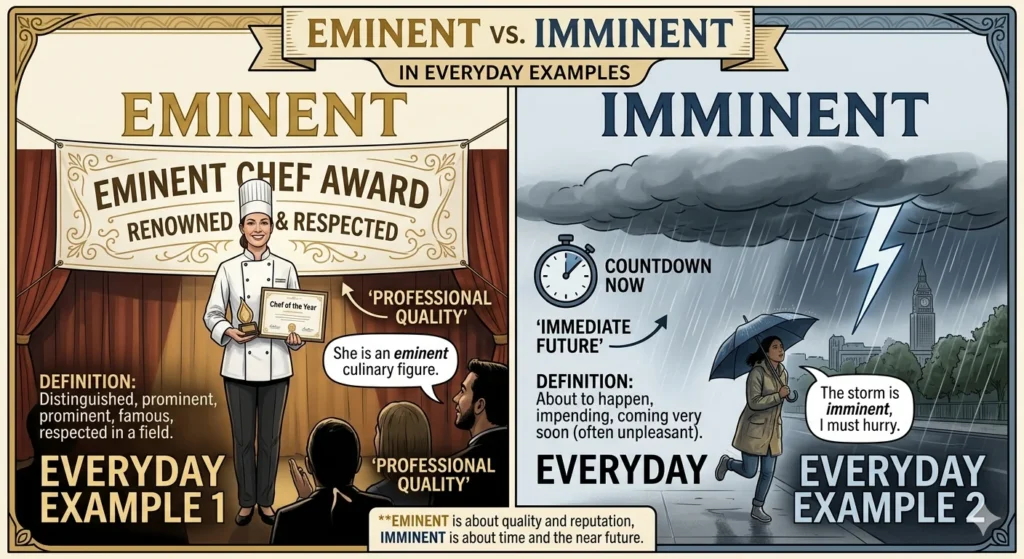
In emails
Eminent
- We invited an eminent guest speaker.
Imminent
- Deadline changes are imminent.
In news reports
Eminent
- The eminent economist shared concerns.
Imminent
- Authorities warned of imminent flooding.
On social media
Eminent
- Fans praised the eminent actor.
Imminent
- A major update is imminent.
In formal writing
Eminent
- The paper cited eminent scholars.
Imminent
- Researchers fear imminent climate risks.
Eminent vs Imminent Meaning Comparison Table
| Feature | Eminent | Imminent |
|---|---|---|
| Meaning | Famous or respected | About to happen |
| Part of speech | Adjective | Adjective |
| Used for | People | Events |
| Emotional tone | Positive | Neutral or urgent |
| Common context | Education, law, science | Weather, danger, business |
| Memory trick | Expert | Immediate |
Eminent vs Imminent vs Immanent
This three-word comparison causes major confusion.
| Word | Meaning | Example |
|---|---|---|
| Eminent | Famous/respected | An eminent doctor |
| Imminent | Happening soon | Imminent danger |
| Immanent | Existing within | Divine power is immanent |
Easy memory tips
- Eminent → Excellent expert
- Imminent → Immediate event
- Immanent → Inside or within
Eminent vs Imminent – Google Trends & Usage Data
Search data shows that many people confuse these words.
Most searched phrases
Popular searches include:
- eminent vs imminent
- eminent vs imminent meaning
- eminent vs imminent difference
- define eminent vs imminent
- imminent meaning
- eminent vs imminent pronunciation
- eminent vs imminent examples
Countries where searches are common
Search interest is high in:
- United States
- United Kingdom
- India
- Pakistan
- Canada
- Australia
Why people search these terms
Most users want to:
- Avoid grammar mistakes
- Improve writing
- Prepare for exams
- Understand pronunciation
- Learn formal English
Students and bloggers search these terms often because spelling mistakes hurt credibility.
FAQs About Eminent vs Imminent
1. What is the main difference between eminent and imminent?
Eminent means respected or famous. Imminent means something will happen very soon.
2. What does “eminent” actually mean?
Eminent describes a person with high status, skill, or reputation.
Example:
- an eminent scientist
3. What does imminent mean?
Imminent means close to happening.
Example:
- imminent danger
4. How soon is imminent?
Imminent usually means within a very short time, such as minutes, hours, or days.
5. What is the difference between inevitable and imminent?
Inevitable means certain to happen eventually. Imminent means happening soon.
6. What is the difference between immanently and imminently?
Immanently means existing within something. Imminently means happening very soon.
7. How do you remember eminent vs imminent?
Use this trick:
- Eminent → expert person
- Imminent → immediate event
Conclusion
Understanding eminent vs imminent is easier once you focus on meaning instead of spelling. Even though the words look similar, they describe completely different ideas.
Eminent is used for respected, skilled, or famous people. It often appears in academic, legal, medical, and professional writing. When someone has a strong reputation, they may be called eminent.
Imminent, however, describes events that are about to happen soon. It is common in weather reports, business news, emergencies, and everyday communication. If danger, change, or action is close, the correct word is imminent.
Many learners also confuse these terms with immanent, which has a separate meaning related to something existing within. Knowing the differences between eminent vs imminent vs immanent helps improve grammar and writing confidence.
A simple trick can help:
- Eminent → expert and respected
- Imminent → immediate and near
By using the examples, tables, pronunciation tips, and memory tricks in this guide, you can avoid common mistakes and use each word correctly in both formal and casual writing.

“Witty McGiggles, PunsBlast’s resident pun master, spins clever wordplay and playful humor to turn every moment into a laugh.”