Have you ever typed “cereal number” and wondered why it looks wrong? You’re not alone.
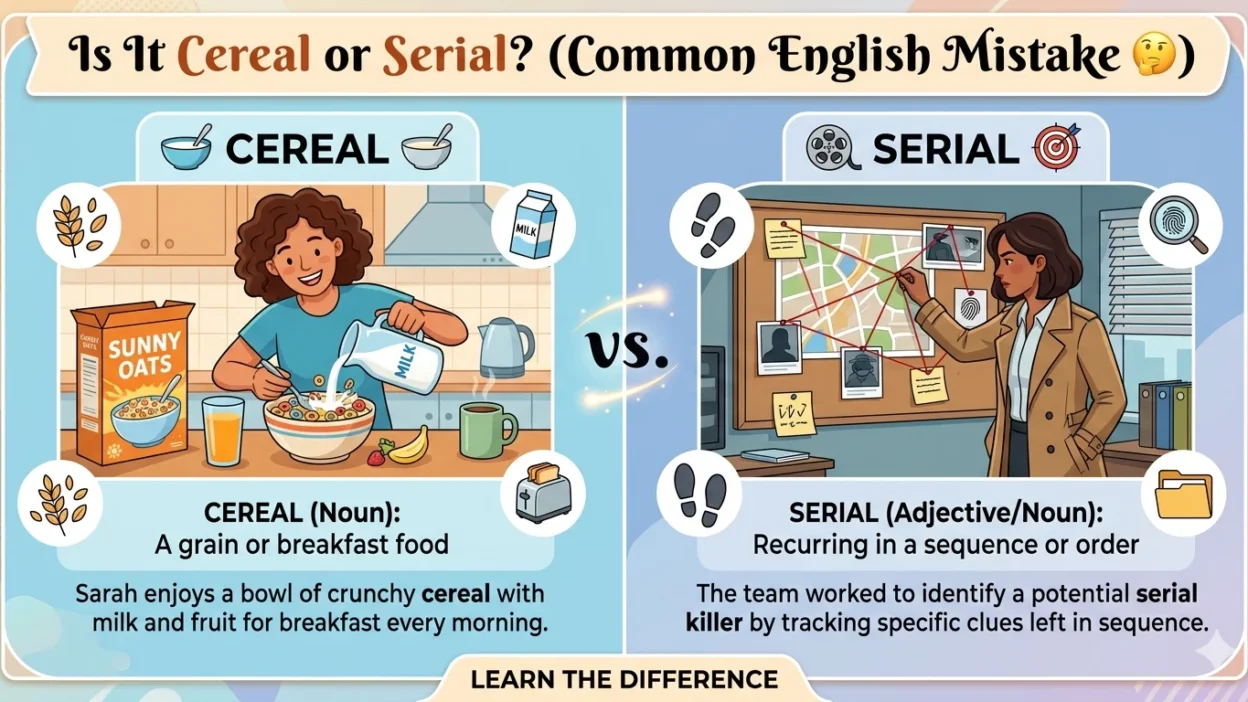
Many people confuse cereal vs serial because they sound the same. These words are homophones—words that share pronunciation but have different meanings and spellings.
People often search “What is the difference between cereal and serial?” or “Is it cereal number or serial number?”
because the mistake shows up in daily life—forms, emails, product labels, and even schoolwork. This confusion can lead to embarrassing errors, especially in professional writing.
This guide will clear things up in a simple way. You’ll learn the meanings, origins, correct usage, and common mistakes.
By the end, you’ll confidently know how to spell cereal, understand serial meaning, and never mix them up again.
Cereal vs Serial means
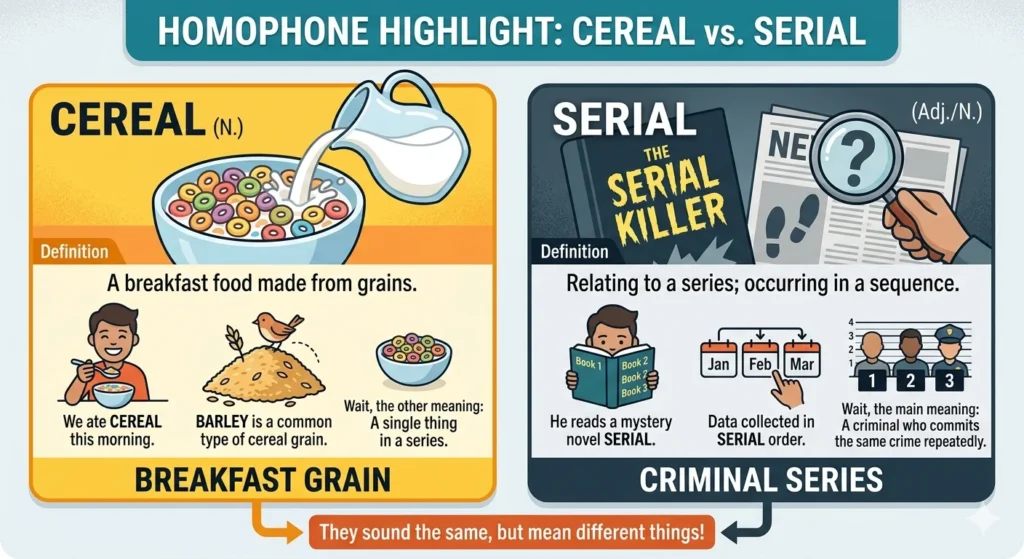
Cereal = Food made from grains
Serial = Something in a sequence or series
Examples:
- I eat cereal for breakfast.
- Enter your device serial number.
👉 So, the correct phrase is:
✔️ Serial number
❌ Cereal number
The Origin of Cereal vs Serial
Cereal
- Comes from Ceres, the Roman goddess of agriculture
- Related to grains like wheat, corn, and rice
- Meaning: food made from grain
Serial
- Comes from the Latin word series
- Means things arranged in order
👉 That’s why:
- Cereal = food
- Serial = order, sequence
British English vs American English Spelling
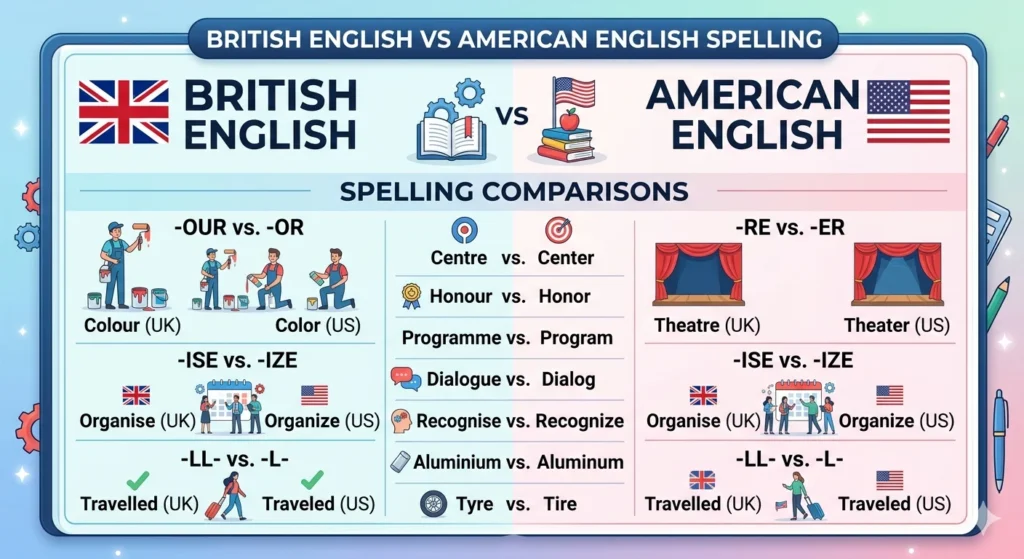
Good news—there is no difference between US and UK spelling here.
| Word | American English | British English | Meaning |
|---|---|---|---|
| Cereal | Cereal | Cereal | Grain food |
| Serial | Serial | Serial | Sequence/order |
👉 Unlike words like “color/colour,” cereal vs serial spelling stays the same worldwide.
Which Spelling Should You Use?
Use based on meaning, not region:
- 🌎 Global English
- Food → cereal
- Sequence → serial
- 🇺🇸 🇬🇧 🇦🇺 All countries follow the same rule
👉 Simple rule:
- Breakfast? → cereal
- Numbers, codes, or order? → serial
Common Mistakes with Cereal vs Serial
Here are frequent errors:
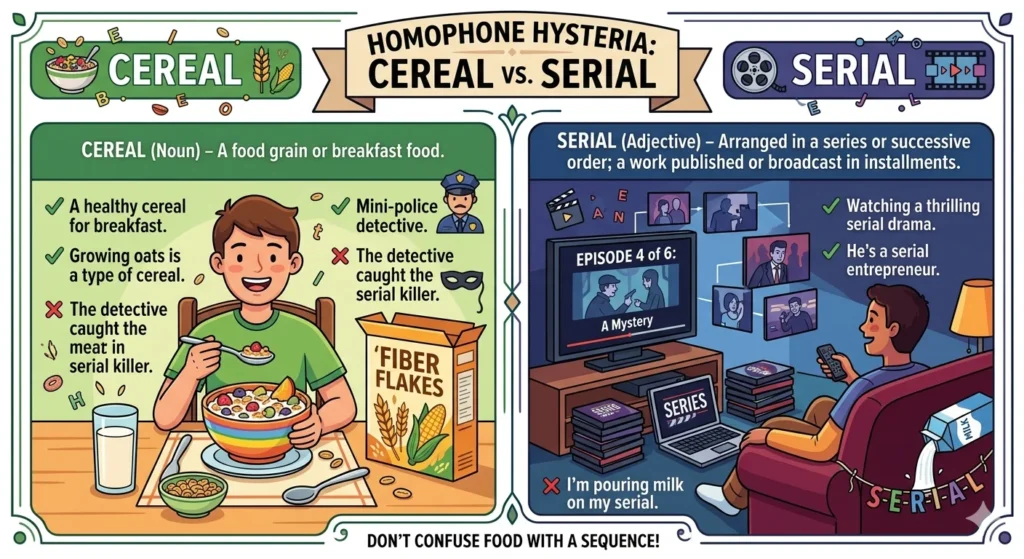
❌ Cereal number
✔️ Serial number
❌ Serial for breakfast
✔️ Cereal for breakfast
❌ Cerelac vs cereal confusion
✔️ Cerelac is a baby food brand, not the same as cereal
Tip:
- If it’s edible → cereal
- If it’s countable/order → serial
Cereal vs Serial in Everyday Examples
Emails
- Please send the serial number of your device.
News
- Police caught a serial offender.
Social Media
- Morning routine: coffee + cereal 🥣
Formal Writing
- Each product has a unique serial number for tracking.
Cereal vs Serial – Google Trends & Usage Data
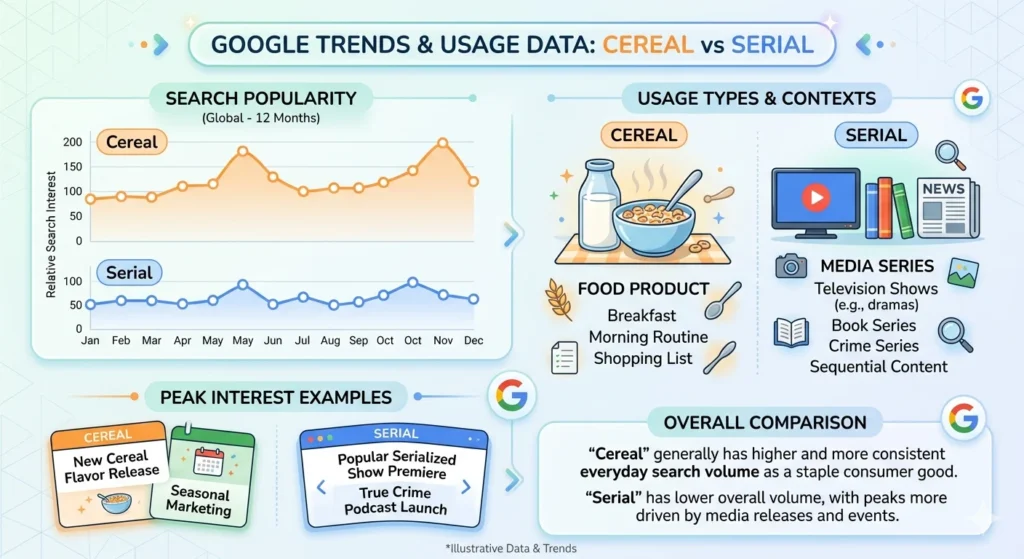
- “Cereal” is popular in food-related searches
- “Serial” is common in tech, crime, and manufacturing
By country:
- USA, UK, Canada → both used equally
- India, Pakistan → “serial number” searches are very common
👉 Context matters more than location.
Comparison Table: Cereal vs Serial
| Feature | Cereal | Serial |
|---|---|---|
| Meaning | Grain food | Sequence/order |
| Usage | Breakfast, food | Numbers, crimes, systems |
| Example | Cornflakes cereal | Serial number |
| Category | Noun | Noun/Adjective |
| Pronunciation | Same | Same |
FAQs
1. What is the difference between cereal and serial?
Cereal is food made from grains. Serial means something arranged in order.
2. Is it cereal number or serial number?
✔️ Correct: Serial number
3. What does cereal mean?
It means food made from grains like wheat, oats, or corn.
4. What is the difference between cerelac and cereal?
Cerelac is a baby food brand. Cereal is general grain-based food.
5. How to spell cereal?
C-E-R-E-A-L
6. What is serial meaning?
Serial means something that follows a sequence or order.
7. Cereal vs serial pronunciation—are they different?
No. Both sound the same. That’s why they are homophones.
Conclusion
Understanding cereal vs serial is easier than it seems. The confusion happens because both words sound the same, but their meanings are very different. One relates to food, while the other relates to order or sequence.
If you remember one simple rule, you’ll never make this mistake again:
👉 Eat cereal, track serial.
Whether you’re writing emails, filling out forms, or posting online, using the correct word improves clarity and professionalism. This is especially important when dealing with technical terms like “serial number,” where mistakes can cause confusion.
By learning the origin, meaning, and real-life examples, you now have a clear understanding of these homophones. Keep practicing with everyday usage, and soon it will feel natural.

“George Gissing, a humor-loving writer at PunsBlast, crafting witty puns and playful word magic to make readers laugh every single day.”