Many people search for censor vs censure because the words look almost the same—but their meanings are very different. This small spelling change can cause big mistakes in writing, emails, and even professional work. If you’ve ever asked, “What is the difference between censure and censor?” you’re not alone.
These two words sound similar, but they do very different jobs. One deals with hiding or blocking content, while the other deals with criticizing someone strongly. Mixing them up can change your whole message.
In this guide, you’ll get a simple and clear explanation. You’ll learn the meaning, origin, spelling rules, and real-life examples. We’ll also answer common questions like “What does it mean to censor someone?” and “Is censure a warning?” By the end, you’ll know exactly when to use each word without confusion.
Censor vs Censure means
Censor vs censure meaning:
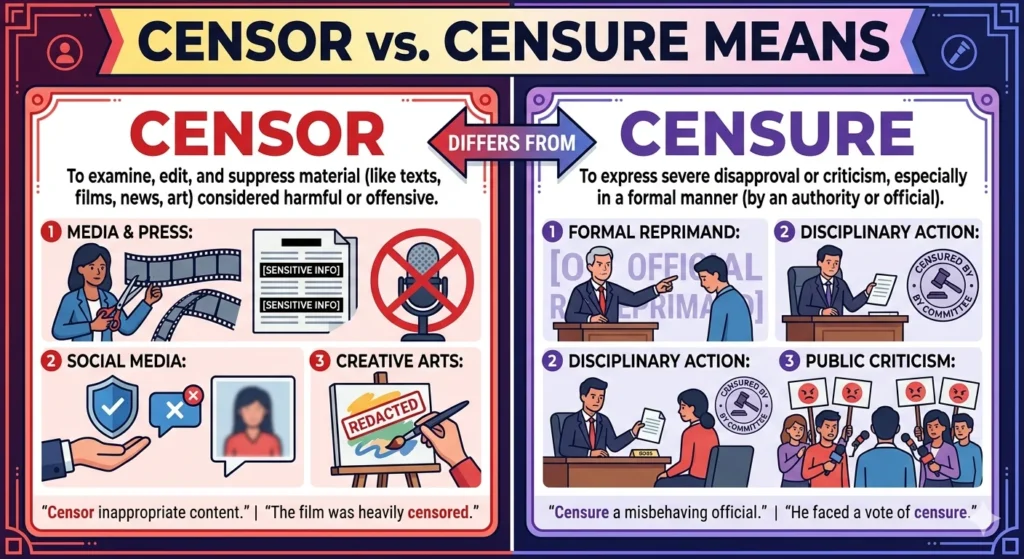
- Censor = to block, remove, or hide information
- Censure = to criticize or express strong disapproval
Examples:
- The government censored the news.
- The committee censured the politician.
👉 Simple rule:
- Censor = Control content
- Censure = Criticize behavior
The Origin of Censor vs Censure
Both words come from Latin, which is why they look alike.
- Censor comes from “censere” → meaning “to judge or assess.” In ancient Rome, a censor checked public morals and records.
- Censure also comes from “censura” → meaning “judgment” or “criticism.”
Over time:
- Censor shifted toward controlling information
- Censure stayed closer to judging or criticizing
That’s why today we have confusion in censor vs censure difference.
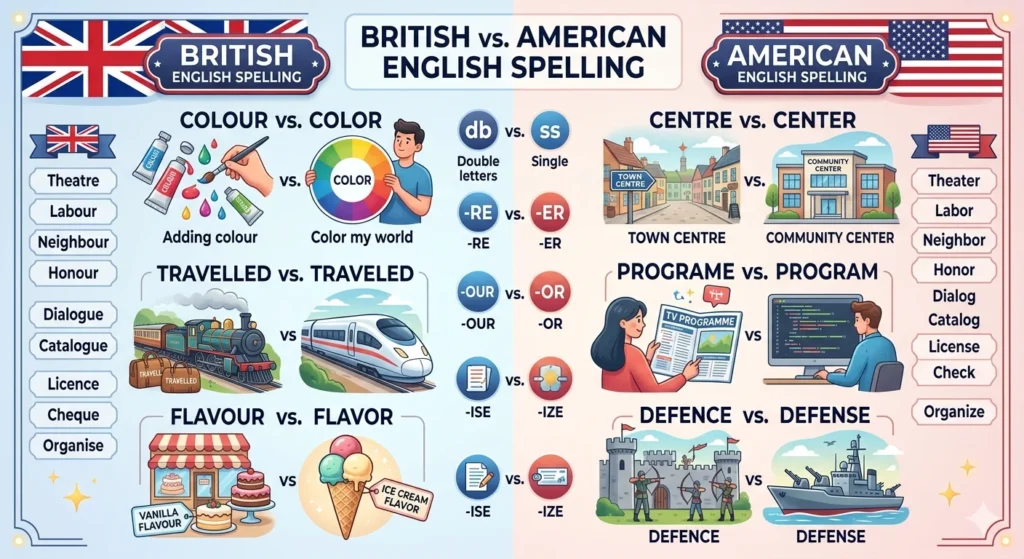
British English vs American English Spelling
Good news:
There is no spelling difference between British and American English for these words.
| Word | British English | American English | Meaning |
|---|---|---|---|
| Censor | Censor | Censor | Block or remove content |
| Censure | Censure | Censure | Express disapproval |
👉 Unlike other words, this is not about UK vs US spelling—it’s about meaning.
Which Spelling Should You Use?
Use based on meaning, not region:
- 🇺🇸 US audience → Use correct meaning (same spelling)
- 🇬🇧 UK/Commonwealth → Same rule
- 🌍 Global writing → Focus on clarity
Tip:
If your sentence is about media, internet, or content, use censor.
If your sentence is about criticism or punishment, use censure.
Common Mistakes with Censor vs Censure
Here are frequent errors:
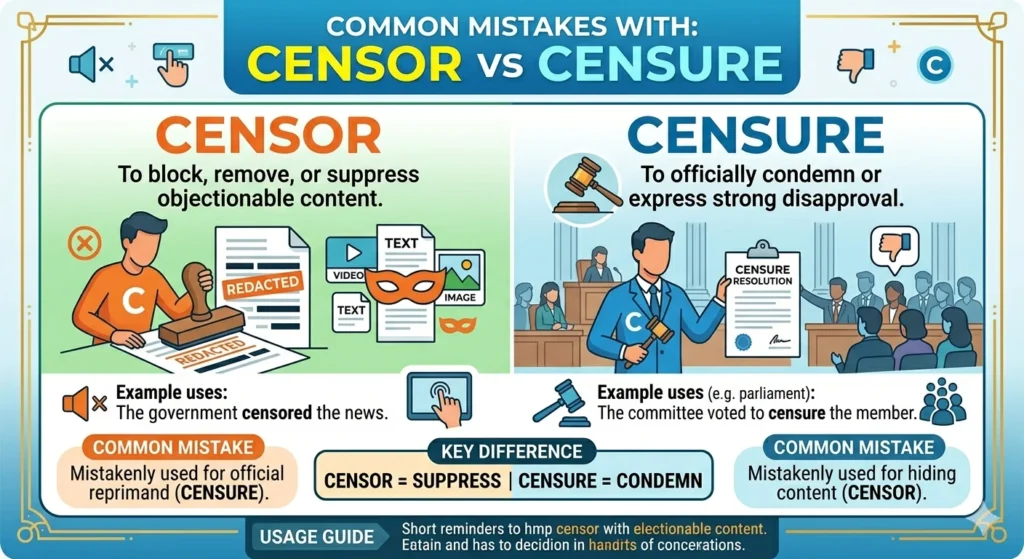
❌ The teacher censored the student for cheating.
✔ The teacher censured the student for cheating.
❌ The app censured violent content.
✔ The app censored violent content.
Related Confusions:
- Censor vs censure vs censorship
- Censorship = the system of controlling content
- Censor vs censure and sensor
- Sensor = a device (like temperature sensor)
- What is the difference between sensing and censoring?
- Sensing = detecting
- Censoring = blocking content
Censor vs Censure in Everyday Examples
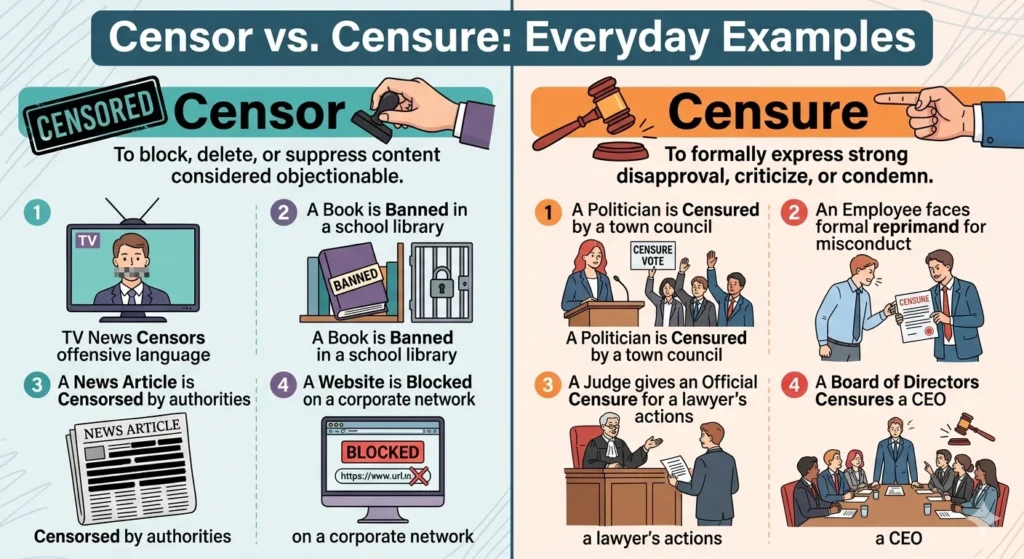
Emails
- We may need to censor private data before sharing.
- The board may censure members for misconduct.
News
- The channel was accused of censoring reports.
- The leader was officially censured.
Social Media
- My post got censored.
- The influencer was censured for offensive comments.
Formal Writing
- Governments sometimes censor information.
- Courts may censure unethical actions.
Censor vs Censure – Google Trends & Usage Data
- Censor is more common worldwide
- Popular in tech, media, and internet topics
- Used heavily in countries like the US, India, and Pakistan
- Censure is less common
- Mostly used in legal, political, and formal writing
👉 This explains why people search censor vs censure vs sensor—they hear one more often than the other.
Comparison Table: Censor vs Censure
| Feature | Censor | Censure |
|---|---|---|
| Meaning | Block or hide content | Criticize strongly |
| Usage | Media, internet | Law, politics |
| Part of Speech | Verb/Noun | Verb/Noun |
| Example | Censor a video | Censure a leader |
| Related Word | Censorship | Disapproval |
FAQs
1. What is the difference between censure and censor?
Censor blocks content. Censure criticizes someone.
2. What does it mean to censor someone?
It means to hide, edit, or remove their content.
3. Is censure a warning?
Not exactly. It is a formal expression of strong disapproval, often official.
4. Censored or censured—what’s correct?
- Censored = content removed
- Censured = person criticized
5. Censure vs censor pronunciation?
- Censor → SEN-ser
- Censure → SEN-shur
6. Can you use censor and censure in a sentence?
Yes:
“The platform censored the post, and the user was censured for breaking rules.”
7. What is the difference between sensing and censoring?
- Sensing = detecting
- Censoring = blocking content
Conclusion
Understanding censor vs censure is simple once you know the core difference. One word deals with content control, while the other deals with criticism. Even though they look similar, using the wrong one can confuse your message.
Remember this easy trick:
- Censor = Content
- Censure = Criticism
There is no British or American spelling difference, so your focus should always be on meaning. In daily use, “censor” appears more often, especially in online and media contexts. Meanwhile, “censure” is mostly used in formal settings like law or politics.
If you write emails, blogs, or professional documents, using these words correctly will improve your clarity and credibility. Always check your sentence context before choosing.
Now that you know the censor vs censure difference, you can use both words with confidence.

“Sylvia Townsend, a witty humorist at PunsBlast, crafting clever puns and playful wordplay that bring smiles to readers everywhere.”