Many people confuse cite vs site vs sight because these words sound the same. They are called homophones. Even though they share the same pronunciation, their meanings are very different. This causes spelling mistakes in emails, essays, blog posts, and social media captions.
People often search questions like “What is the difference between sight site and cite?” or “Is it sighting or citing a document?” because they want the correct word for writing. Students may need “cite” for research papers. Travelers may use “tourist site or sight.” Website owners may wonder, “Is it cite visit or site visit?” These mistakes are common in English.
This guide explains the full cite vs site vs sight difference in simple words. You will learn the meaning of each word, pronunciation, spelling rules, examples, and common mistakes. You will also see comparison tables and real-life examples. By the end, you will know exactly when to use cite, site, or sight in daily writing.
Cite vs Site vs Sight means
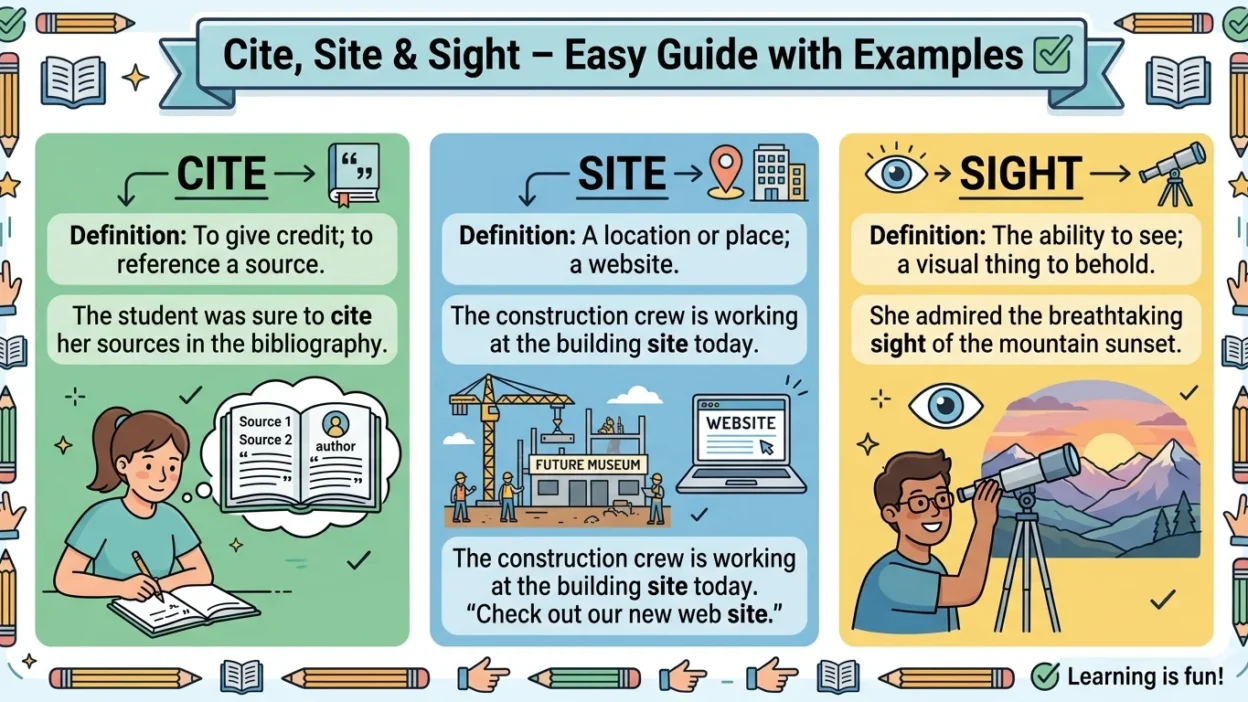
Here is the simple answer to cite vs site vs sight meaning:
| Word | Meaning | Example |
|---|---|---|
| Cite | To mention or quote something | She cited a book in her essay. |
| Site | A place or location | This site is popular with tourists. |
| Sight | Something you see or vision | The sunset was a beautiful sight. |
Quick Examples
- Cite: Please cite your sources.
- Site: We visited the construction site.
- Sight: The mountain was an amazing sight.
This is the easiest way to understand cite vs site vs sight.
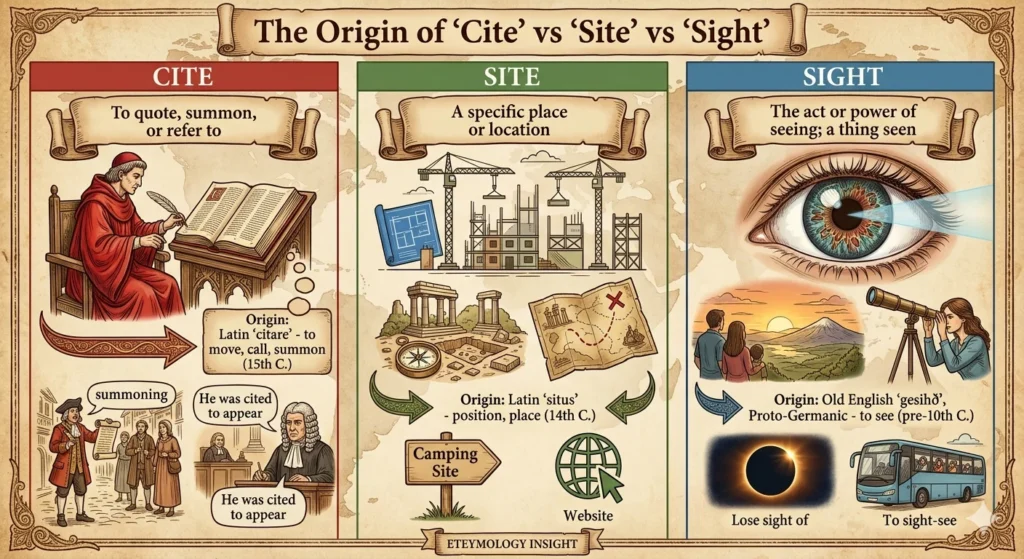
The Origin of Cite vs Site vs Sight
The spelling differences come from the history of English and Latin roots.
Cite
The word cite comes from the Latin word citare, meaning “to call” or “to quote.” Today, it mainly means mentioning a source in writing.
Example:
- Teachers ask students to cite books correctly.
Site
The word site comes from the Latin word situs, meaning “position” or “place.”
Example:
- The hotel site is near the beach.
Sight
The word sight comes from Old English words related to seeing and vision.
Example:
- The view was a wonderful sight.
Even though these words sound the same, their spellings changed over time because of different language origins.
British English vs American English Spelling
The words cite, site, and sight are spelled the same in both British and American English. The main difference is usually context and vocabulary use.
For example:
| American English | British English | Meaning |
|---|---|---|
| Vacation site | Holiday site | Place |
| Cite a source | Cite a source | Mention a reference |
| Beautiful sight | Beautiful sight | Something seen |
Spelling Rules
- Cite is always used for references and quotations.
- Site is always used for locations and websites.
- Sight is always connected to vision or seeing.
Site vs Sight Pronunciation
All three words sound the same:
- Cite = /sait/
- Site = /sait/
- Sight = /sait/
This is why many writers confuse them.
Which Spelling Should You Use?
The correct spelling depends on your meaning.
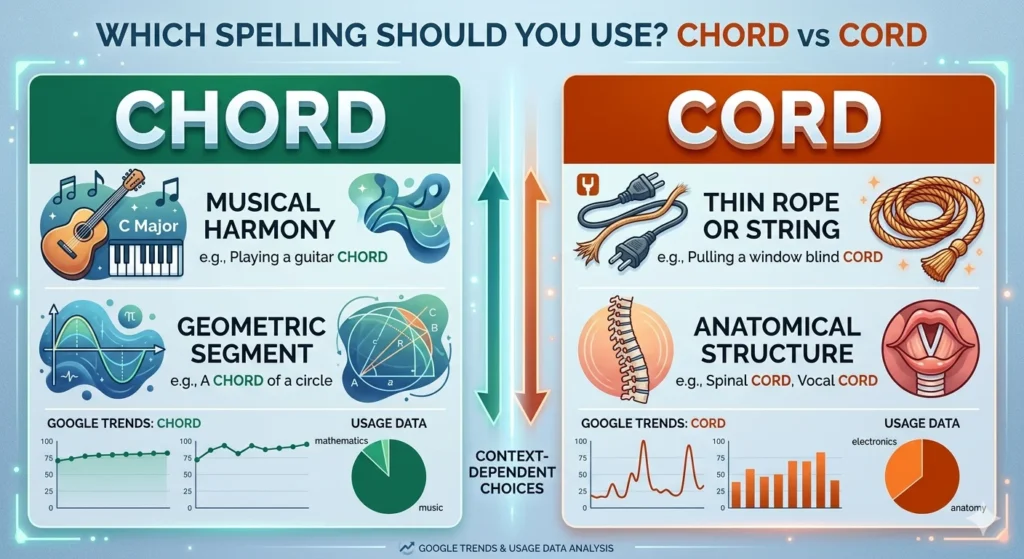
Use “Cite” When:
- Talking about references
- Mentioning books or research
- Quoting information
Example:
- You must cite your sources in academic writing.
Use “Site” When:
- Talking about a place
- Referring to a website
- Mentioning a location
Example:
- Our office site moved downtown.
Use “Sight” When:
- Talking about vision
- Describing something seen
- Mentioning views or attractions
Example:
- The waterfall was a beautiful sight.
Audience-Based Advice
| Audience | Best Word Choice |
|---|---|
| US readers | Standard English usage |
| UK readers | Same spelling rules |
| Global audience | Use simple context clues |
If you are unsure, ask yourself:
- Is it about a source? → Cite
- Is it about a place? → Site
- Is it about seeing? → Sight
Common Mistakes with Cite vs Site vs Sight
Many people mix these words in daily writing.
| Incorrect Sentence | Correct Sentence |
|---|---|
| Please site your sources. | Please cite your sources. |
| The beach was a beautiful site. | The beach was a beautiful sight. |
| We visited a tourist sight online. | We visited a tourist site online. |
Frequent Errors
What does cite mean?
Some people think “cite” means “visit.” It does not. It means mentioning or quoting information.
Is it sighting or citing a document?
Correct: citing a document
Wrong: sighting a document
“Sighting” usually means seeing something briefly.
Is it cite visit or site visit?
Correct: site visit
A site visit means visiting a location.
Out of site or sight
Correct phrase: out of sight
Meaning:
- Not visible
- Hidden from view
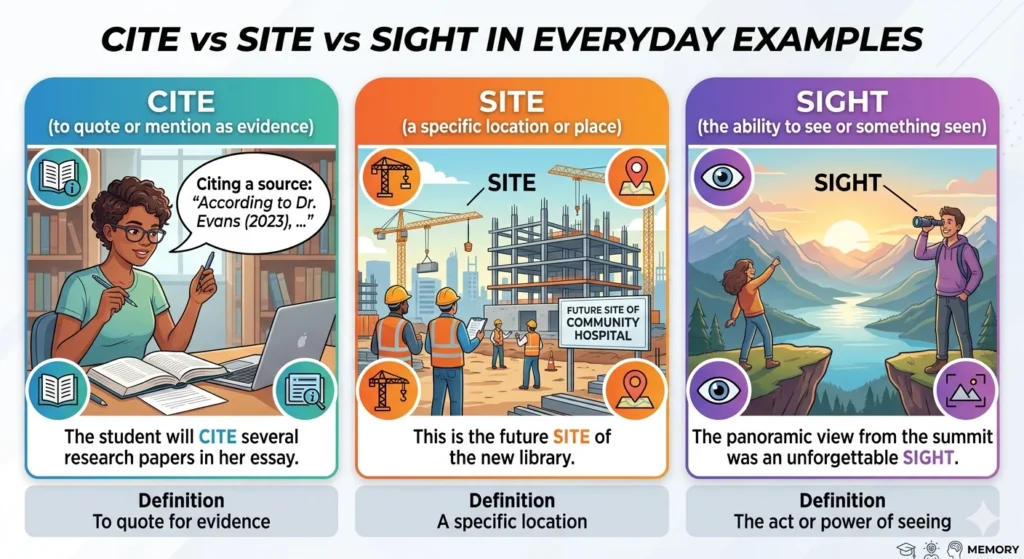
Cite vs Site vs Sight in Everyday Examples
Here are real-life examples to show how these words are used.
Emails
- Please cite the article in your report.
- The meeting site has changed.
- The fireworks were a great sight.
News Writing
- Journalists cite official reports.
- The accident site was closed.
- The eclipse was an unforgettable sight.
Social Media
- “This beach is a perfect sightseeing spot!”
- “Check out my new website site.”
- “Always cite your facts online.”
Formal Writing
- Researchers must cite evidence.
- The building site opened last year.
- The museum is a historic sight.
Use Site and Sight in a Sentence
- The tourist site was an incredible sight.
- We lost sight of the boat near the site.
Site or Cite an Example
- Cite an example from the book.
- Visit the company site for details.
Tourist Site or Sight
Both can work, but meanings differ:
- Tourist site = location people visit
- Tourist sight = something worth seeing
Cite vs Site vs Sight – Google Trends & Usage Data
The popularity of these words changes by context.
| Word | Most Common Use |
|---|---|
| Cite | Education and research |
| Site | Websites and locations |
| Sight | Travel and vision |
Popular Usage by Country
| Country | Most Searched Variation |
|---|---|
| United States | Cite vs site |
| United Kingdom | Site vs sight |
| India | Cite site sight meaning |
| Canada | Cite vs site vs sight difference |
Why People Search These Terms
People often search:
- “What is the difference between sight site and cite?”
- “What does cite mean?”
- “Use site and sight in a sentence”
This shows that many English learners and writers struggle with homophones.
Comparison Table: Cite vs Site vs Sight
| Feature | Cite | Site | Sight |
|---|---|---|---|
| Meaning | Mention a source | Place or location | Something seen |
| Part of Speech | Verb | Noun | Noun |
| Used in Research | Yes | No | No |
| Used for Websites | No | Yes | No |
| Related to Vision | No | No | Yes |
| Example | Cite a book | Website site | Beautiful sight |
FAQs
What is the difference between sight site and cite?
- Cite = mention a source
- Site = location or website
- Sight = something seen
What does cite mean?
“Cite” means to quote or mention information from another source.
Is it sighting or citing a document?
The correct phrase is citing a document.
Is it cite visit or site visit?
The correct phrase is site visit because it refers to a location.
What is a tourist site?
A tourist site is a place people visit for travel or history.
What is a tourist sight?
A tourist sight is something visually interesting to see.
How do you remember cite vs site vs sight?
- Cite → citation
- Site → location
- Sight → seeing
Conclusion
Understanding cite vs site vs sight is important for clear writing. These three words sound the same, but their meanings are completely different. “Cite” relates to references and sources. “Site” refers to a place, location, or website. “Sight” connects to vision and things you see.
Many people confuse these words because English has many homophones. Still, learning the correct meaning is simple when you focus on context. If you are writing a research paper, use cite. If you are talking about a website or place, use site. If you are describing something visible or beautiful, use sight.
This confusion appears often in emails, blogs, social media, and formal writing. That is why searches like “What is the difference between sight site and cite?” remain popular online. Using the correct spelling improves grammar, professionalism, and reader trust. With the examples and tips in this guide, you can now confidently choose the right word every time.

“May Sinclair, a playful wordsmith at PunsBlast, turning clever puns and witty humor into daily laughs that brighten readers’ days.”