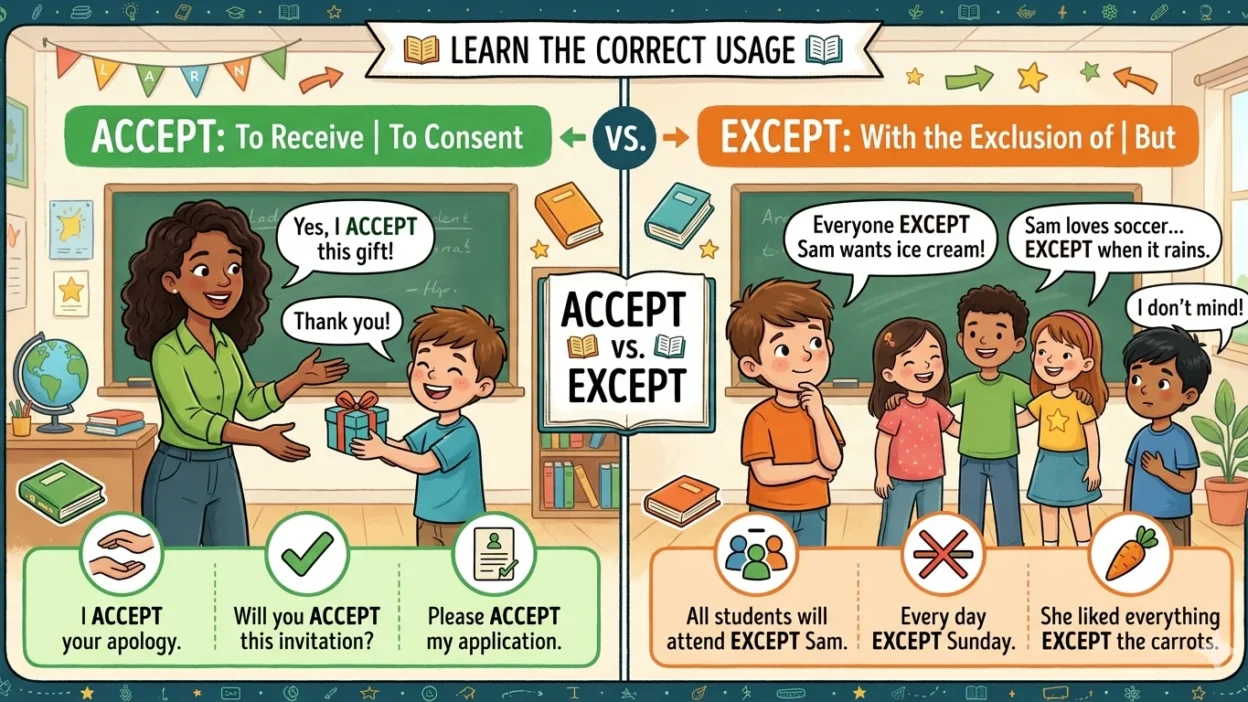
Many English learners confuse accept vs except because the two words sound almost the same.
They are often called accept and except homophones because their pronunciation is very close. But their meanings are completely different.
People search for What is the difference between accept and except? because these words appear in school writing, emails, social media posts, and business communication. A small spelling mistake can completely change the meaning of a sentence.
For example:
- “I accept your apology” is correct.
- “I except your apology” is wrong.
This confusion becomes bigger when people also add the word “expect.” That is why many users search for accept vs except vs expect and ask, What’s the difference between accept except and expect?
In this guide, you will learn:
- Accept vs except meaning
- Grammar rules
- Easy examples
- Common mistakes
- Pronunciation tips
- Usage advice for formal and casual writing
By the end, you will know exactly when to use accept vs except with confidence.
Accept vs Except means
The main difference is simple:
| Word | Meaning | Example |
|---|---|---|
| Accept | To receive, agree, or approve | I accept your offer. |
| Except | Not including | Everyone came except Ali. |
Easy Examples
- She will accept the gift.
- Everyone passed the test except one student.
So, if you are asking What is the difference between accept and except me?, here is the answer:
- “Accept me” = choose me or approve me.
- “Except me” = leave me out.
Accept vs Except Meaning
- Accept meaning: to say yes, receive, or believe.
- Except meaning: excluding someone or something.
These are among the most commonly confused words accept vs except in English grammar.
The Origin of Accept vs Except
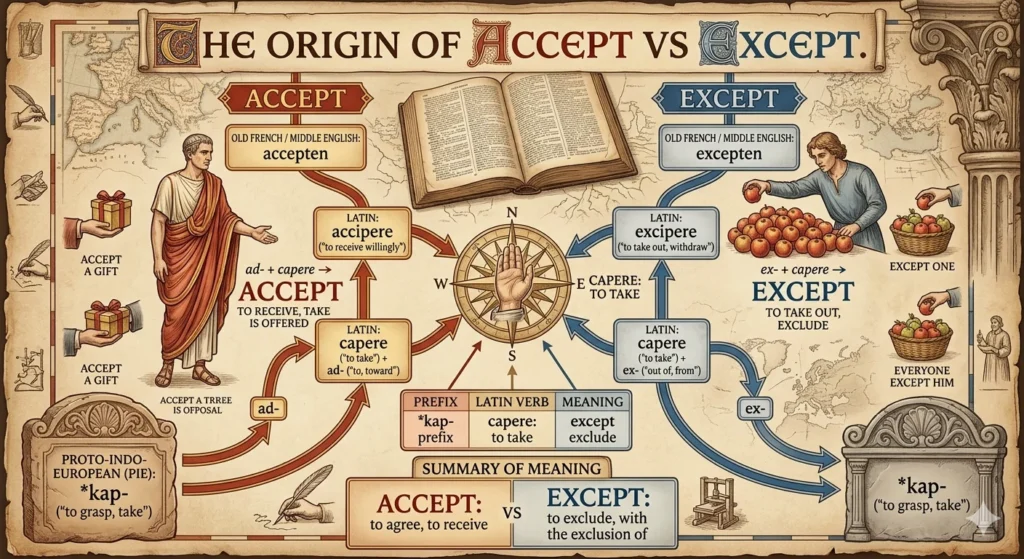
The words accept and except come from Latin roots. That is why they look and sound similar.
Accept Origin
The word accept comes from the Latin word acceptare, which means “to receive willingly.”
Over time, English speakers used it to mean:
- receive
- agree
- approve
Example:
- They accepted the invitation.
Except Origin
The word except comes from the Latin word exceptus, meaning “taken out.”
That is why it means:
- excluding
- leaving out
Example:
- Everyone came except Sara.
Why the Spelling Difference Exists
The prefixes help explain the meaning:
- Ac- in accept relates to receiving.
- Ex- in except relates to removing or excluding.
Understanding the origin makes accept vs except grammar much easier.
British English vs American English Spelling
There is no major spelling difference between British and American English for accept vs except. Both countries use the same spelling.
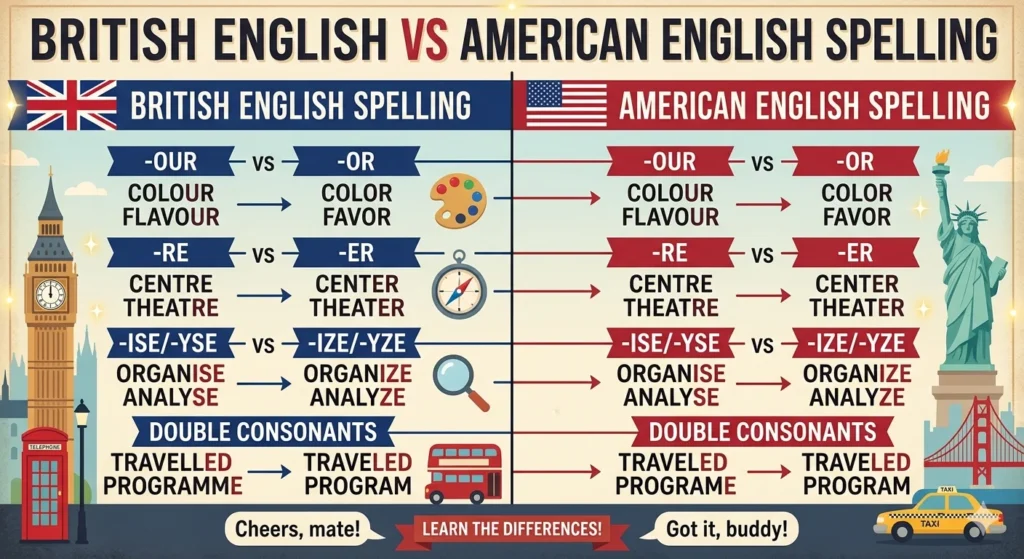
However, sentence style and punctuation may differ slightly.
Comparison Table
| Usage | American English | British English |
|---|---|---|
| I accept your offer. | Correct | Correct |
| Everyone except Tom came. | Correct | Correct |
| Formal business writing | Common | Common |
| School grammar teaching | Common | Common |
Example Sentences
American English
- Please accept our apology.
British English
- Everyone except James attended the meeting.
So, there is no spelling battle here like “color vs colour.” The confusion is only about meaning and usage.
Which Spelling Should You Use?
You should use the correct word based on meaning, not location.
Use “Accept” When You Mean:
- agree
- receive
- approve
Examples:
- I accept your idea.
- She accepted the award.
Use “Except” When You Mean:
- excluding
- leaving out
Examples:
- Everyone came except him.
- I like all fruits except bananas.
Audience-Based Advice
| Audience | Best Choice |
|---|---|
| US readers | Use standard grammar |
| UK readers | Use standard grammar |
| Global audience | Keep sentences simple and clear |
No matter where your readers live, the meanings stay the same.
Common Mistakes with Accept vs Except
Many learners mix these words because they sound alike.
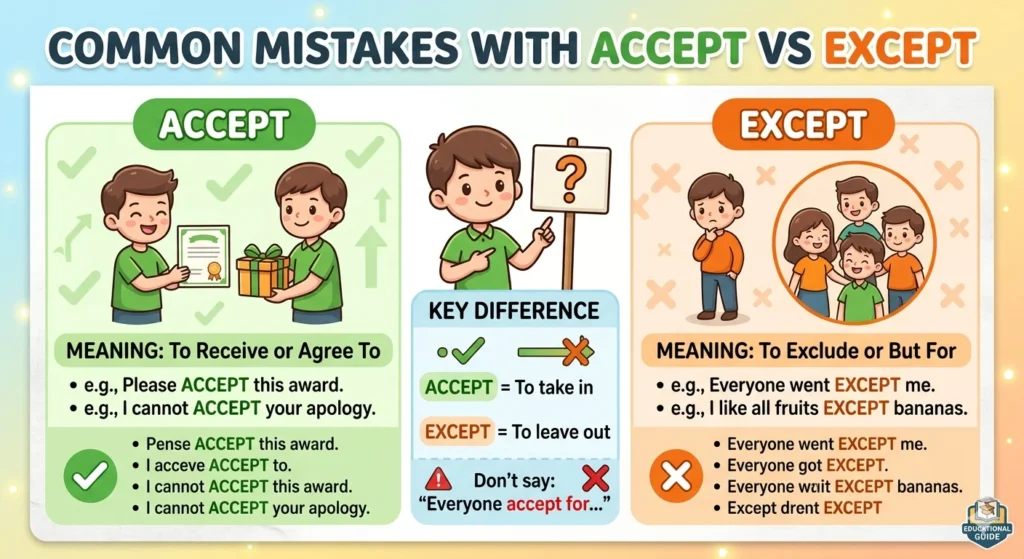
Mistake 1
❌ I except your apology.
✅ I accept your apology.
If you ask, Is it accept or except my apology? the correct answer is:
✅ “Accept my apology.”
Mistake 2
❌ Everyone came accept Ali.
✅ Everyone came except Ali.
Mistake 3
❌ Please except this gift.
✅ Please accept this gift.
Mistake 4: Mixing Accept, Except, and Expect
People often search for accept vs except vs expect because all three sound similar.
| Word | Meaning |
|---|---|
| Accept | Receive or agree |
| Except | Excluding |
| Expect | Think something will happen |
Examples
- I accept your answer.
- Everyone came except Ahmed.
- I expect rain tomorrow.
Accept vs Except in Everyday Examples
Understanding accept vs except examples becomes easier with real-life situations.
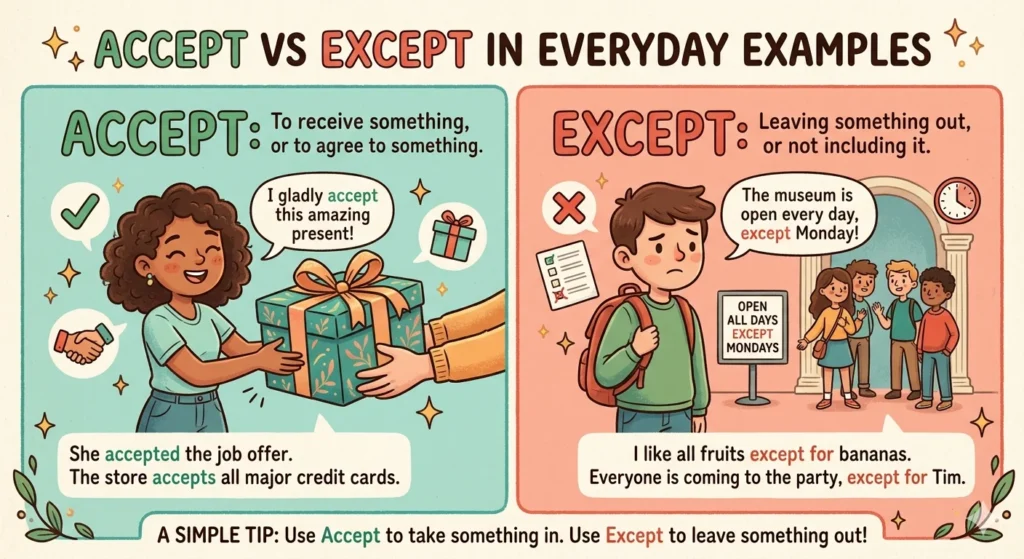
In Emails
- We accept your request.
- Everyone received the email except John.
In News Writing
- The company accepted the proposal.
- All areas except downtown were affected.
In Social Media
- “I finally accepted myself.”
- “Everyone is here except me!”
In Formal Writing
- The university accepted her application.
- All members except the chairman voted yes.
Accept vs Except Sentences
- Please accept this award.
- Nobody answered except Sarah.
- He accepted the job offer.
- Every shop was open except one.
These are great accept vs except usage examples for students and writers.
Accept vs Except – Google Trends & Usage Data
Search data shows that many people struggle with accept vs except difference usage.
Popular Searches
People often search:
- What is accept vs except?
- Accept vs except grammar
- Accept vs except pronunciation
- Accept vs except worksheet
- Accept vs except quiz
- Accept vs except practice
Usage by Country
| Country | Common Search |
|---|---|
| United States | accept vs except meaning |
| United Kingdom | accept vs except usage |
| India | accept vs except examples |
| Pakistan | accept vs except grammar |
| Canada | accept vs except vs expect |
Why the Confusion Happens
The confusion exists because:
- the words sound similar
- both are common in English
- spell-check tools may not catch mistakes
Accept vs Except Pronunciation
The pronunciation is very close:
| Word | Pronunciation |
|---|---|
| Accept | ak-SEPT |
| Except | ik-SEPT |
The beginning sound changes slightly, but many speakers pronounce them almost the same in fast speech.
That is why learners search for accept vs except pronunciation online.
Accept vs Except Worksheet Ideas
Teachers often use an accept vs except worksheet pdf to help students practice.
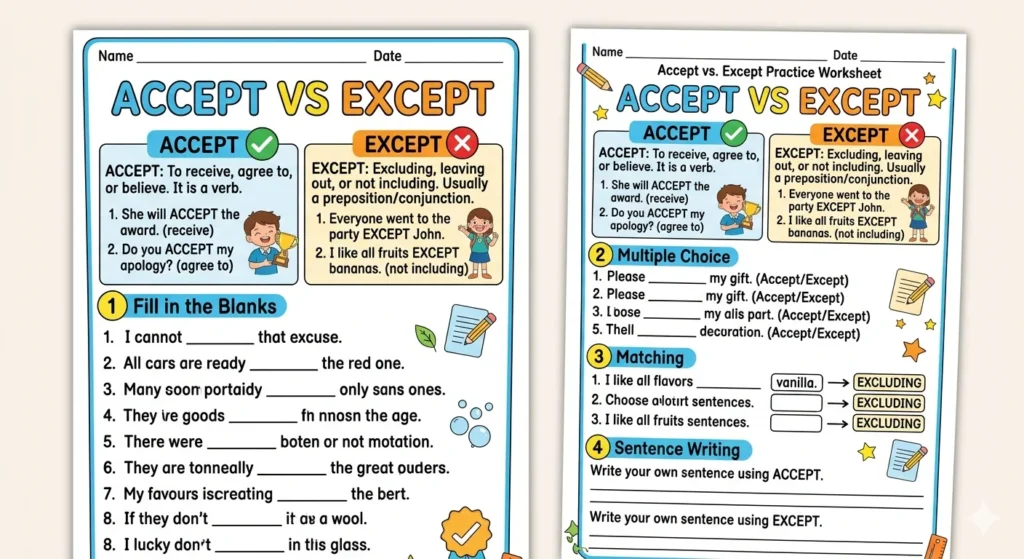
Practice Questions
Fill in the blanks:
- I ______ your invitation.
- Everyone came ______ Ali.
- She will ______ the prize.
- All students passed ______ one.
Answers
- accept
- except
- accept
- except
This kind of accept vs except practice improves grammar skills quickly.
Accept vs Except Quiz
Choose the Correct Word
- Please ___ my thanks.
- Everyone ___ Tom arrived early.
- I ___ good news tomorrow.
Answers
- accept
- except
- expect
This simple accept vs except quiz also teaches the difference between accept vs except vs expect.
Accept vs Except Meme
Many grammar memes joke about these confusing words.
Example meme idea:
“I can accept everyone… except people who confuse accept and except.”
Grammar humor helps learners remember the correct meaning.
FAQs About Accept vs Except
What is the difference between accept and except?
Accept means receive or agree.
Except means excluding or leaving out.
Is it accept or except my apology?
The correct phrase is:
✅ “Accept my apology.”
What is the difference between accept and except me?
- “Accept me” = include or approve me.
- “Except me” = leave me out.
What’s the difference between accept except and expect?
- Accept = receive
- Except = excluding
- Expect = believe something will happen
Are accept and except homophones?
Yes. They sound very similar, so they are often called near-homophones.
How can I remember accept vs except?
A simple trick:
- Accept → think “agree”
- Except → think “exclude”
Why do people confuse accept vs except?
Because the words:
- sound alike
- have similar spelling
- appear in everyday writing
Conclusion
Understanding accept vs except is important for clear English writing. Even though the words sound similar, their meanings are very different. Accept means to receive, agree, or approve, while except means excluding or leaving something out.
This small difference can completely change the meaning of a sentence. For example, “I accept your apology” is correct, but “I except your apology” is not. That is why many students and writers search for accept vs except meaning, accept vs except grammar, and accept vs except usage examples.
The best way to master these words is through practice. Read examples, complete quizzes, and use the words in daily writing. Also remember the third confusing word: expect. Knowing the difference between accept vs except vs expect will improve your grammar and confidence.
Whether you are writing emails, essays, social media posts, or business messages, using the correct word makes your writing look more professional and easier to understand.

“Sylvia Townsend, a witty humorist at PunsBlast, crafting clever puns and playful wordplay that bring smiles to readers everywhere.”