Many English learners and even native speakers get confused about advice vs advise. The words look almost the same, sound similar, and often appear in the same situations.
That is why people search questions like “When should I use advice or advise?”, “Can you please advise or advice me?”, and “Please advice vs advise” every day.
The confusion usually happens because one word is a noun and the other is a verb. A small spelling change creates a big grammar difference. If you use the wrong one in emails, school writing, business messages, or social media posts, your sentence may look incorrect.
In this guide, you will learn the full advice vs advise meaning, grammar rules, pronunciation, sentence examples, UK vs US spelling differences, and common mistakes. You will also see easy tables and real-life examples that help you remember the correct usage forever.
Advice vs Advise means
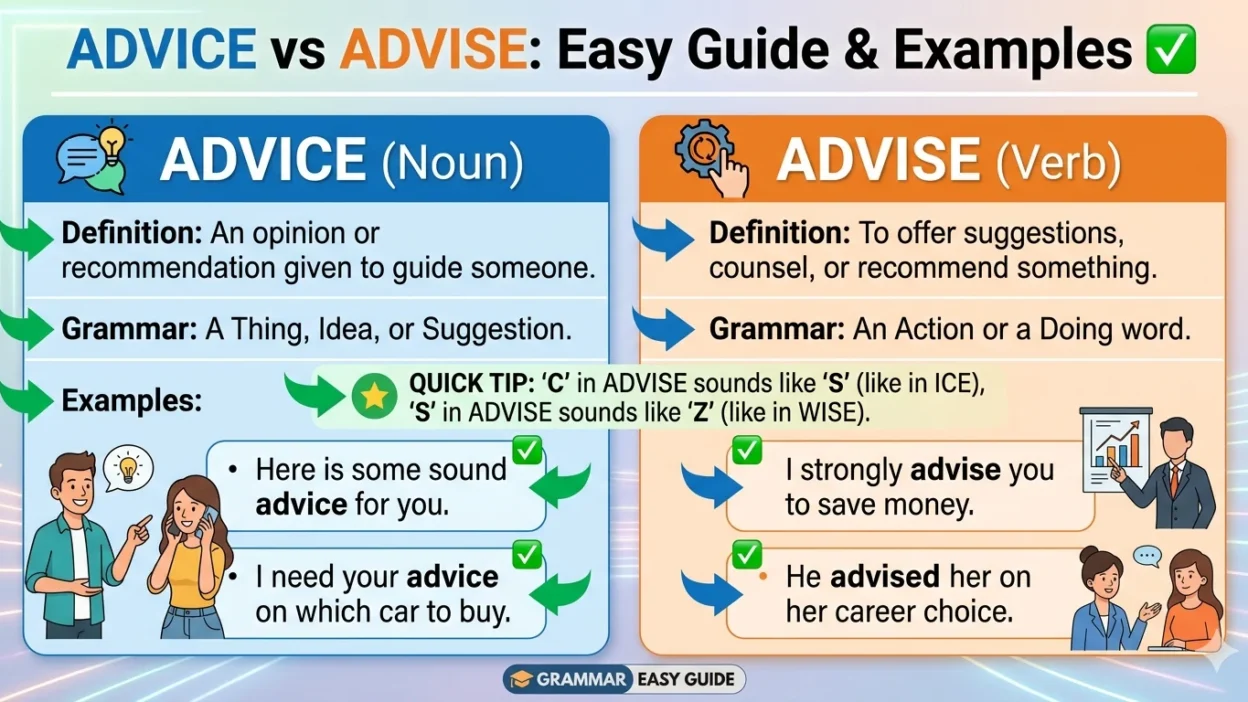
The difference is simple:
- Advice = a noun (a suggestion or recommendation)
- Advise = a verb (to give a suggestion or recommendation)
Examples
| Word | Part of Speech | Example Sentence |
|---|---|---|
| Advice | Noun | She gave me good advice. |
| Advise | Verb | I advise you to study early. |
Easy Trick to Remember
- Advice → thing
- Advise → action
Quick Examples
- “Can I give you some advice?” ✅
- “Can you advise me?” ✅
- “Please advise me soon.” ✅
- “Please advice me soon.” ❌
This is the basic advice vs advise grammar difference.
The Origin of Advice vs Advise
The words came from Old French and Latin roots. Both words are connected to the idea of giving opinions, recommendations, or guidance.
- Advice entered English as a noun.
- Advise entered English as a verb.
Over time, English kept both spellings to show different grammar roles.
Why the Spellings Are Different
English often changes word endings to show function:
| Noun | Verb |
|---|---|
| device | devise |
| practice | practise (UK) |
| advice | advise |
The “-ice” ending usually sounds softer, while “-ise” sounds more active.
This history explains the modern advice vs advise definition and usage rules.
British English vs American English Spelling
Many users search for advice vs advise UK or advice vs advise British English because English spelling changes in some countries.
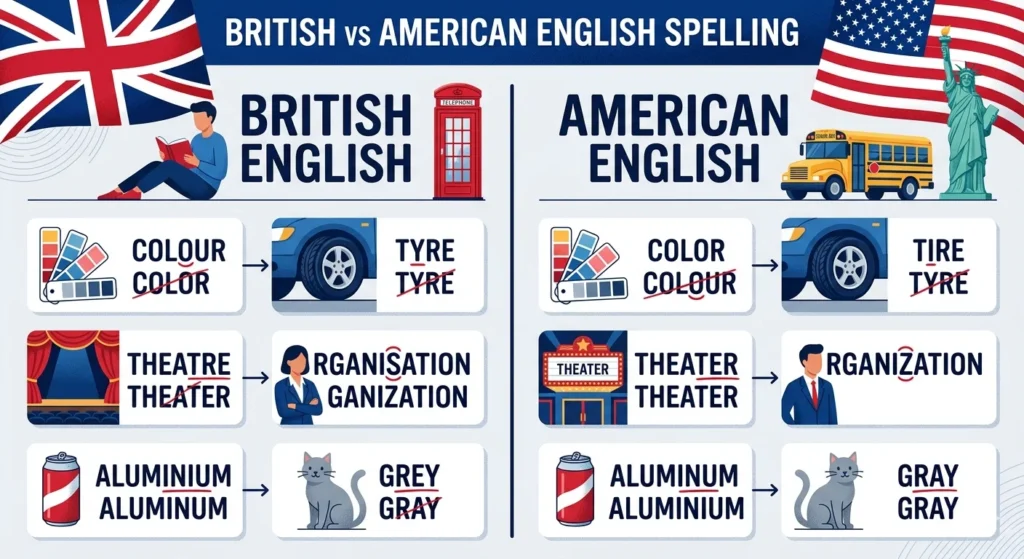
For these two words, the spelling is actually the same in both British and American English.
UK and US Usage
| Meaning | British English | American English |
|---|---|---|
| Noun | advice | advice |
| Verb | advise | advise |
So there is no major spelling difference between the UK and the US for these words.
Pronunciation Difference
The biggest difference is pronunciation.
| Word | Pronunciation |
|---|---|
| Advice | ad-VICE |
| Advise | ad-VIZE |
This is why many people search for advice vs advise pronunciation online.
Which Spelling Should You Use?
The correct choice depends on grammar, not location.
Use “Advice” When:
You are talking about a suggestion, opinion, or recommendation.
Examples
- Thank you for your advice.
- His advice helped me.
- I need career advice.
Use “Advise” When:
You are talking about the action of giving recommendations.
Examples
- I advise you to rest.
- Doctors advise drinking water.
- Please advise me on this issue.
Audience-Based Advice
| Audience | Best Usage |
|---|---|
| US readers | Follow standard grammar rules |
| UK readers | Same grammar rules apply |
| Global audience | Use simple and clear English |
Whether you write for the UK, USA, Pakistan, India, or Canada, the advice vs advise usage difference stays the same.
Common Mistakes with Advice vs Advise
Many people mix these words in formal writing, emails, and social media.
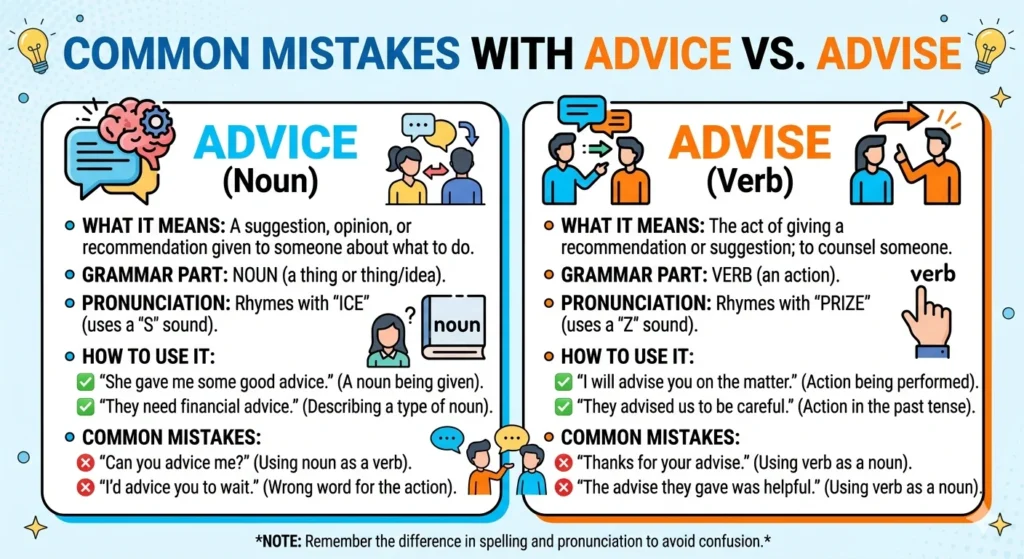
Common Error #1
❌ Please advice me.
✅ Please advise me.
Common Error #2
❌ He gave me many advises.
✅ He gave me much advice.
✅ He gave me many suggestions.
Common Error #3
❌ I need you to advice me.
✅ I need you to advise me.
Common Error #4
❌ Your advise was helpful.
✅ Your advice was helpful.
Common Error #5
❌ Payment advise attached.
✅ Payment advice attached.
People also search payment advice or advise because business emails often use this phrase. The correct business term is payment advice.
Advice vs Advise in Everyday Examples
Here are real-life advise vs advice examples used in daily communication.
In Emails
- Please advise me about the meeting time.
- Thank you for your advice regarding the project.
In News Writing
- Experts advise people to stay indoors.
- Financial advice should come from professionals.
In Social Media Posts
- Can someone advise me on buying a laptop?
- My best advice is to stay consistent.
In Formal Writing
- The lawyer advised the client carefully.
- The manager offered useful advice.
Advice vs Advise in a Sentence
| Correct Sentence | Word Used |
|---|---|
| She gave me great advice. | Advice |
| I advise checking the details first. | Advise |
| Their advice saved time. | Advice |
| Teachers advise students daily. | Advise |
Advice vs Advise Meaning
Understanding the exact meaning helps avoid mistakes.
| Word | Meaning |
|---|---|
| Advice | Guidance or recommendation |
| Advise | To recommend or guide someone |
Meaning Advice vs Advise
- Advice meaning → a helpful opinion
- Advise meaning → the act of giving guidance
This is the core advice vs advise difference usage rule.
Advice vs Advise in Urdu
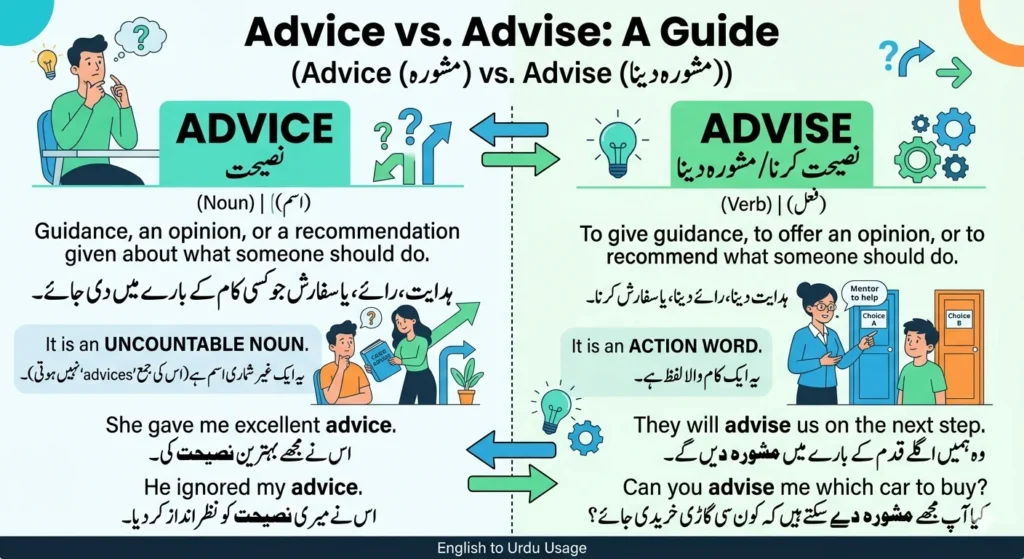
Many learners search for advice vs advise in Urdu to understand the grammar better.
| English Word | Urdu Meaning |
|---|---|
| Advice | مشورہ |
| Advise | مشورہ دینا |
Urdu Example
- He gave me advice.
→ اس نے مجھے مشورہ دیا۔ - I advise you to study.
→ میں تمہیں پڑھنے کا مشورہ دیتا ہوں۔
Advice vs Advise – Google Trends & Usage Data
Search data shows that millions of people search advice vs advise every year because the words are confusing.
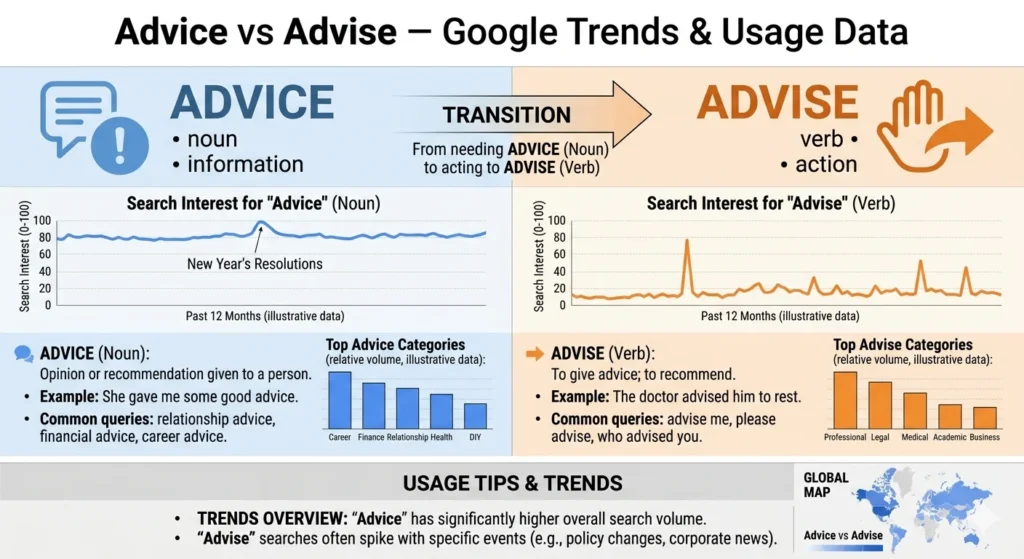
Countries With High Search Interest
- Pakistan
- India
- United Kingdom
- United States
- Philippines
Common Search Queries
People often search:
- When should I use advice or advise?
- Can you please advise or advice me?
- Please advice vs advise
- Advice vs advise grammar
- Advice vs advise exercises
- How to use advise in a sentence?
Why the Keyword Is Popular
The confusion happens because:
- The words sound similar.
- The spellings are close.
- One is a noun and one is a verb.
- Business emails often use these words.
Comparison Table: Advice vs Advise
| Feature | Advice | Advise |
|---|---|---|
| Part of Speech | Noun | Verb |
| Meaning | Suggestion | To give suggestions |
| Example | Good advice helps. | I advise patience. |
| Used as Action? | No | Yes |
| Used as Thing? | Yes | No |
| Pronunciation | ad-VICE | ad-VIZE |
FAQs About Advice vs Advise
1. When should I use advice or advise?
Use advice as a noun and advise as a verb.
2. Can you please advise or advice me?
Correct sentence: “Can you please advise me?”
3. Can I give you some advice or advise?
Correct sentence: “Can I give you some advice?”
4. How to use advise in a sentence?
Example: “I advise you to arrive early.”
5. What is the difference between advice and advise?
Advice is a thing. Advise is an action.
6. Is “please advice” correct?
No. The correct phrase is please advise.
7. What is the pronunciation of advice vs advise?
- Advice → ad-VICE
- Advise → ad-VIZE
Conclusion
Understanding advice vs advise becomes easy once you remember one simple rule: advice is a noun and advise is a verb. Advice is the recommendation itself, while advise is the act of giving that recommendation. This small grammar rule helps you write better emails, social media posts, school assignments, and professional documents.
Many learners make mistakes like “please advice me” or “can you advice me?” because the words look very similar. However, using the correct form improves your English and makes your writing more professional. The easiest trick is to ask yourself whether you need a “thing” or an “action.” If it is a suggestion, use advice. If someone is giving guidance, use advise.
No matter if you use British English, American English, or global English, these grammar rules stay the same. Practice the examples, remember the pronunciation difference, and you will confidently use both words correctly in daily life.

“May Sinclair, a playful wordsmith at PunsBlast, turning clever puns and witty humor into daily laughs that brighten readers’ days.”