
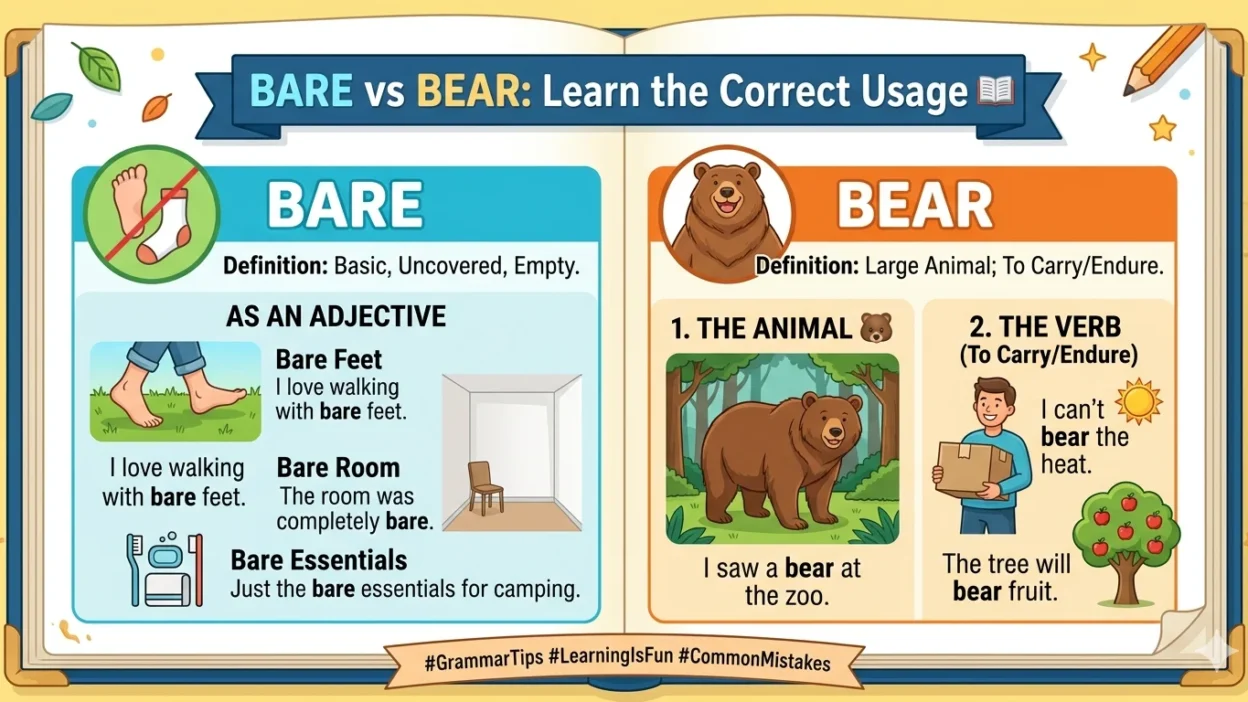
Many people search for bare vs bear because these two words sound the same but mean very different things. This is a classic case of homophones—words that sound alike but have different meanings and spellings. This confusion can lead to mistakes in emails, exams, and even professional writing.
For example, you may wonder: Is it bare with me or bear with me? Or I can’t bear it or bare it? These small errors can change the meaning of a sentence completely.
This article clears that confusion in a simple way. You’ll learn the bare vs bear meaning, their correct usage, common mistakes, and easy examples. By the end, you’ll confidently use both words without hesitation.
Bare vs Bear means
Bare vs bear meaning difference:
- Bare = uncovered, empty, or plain
Example: She walked on the bare floor. - Bear = to carry, hold, or tolerate
Example: I can’t bear the pain.
👉 Correct usage:
- ✔️ Bear with me (be patient)
- ❌ Bare with me (wrong)
The Origin of Bare vs Bear
Understanding the definition of bare vs bear becomes easier when you know their roots.
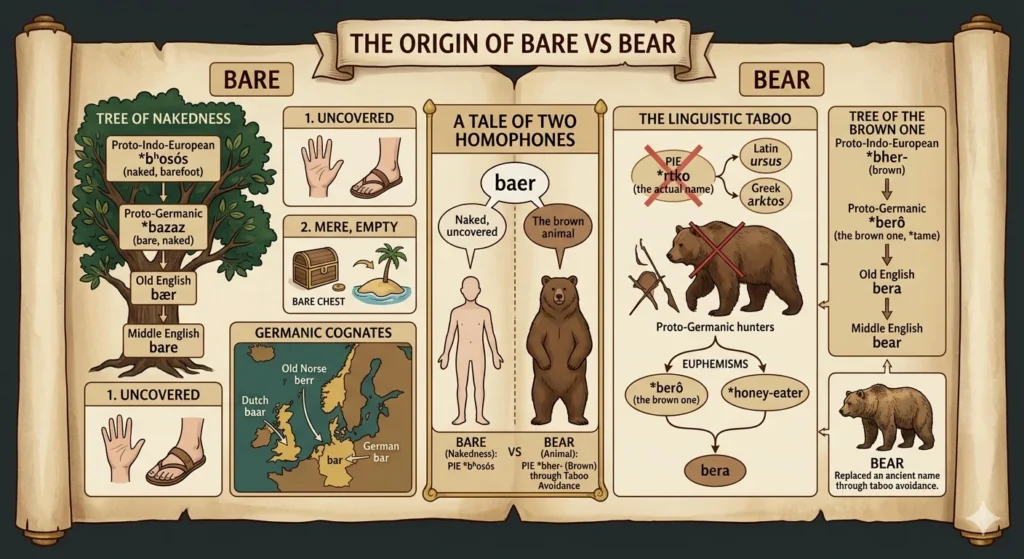
- Bare comes from Old English “bær”, meaning uncovered or naked.
- Bear comes from Old English “beran”, meaning to carry or support.
This is why:
- Bare vs bear weight → “bear weight” is correct (to carry weight)
- Bare vs bear fruit → “bear fruit” means to produce results
The spelling difference exists because they come from different historical roots but evolved to sound the same.
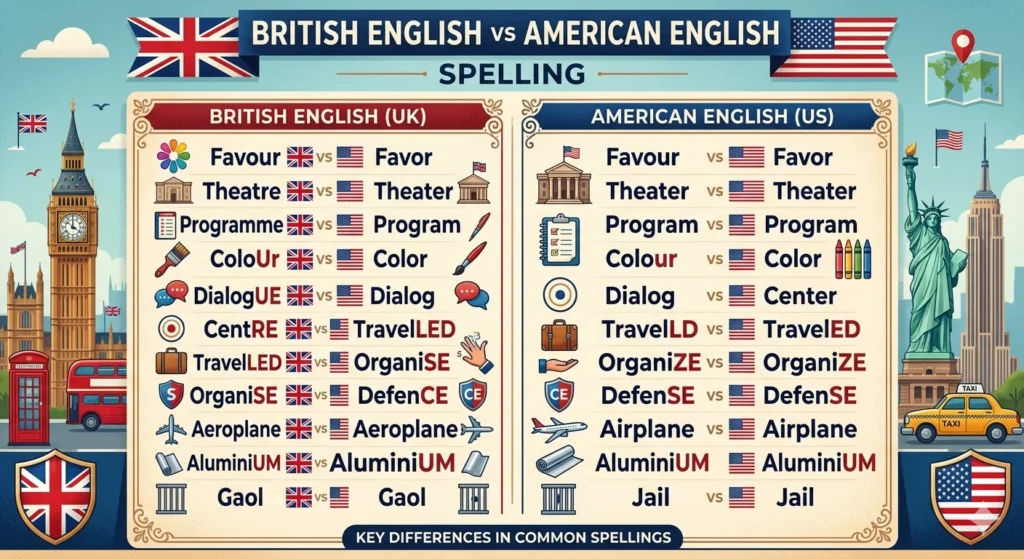
British English vs American English Spelling
Good news: bare vs bear spelling difference does NOT change between UK and US English.
| Usage | British English | American English |
|---|---|---|
| Bare (uncovered) | bare | bare |
| Bear (carry/tolerate) | bear | bear |
| Bear with me | bear | bear |
👉 Unlike other words, there is no variation here.
Which Spelling Should You Use?
Use the correct word based on meaning:
- US, UK, Global English → Same rule applies
- Writing formally? Always use correct meaning:
- Bear with me (correct)
- Bear the cost (correct)
- Bare the pain ❌ (wrong)
👉 Tip:
If the meaning is about carrying, تحمل (in Urdu), or patience, use bear.
Common Mistakes with Bare vs Bear
Here are frequent errors:
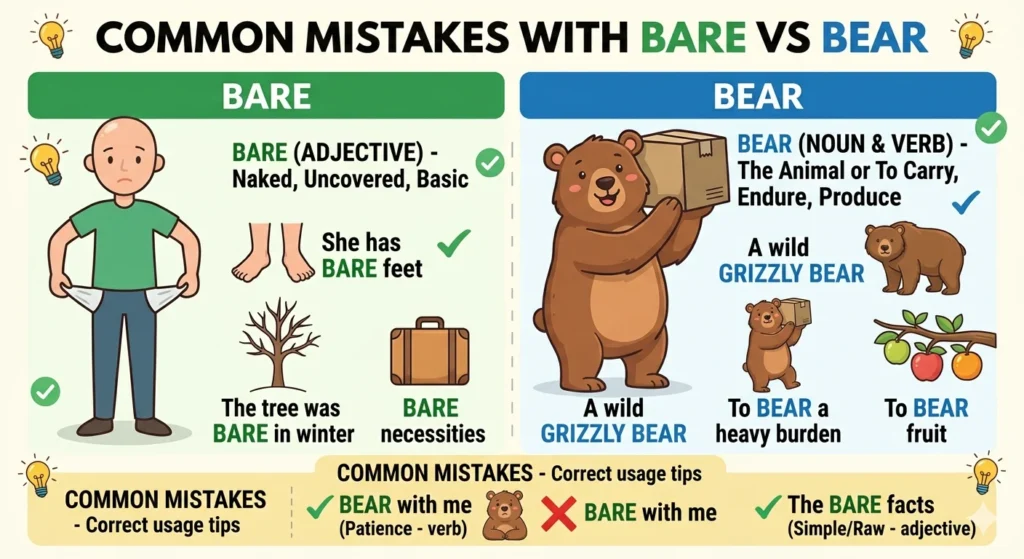
❌ Bare with me
✔️ Bear with me
❌ I can’t bare it
✔️ I can’t bear it
❌ Bear pain or bare pain?
✔️ Bear pain (tolerate pain)
❌ Too much to bare vs bear
✔️ Too much to bear
❌ Bare or bear the thought?
✔️ Bear the thought
👉 These mistakes happen because of confusion meaning: mixing similar-sounding words.
Bare vs Bear in Everyday Examples
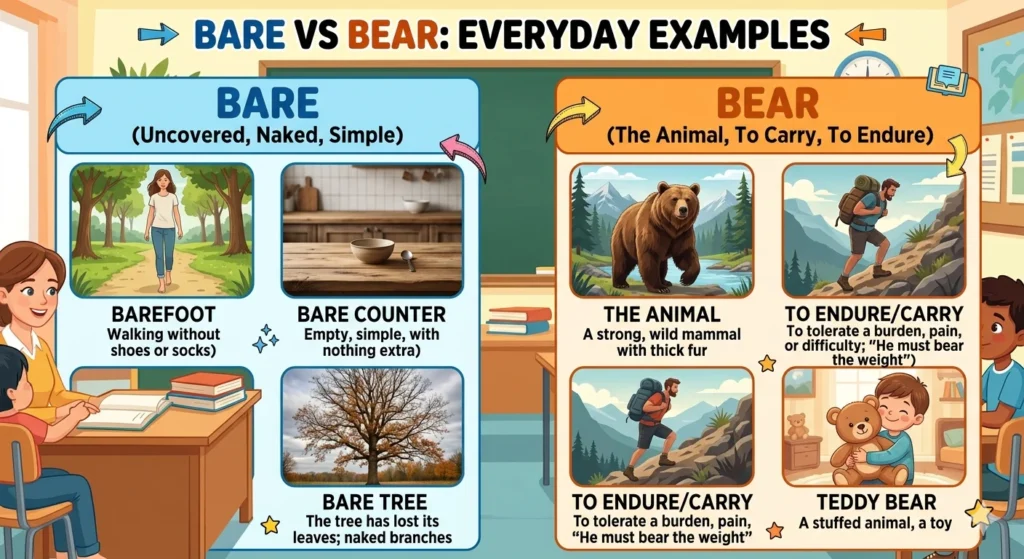
Emails
- “Please bear with me while I check.”
News
- “The company will bear the cost of repairs.”
Social Media
- “I can’t bear it anymore!”
Formal Writing
- “The bridge must bear weight safely.”
More Sentences
- Bare vs bear sentences:
- He stood on the bare ground.
- She cannot bear the noise.
Bare vs Bear – Google Trends & Usage Data
Search data shows:
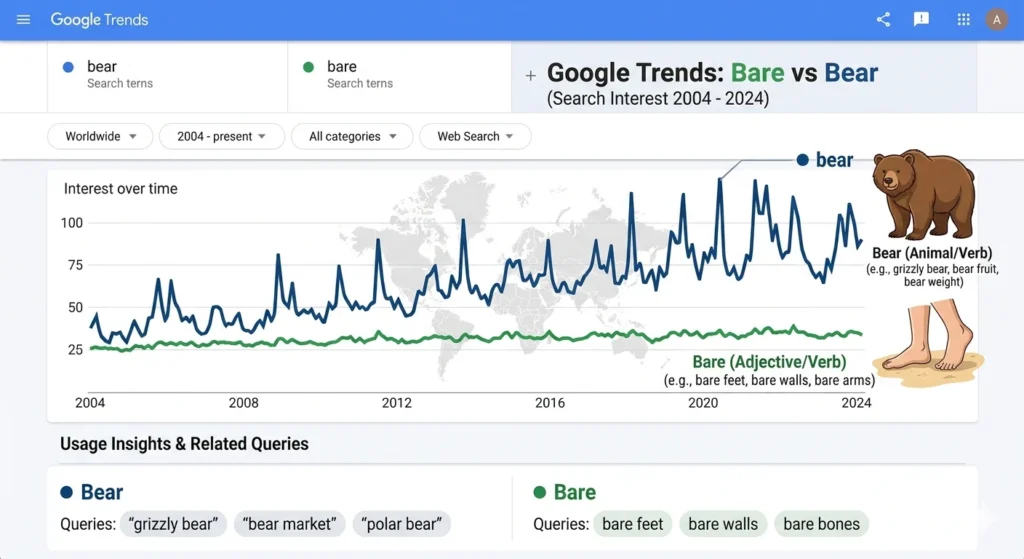
- “Bear with me” is far more popular than “bare with me”
- High usage in:
- USA
- UK
- Pakistan & India (learning context)
People often search:
- Is it bare with me or bear with me now?
- Bear or bare the pain
- Bear or bare the cost
This shows global confusion in English learners.
Comparison Table (Bare vs Bear)
| Feature | Bare | Bear |
|---|---|---|
| Meaning | uncovered | carry/tolerate |
| Part of Speech | adjective/verb | verb/noun |
| Example | bare feet | bear weight |
| Common phrase | bare minimum | bear with me |
| Usage | physical state | action/emotion |
FAQs
1. Is it bare with me or bear with me?
✔️ Bear with me is correct. It means “be patient.”
2. I can’t bear it or bare it?
✔️ I can’t bear it (tolerate something).
3. What is bare vs bear pronunciation?
Both sound the same: /ber/
4. What does confusion mean?
Confusion meaning: a state of not understanding clearly.
Confusion in Urdu: الجھن
5. What is the synonym of confusion?
Common confusion synonyms:
- uncertainty
- doubt
- mix-up
6. What are the three types of confusion?
- Language confusion
- Mental confusion (confusion in psychology)
- Situational confusion
7. Bear or bare the cost?
✔️ Bear the cost is correct.
Conclusion
The difference between bare vs bear is simple once you understand their meanings. Bare relates to something uncovered or empty, while bear means to carry, support, or tolerate. Most mistakes happen because both words sound the same, leading to confusion in writing.
Remember the key rule: if the sentence is about تحمل (tolerance), responsibility, or carrying something, always use bear. This applies in common phrases like bear with me, bear the cost, and bear the pain. On the other hand, use bare only when referring to something exposed, like bare feet or bare walls.
Mastering this small difference can greatly improve your English accuracy. Whether you are writing emails, academic work, or social media posts, using the correct word shows clarity and professionalism. Keep practicing with real examples, and soon you won’t mix them up again.

“Sylvia Townsend, a witty humorist at PunsBlast, crafting clever puns and playful wordplay that bring smiles to readers everywhere.”