Many people get confused by affect vs effect because the two words look and sound similar. They are common in school, emails, news articles, business writing, and social media posts. Even native English speakers often mix them up.
If you have ever asked, “When to use affect or effect?” or “What does ‘affect’ mean?”, you are not alone. One word is usually a verb, while the other is usually a noun. That small grammar difference creates a lot of mistakes.
This guide will help you understand the affect vs effect meaning in simple words. You will learn the grammar rules, spelling differences, pronunciation, examples, and memory tricks. We will also cover topics like affect vs effect psychology, affect vs effect medical, and even Affect vs effect in Urdu.
By the end of this article, you will know:
- The difference between affect and effect
- How to use them correctly in sentences
- Easy tricks to remember them
- Common mistakes to avoid
- Which word fits formal and casual writing
Let’s make affect vs effect simple once and for all.
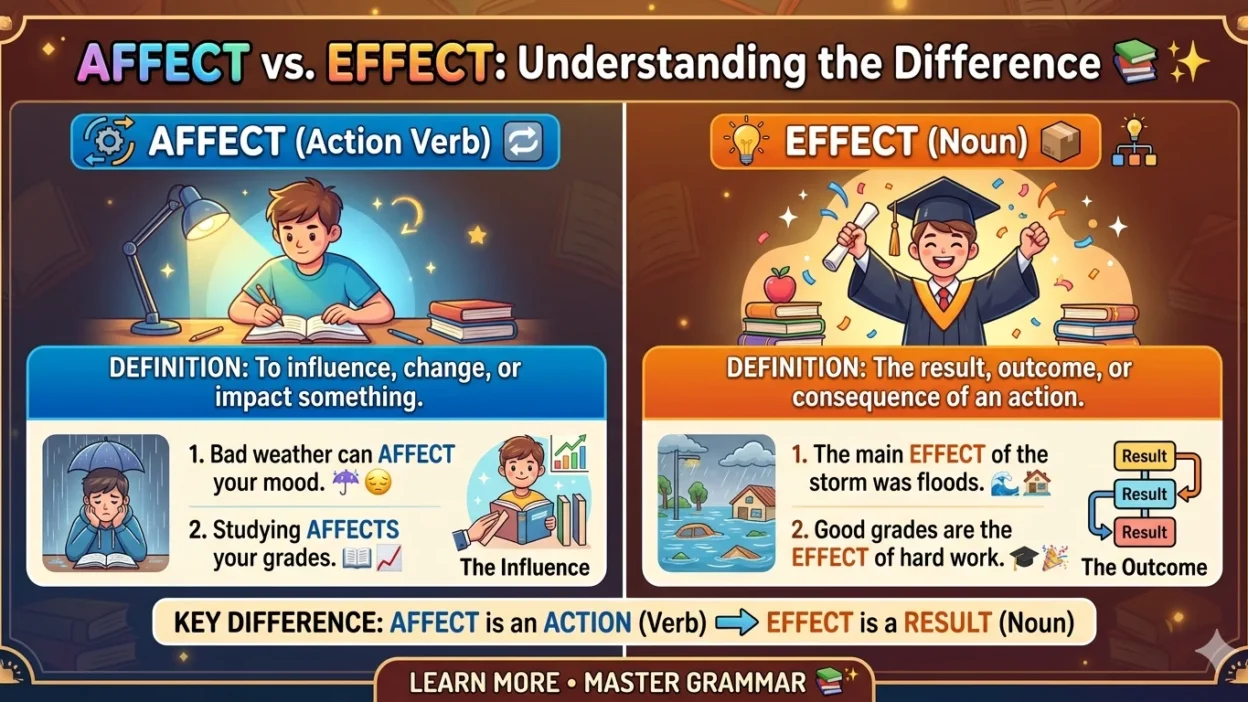
Affect vs Effect means
The quick answer is simple:
- Affect is usually a verb. It means to influence or change something.
- Effect is usually a noun. It means a result or outcome.
Easy Examples
| Word | Meaning | Example |
|---|---|---|
| Affect | To influence | Rain can affect traffic. |
| Effect | Result | The effect of rain was flooding. |
Affect vs Effect in a Sentence
- Lack of sleep can affect your mood.
- The effect of lack of sleep is tiredness.
Simple Memory Trick
- Affect = Action
- Effect = End result
This is the easiest affect vs effect trick for beginners.
Many people search:
- when to use affect vs effect
- affect vs effect definition
- define affect vs effect
- affect vs effect difference grammar
The answer is usually:
- Use affect for an action.
- Use effect for a result.
The Origin of Affect vs Effect
The words come from Latin roots.
Affect Origin
The word affect comes from the Latin word afficere, which means:
- to influence
- to act on
- to move emotionally
This is why affect is mostly used as a verb today.
Effect Origin
The word effect comes from the Latin word effectus, meaning:
- result
- outcome
- completion
That is why effect is mostly used as a noun.
Why Are They So Confusing?
The spelling is very close:
- affect
- effect
The pronunciation is also similar. This creates confusion in daily writing.
People often search:
- affect vs effect pronunciation
- affect vs effect usage
- affect vs effect difference
The confusion also happens because both words are connected:
- one causes change
- the other shows the result
British English vs American English Spelling
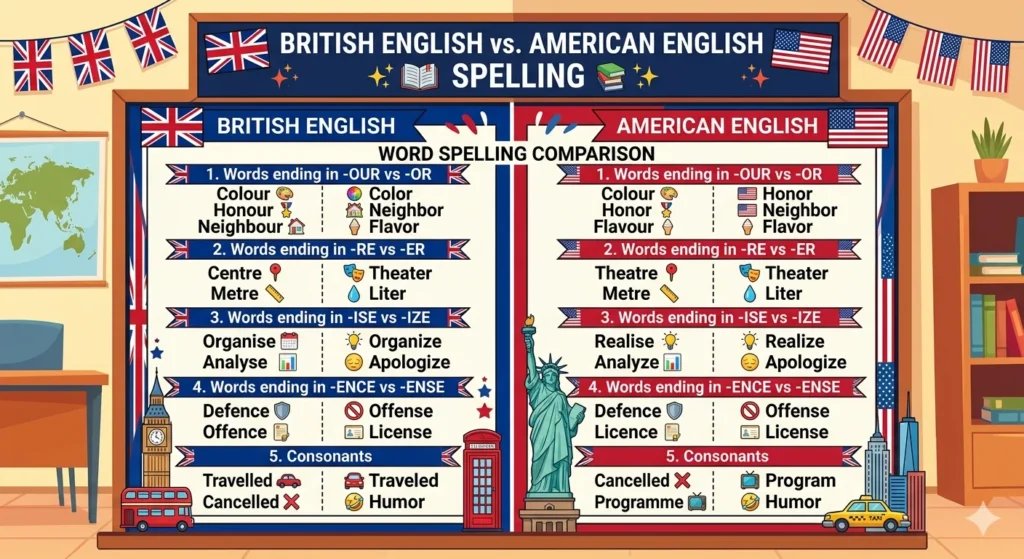
Unlike words such as “color” and “colour,” the spelling of affect and effect stays the same in both British and American English.
However, usage style can differ slightly in professional writing.
Comparison Table
| Topic | American English | British English |
|---|---|---|
| Affect spelling | Affect | Affect |
| Effect spelling | Effect | Effect |
| Common usage | Formal and casual | Formal and academic |
| Pronunciation | Slightly sharper | Slightly softer |
Examples
American English
- New laws may affect prices.
- The new policy had a positive effect.
British English
- Weather can affect travel plans.
- The medicine had little effect.
So, there is no spelling difference, but sentence style may vary.
Which Spelling Should You Use?
You should use the standard spelling:
- affect
- effect
The choice depends on grammar, not country.
Use “Affect” When:
- You need a verb
- You talk about influence or change
Example:
- Social media can affect teenagers.
Use “Effect” When:
- You need a noun
- You talk about results
Example:
- The effect was clear.
Advice by Audience
| Audience | Best Choice |
|---|---|
| US readers | Standard grammar rules |
| UK readers | Standard grammar rules |
| Global audience | Keep sentences simple |
Professional Tip
If unsure:
- Ask yourself: Is this an action?
- If yes → use affect
- If no → use effect
This helps in:
- academic writing
- business emails
- blogs
- SEO articles
Common Mistakes With Affect vs Effect
Many writers make small grammar mistakes.
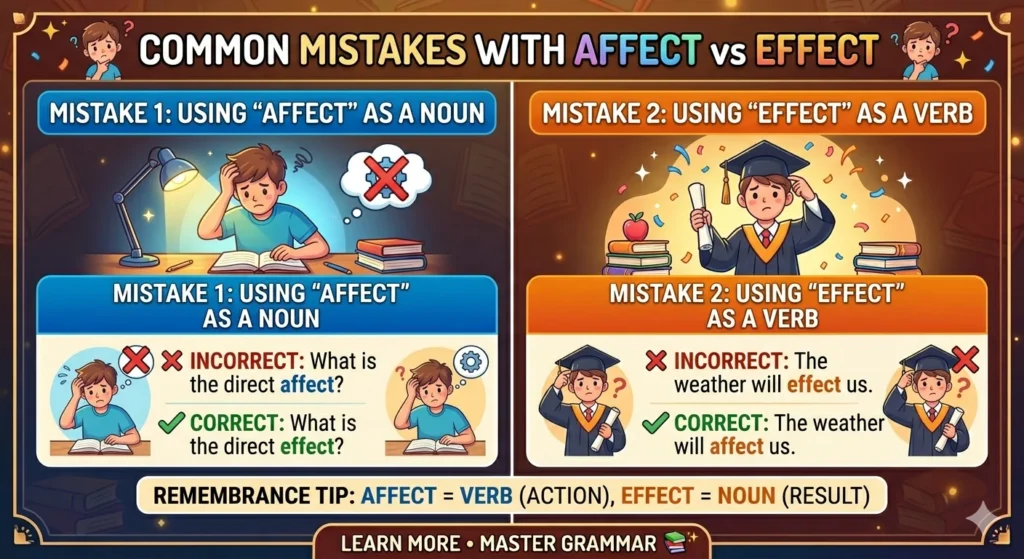
Mistake 1
❌ The rain will effect my plans.
✅ The rain will affect my plans.
Reason:
“Affect” is the action word.
Mistake 2
❌ The affect was huge.
✅ The effect was huge.
Reason:
“Effect” is the result.
Mistake 3
❌ Is it still affects me or effects me?
✅ It still affects me.
Reason:
“Affects” is the correct verb form.
Mistake 4
❌ Take affect
✅ Take effect
“Take effect” means:
- to start working
- to become active
Example:
- The new law will take effect tomorrow.
This is a very common take affect vs effect mistake.
Mistake 5
❌ Side affect
✅ Side effect
Correct phrase:
- side effect
This is common in medical writing and medicine labels.
People also search:
- Side effect vs affect
- affect vs effect medical
Affect vs Effect in Everyday Examples
Understanding real-life examples makes grammar easier.
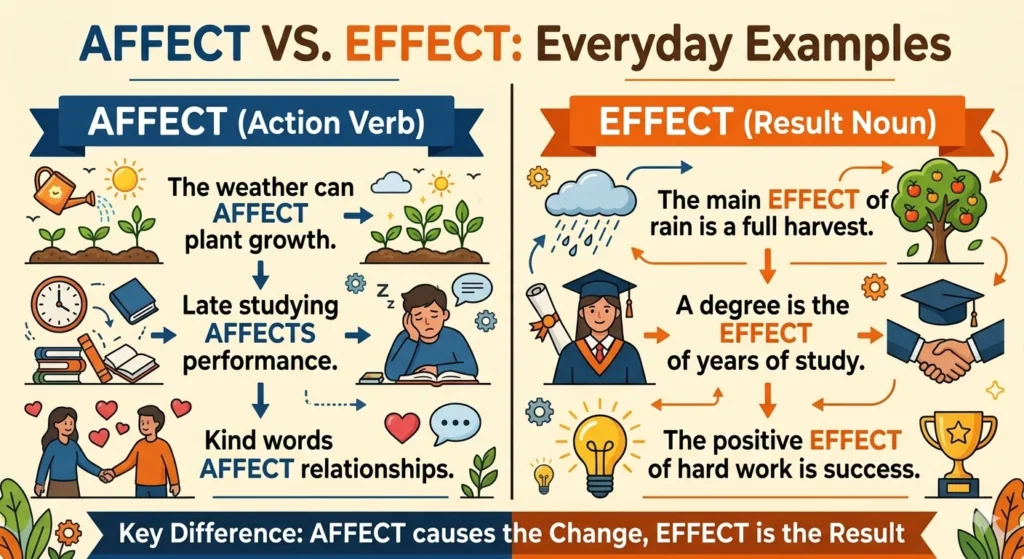
Emails
- Your feedback will affect the final report.
- The changes had a positive effect.
News Writing
- Inflation may affect food prices.
- The new tax had little effect.
Social Media
- Stress can affect mental health.
- The video created a strong emotional effect.
Formal Writing
- Climate change affects global weather.
- The effects of pollution are serious.
Affect vs Effect in a Sentence
| Sentence Type | Example |
|---|---|
| Verb example | Noise can affect sleep. |
| Noun example | The effect was immediate. |
Affect vs Effect in Urdu
For Urdu speakers, this comparison helps a lot.
| English Word | Urdu Meaning |
|---|---|
| Affect | اثر ڈالنا |
| Effect | نتیجہ / اثر |
Urdu Examples
- Smoking can affect health.
→ تمباکو صحت پر اثر ڈال سکتی ہے۔ - The effect of smoking is harmful.
→ تمباکو کا اثر نقصان دہ ہے۔
This makes Affect vs effect in Urdu easier to understand.
Affect vs Effect Psychology
In psychology, the word affect can also be a noun.
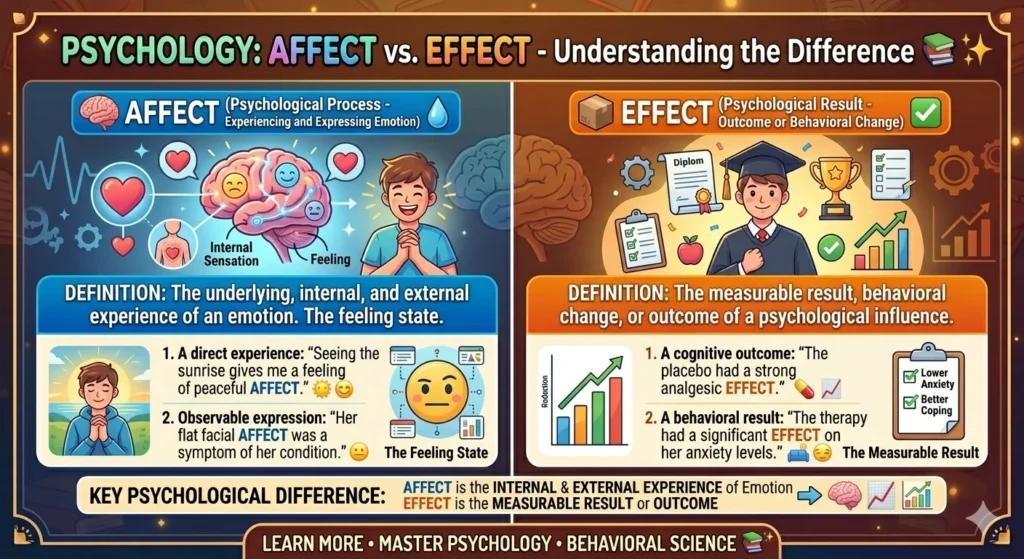
It means:
- emotional expression
- visible mood
Example:
- The patient showed a flat affect.
This is different from the normal grammar rule.
Meanwhile, effect still means a result.
Example:
- The therapy had a positive effect.
This is why many students search:
- affect vs effect psychology
Affect vs Effect Medical Usage
Medical writing often uses both words.
Affect
Used for influence:
- The disease may affect the lungs.
Effect
Used for results:
- Side effects include headache and nausea.
Common medical phrase:
- side effect
This is important in:
- prescriptions
- health articles
- hospital reports
Affect vs Effect Pronunciation
The pronunciation is close but slightly different.
| Word | Pronunciation |
|---|---|
| Affect | uh-FEKT |
| Effect | ih-FEKT |
The first sound changes slightly.
This is why many learners search:
- affect vs effect pronunciation
Affect vs Effect Synonym
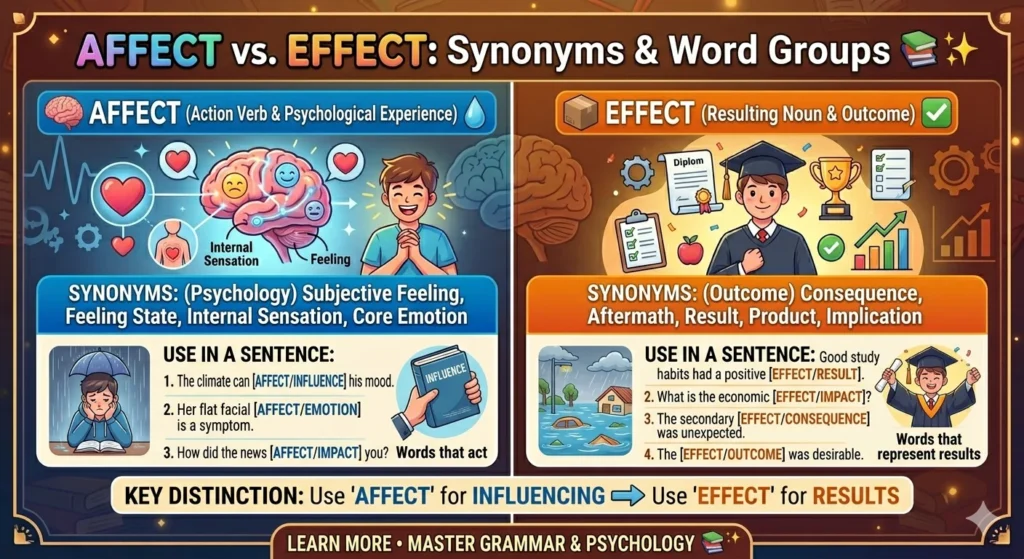
Affect Synonyms
- influence
- change
- impact
Effect Synonyms
- result
- outcome
- consequence
These synonyms can help if you forget the correct word.
Affect vs Effect – Google Trends & Usage Data
Search interest for affect vs effect stays high because students, writers, and professionals often confuse the words.
Countries With High Search Interest
- United States
- Pakistan
- India
- United Kingdom
- Canada
Common Search Queries
| Search Query | Purpose |
|---|---|
| affect vs effect checker | Grammar checking |
| affect vs effect quiz | Learning practice |
| affect vs effect reddit | Community explanations |
| affect vs effect -ai | AI writing help |
| how to remember affect vs effect | Memory tricks |
Why Is It Popular?
People need quick grammar help for:
- emails
- school assignments
- SEO writing
- office documents
- social media captions
Affect vs Effect Comparison Table
| Feature | Affect | Effect |
|---|---|---|
| Part of speech | Usually verb | Usually noun |
| Meaning | Influence | Result |
| Example | Heat affects plants. | The effect was damage. |
| Memory trick | Action | End result |
| Common use | Daily actions | Outcomes |
| Formal writing | Yes | Yes |
How Do You Remember Affect vs Effect?
Here are easy memory tricks:
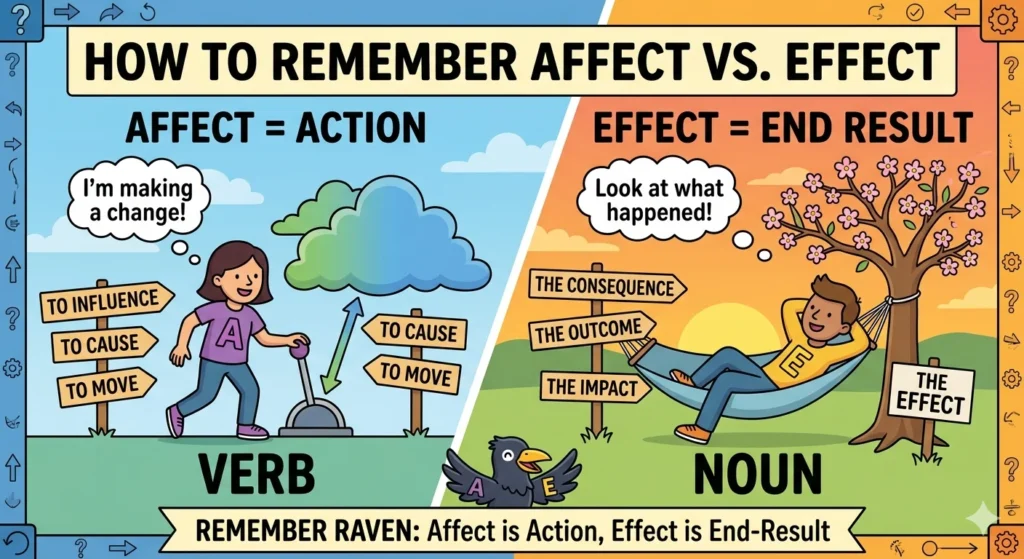
Trick 1: A = Action
- Affect = Action
Trick 2: E = End Result
- Effect = End result
Trick 3: RAVEN Method
- Remember:
- Affect = Verb
- Effect = Noun
This is a famous grammar memory trick.
Many users search:
- how do you remember affect vs effect?
- how to remember affect vs effect
Affect vs Effect Quiz
Choose the correct word:
- Loud music can ___ sleep.
- The medicine had a strong ___.
- Stress may ___ health.
- The new rule will take ___ tomorrow.
Answers
- affect
- effect
- affect
- effect
This quick affect vs effect quiz helps improve grammar skills.
FAQs About Affect vs Effect
1. What does “affect” mean?
“Affect” usually means to influence or change something.
Example:
- Weather can affect travel.
2. When to use affect or effect?
Use:
- affect for actions
- effect for results
3. Is it affects me or effects me?
Correct:
- affects me
Example:
- Stress affects me deeply.
4. What is the difference between affect vs effect?
Affect is usually a verb. Effect is usually a noun.
5. What is the easiest affect vs effect trick?
Remember:
- Affect = Action
- Effect = End result
6. What does “take effect” mean?
It means something starts working or becomes active.
Example:
- The law takes effect next week.
7. Can affect be a noun?
Yes. In psychology, “affect” can mean emotional expression.
Conclusion
Understanding affect vs effect becomes easy once you know the basic rule. In most cases, affect is a verb that means to influence something, while effect is a noun that means a result or outcome. This simple difference solves most grammar mistakes.
People often confuse these words because they look and sound alike. That is why searches like when to use affect vs effect, affect vs effect usage, and affect vs effect meaning are very common online. The good news is that a small memory trick can help you remember the difference forever:
- Affect = Action
- Effect = End result
You should also pay attention to common phrases like:
- take effect
- side effect
These phrases always use “effect.”
Whether you are writing emails, school assignments, blog posts, or professional documents, using the correct word improves clarity and grammar. Practice with examples, quizzes, and daily reading. Over time, choosing between affect vs effect will feel natural and easy.

“M.R. James, a playful storyteller at PunsBlast, crafting sharp puns and clever humor that turn everyday words into unforgettable laughs.”