Many people search for allowed vs aloud because these two words sound the same but mean very different things.
This confusion is common in English and is called a homophone problem. If you’ve ever typed “read it allowed” or “not aloud to go,” you’re not alone.
Understanding the difference helps you write clearly in emails, school work, and even social media posts. It also improves your grammar and makes your writing look more professional.
So, what is the difference between aloud and allowed? In simple terms, one relates to permission, and the other relates to sound.
This article will break it down in an easy way with examples, tables, and tips you can use daily. You’ll also learn about pronunciation, common mistakes, and real-life usage so you never mix them up again.
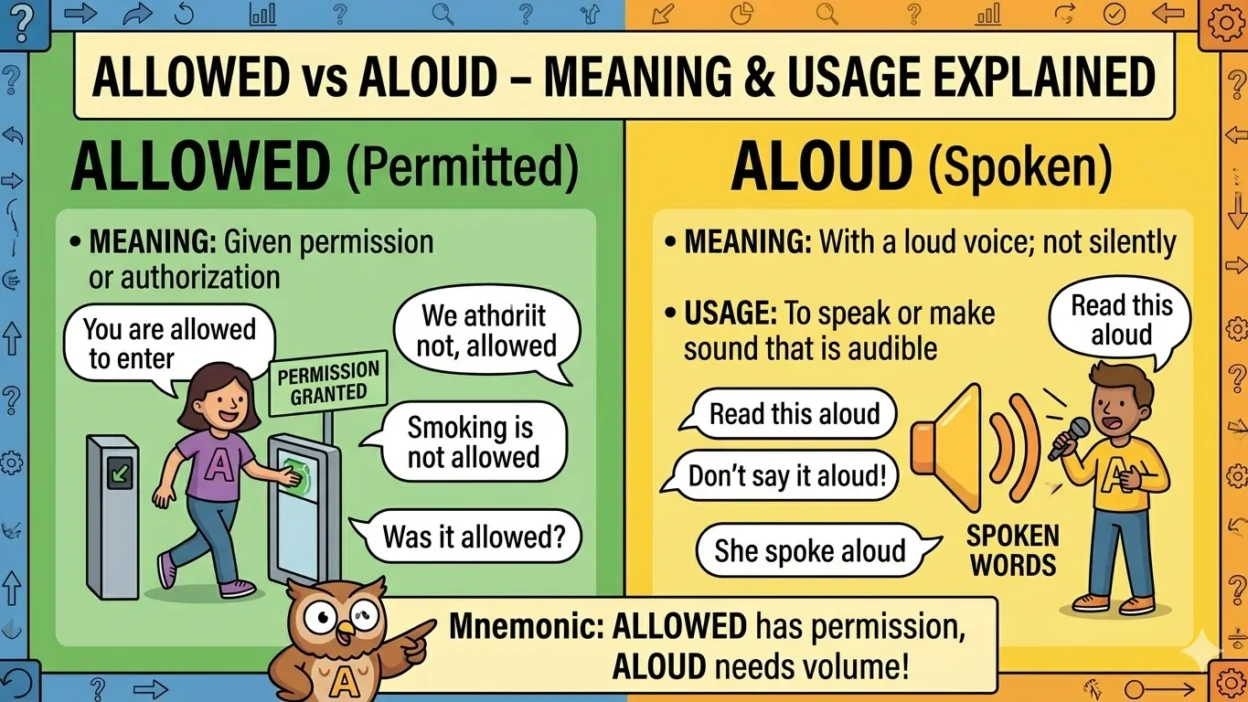
Allowed vs Aloud means
- Allowed = permitted or given permission
- Example: You are allowed to enter the room.
- Aloud = spoken out loud, not silent
- Example: Please read the text aloud.
👉 Allowed vs aloud meaning:
- Allowed = permission
- Aloud = sound
👉 Allowed vs aloud sentences:
- She is allowed to use her phone.
- He read the message aloud.
👉 Allowed and aloud pronunciation:
Both sound the same: /əˈlaʊd/
The Origin of Allowed vs Aloud
- Allowed comes from the verb allow, which means to permit. It has roots in Old French alouer.
- Aloud comes from Old English hlūd, meaning loud or audible.
👉 Allowed vs aloud spelling difference:
- Allowed → ends with -owed (permission word)
- Aloud → ends with -oud (sound word)
This is why English learners often confuse them—they sound the same but have different origins.
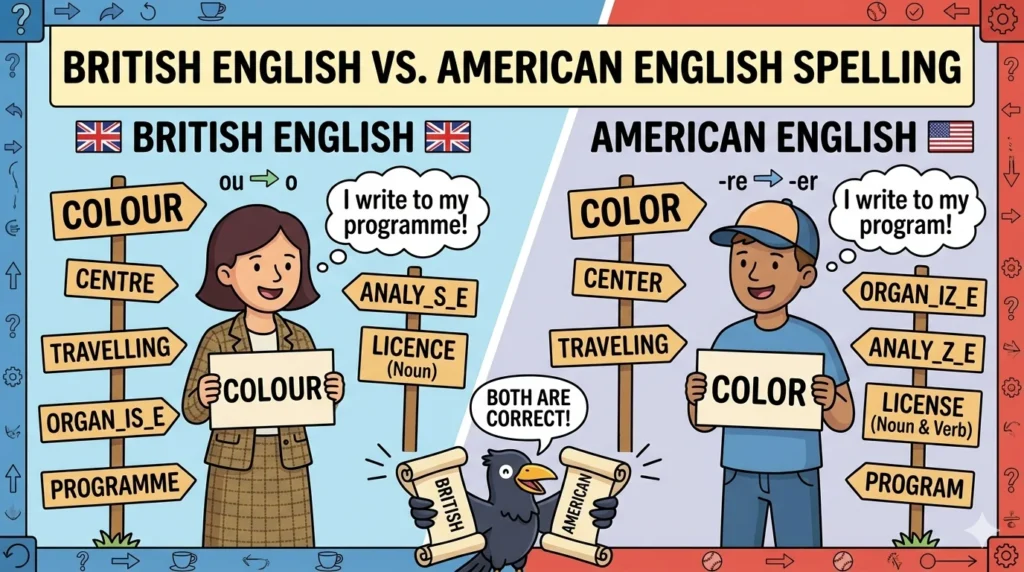
British English vs American English Spelling
Good news: allowed vs aloud grammar is the same in both British and American English.
| Word | Meaning | US Spelling | UK Spelling |
|---|---|---|---|
| Allowed | Permission | Allowed | Allowed |
| Aloud | Audible | Aloud | Aloud |
✔ No spelling change between regions
✔ Only meaning matters
Which Spelling Should You Use?
- Use “allowed” when talking about rules or permission
- Schools, laws, parents, workplace
- Use “aloud” when talking about speaking or sound
- Reading, talking, announcements
👉 Audience advice:
- US, UK, Pakistan, and global English all follow the same rule
- Choose based on meaning, not location
Common Mistakes with Allowed vs Aloud
❌ Incorrect: I am not aloud to go outside
✔ Correct: I am not allowed to go outside
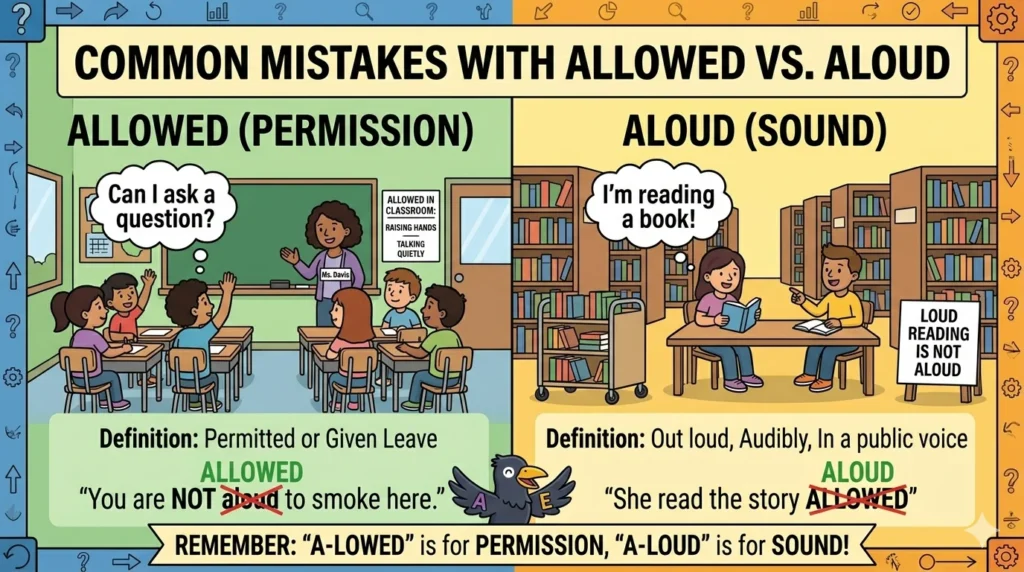
❌ Incorrect: She read the poem allowed
✔ Correct: She read the poem aloud
👉 Tip:
- Permission = allowed
- Sound = aloud
Allowed vs Aloud in Everyday Examples
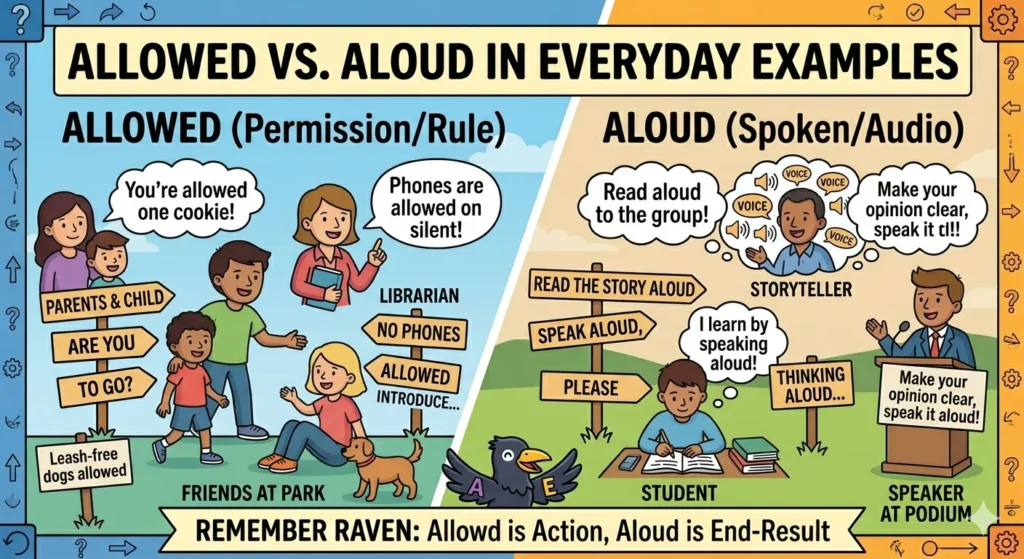
Emails
- You are allowed to access the file.
- Please read the report aloud in the meeting.
News
- Citizens are allowed to vote.
- The statement was read aloud.
Social Media
- Am I allowed to post this?
- He laughed aloud 😂
Formal Writing
- Students are allowed to submit late work.
- The speech was delivered aloud.
👉 Aloud allowed homophones sentences:
- She is allowed to read aloud in class.
Allowed vs Aloud – Google Trends & Usage Data
- Allowed is used more in legal, school, and rule-based contexts
- Aloud is used more in reading, speaking, and storytelling
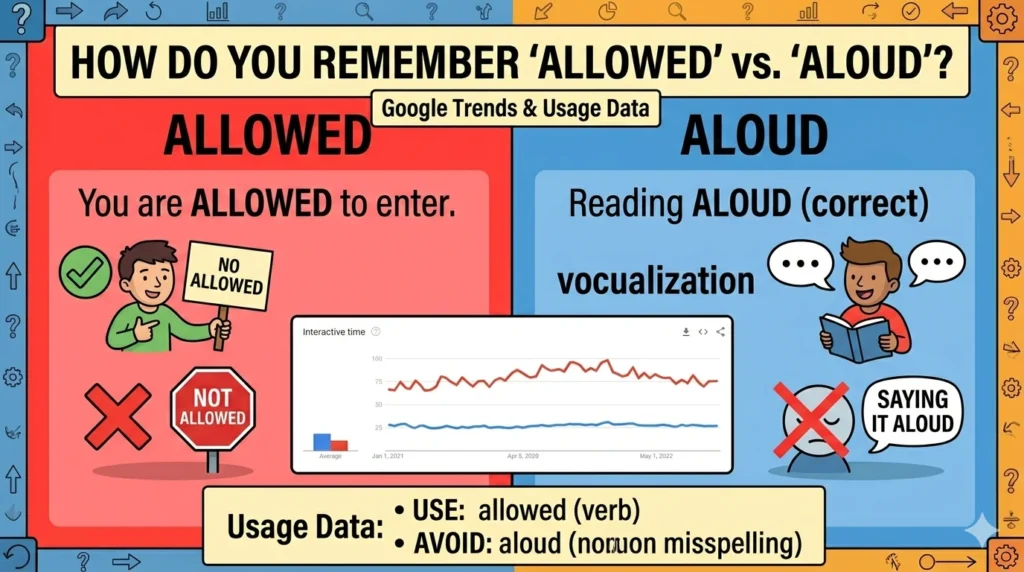
🌍 Popular usage:
- US & UK → both used equally based on context
- India & Pakistan → often confused due to pronunciation
👉 Fun fact:
Searches like “allowed vs aloud exercises” and “allowed vs aloud examples” are very common among students.
Comparison Table: Allowed vs Aloud
| Feature | Allowed | Aloud |
|---|---|---|
| Meaning | Permission | Spoken sound |
| Usage | Rules, laws | Speaking, reading |
| Example | Not allowed here | Read aloud |
| Grammar Type | Verb (past form) | Adverb |
| Pronunciation | Same | Same |
FAQs
1. What is the difference between aloud and allowed?
Allowed means permission. Aloud means speaking out loud.
2. What does “aloud” mean?
It means something is spoken so others can hear it.
3. What’s a better word than “allowed”?
You can use: permitted, approved, accepted.
4. Are allowed and aloud pronounced the same?
Yes, they are homophones.
5. What are 25 homophones?
Examples: to/too/two, there/their/they’re, hear/here, allowed/aloud, buy/by/bye.
6. How can I remember allowed vs aloud?
- Allowed → has “allow” (permission)
- Aloud → has “loud” (sound)
7. Why do people confuse allowed vs aloud?
Because they sound the same but have different meanings and spellings.
Conclusion
The confusion between allowed vs aloud is very common, but easy to fix once you know the core difference. One word is about permission, and the other is about sound. That’s it.
If you remember that allowed = allow (permission) and aloud = loud (sound), you will avoid most mistakes. This simple trick works in school writing, emails, and even social media posts.
There is no difference between British and American English here, which makes things easier. The key is understanding the context. Always ask yourself: “Am I talking about permission or sound?”
Practice using both words in sentences. Try small exercises and examples daily. Over time, it will become natural.
Clear writing builds trust and improves communication. Fixing small mistakes like this makes a big difference in how others see your work.

“Margaret Oliphant, a witty wordsmith at PunsBlast, blending charm and clever humor to turn everyday moments into laugh-worthy puns.”