meanings are very different. This small spelling change can affect your writing in emails, school work, and even social media posts.
People often search for already vs all ready meaning because both phrases sound alike. But using the wrong one can make a sentence unclear or even incorrect. This guide solves that confusion in a simple way.
If you have ever wondered whether to write “I am already done” or “I am all ready,” you are not alone. This article will explain the already vs all ready grammar difference, show easy examples, and help you use both correctly in daily life.
Already vs All Ready means
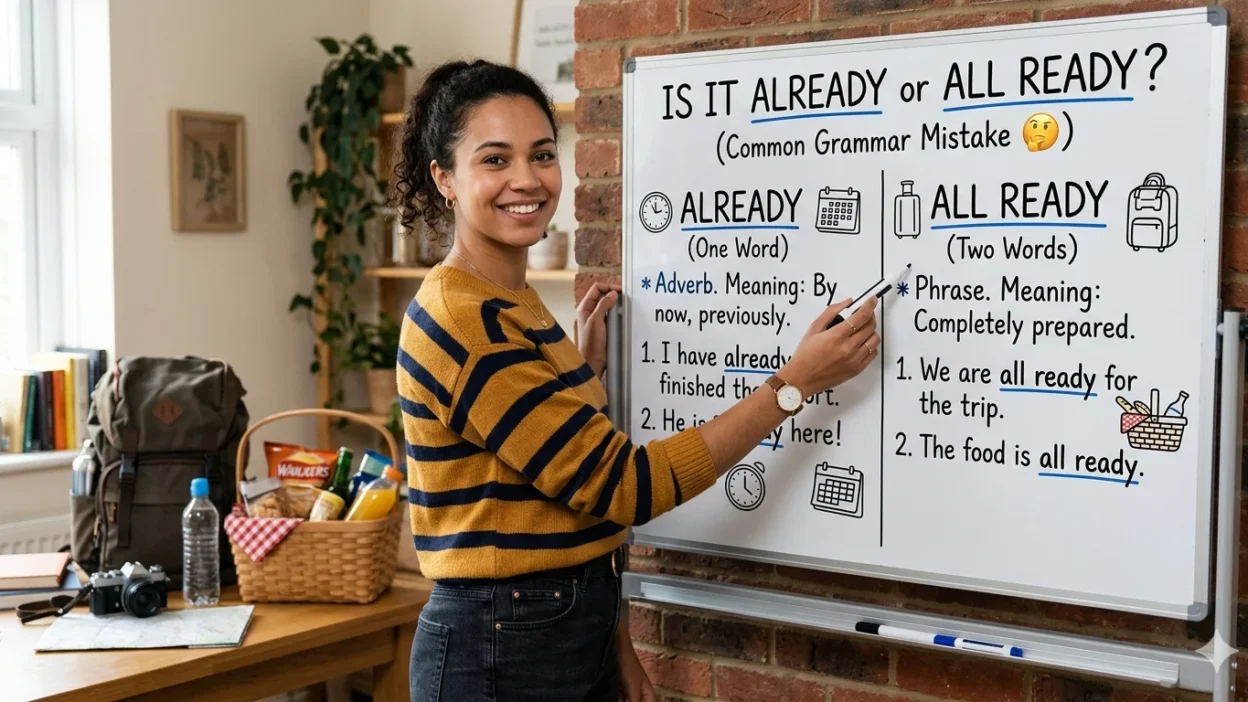
Already means something happened before now.
All ready means fully prepared.
Examples:
- I have already finished my homework.
- We are all ready for the trip.
Think of it like this:
- Already = time (past)
- All ready = preparation
The Origin of Already vs All Ready
The word already comes from Old English. It combines “all” + “ready,” but over time, it became one word with a new meaning: something completed before now.
All ready stayed as two words. It kept its original meaning:
- “All” = everything
- “Ready” = prepared
So, the spelling difference exists because the meanings changed over time.
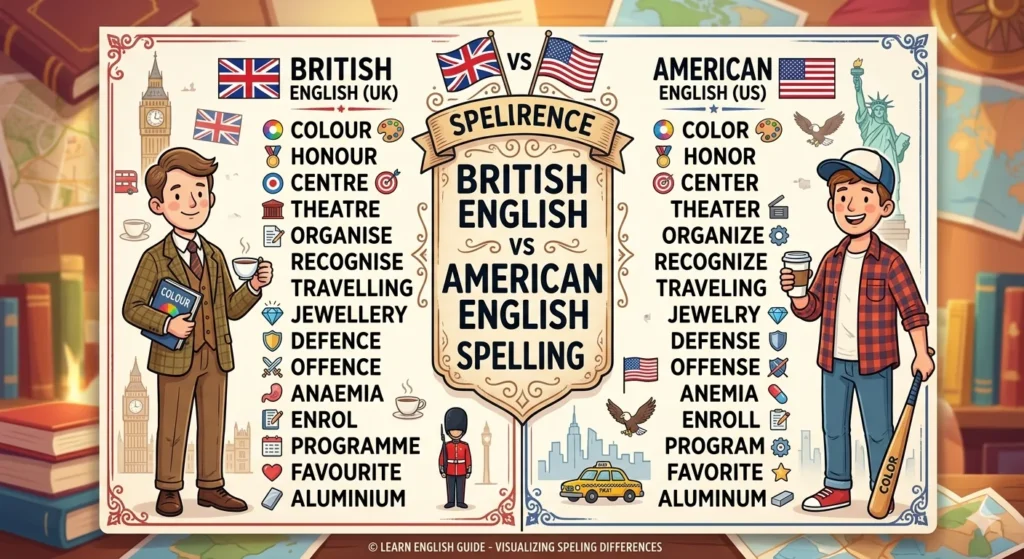
British English vs American English Spelling
Good news: there is no spelling difference between British and American English for these terms.
| Phrase | British English | American English | Meaning |
|---|---|---|---|
| Already | Already | Already | Done before now |
| All ready | All ready | All ready | Fully prepared |
Both forms are correct in all English types.
Which Spelling Should You Use?
Choose based on meaning, not location.
- Use already when talking about time
→ “She has already left.” - Use all ready when talking about preparation
→ “We are all ready to go.”
Simple Tip:
If you can replace it with “prepared,” use all ready.
Common Mistakes with Already vs All Ready
Here are common errors in already vs all ready grammar:
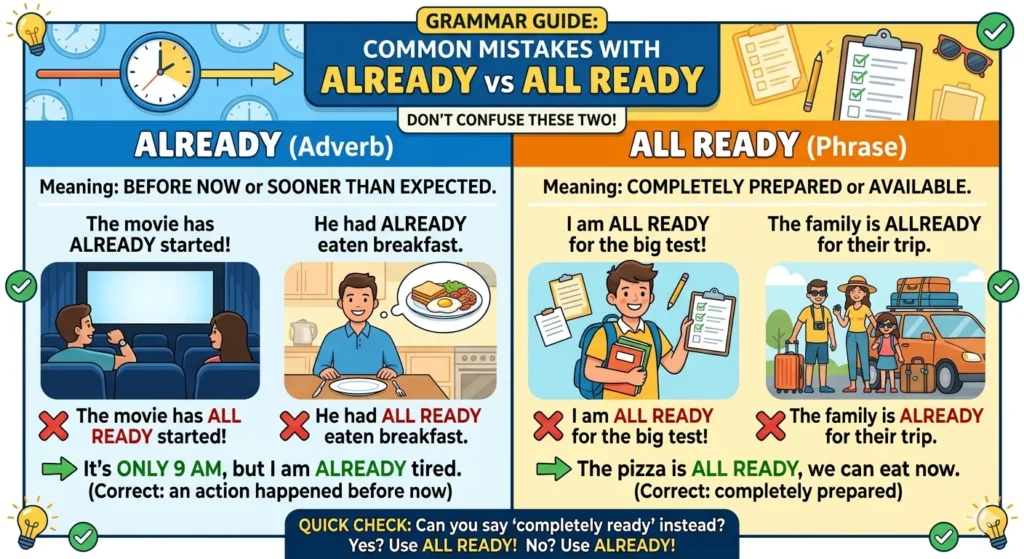
❌ I am already for the meeting.
✔ I am all ready for the meeting.
❌ I have all ready eaten.
✔ I have already eaten.
❌ We are already to leave.
✔ We are all ready to leave.
These mistakes are very common in already vs all ready sentences.
Already vs All Ready in Everyday Examples
Emails
- I have already sent the file.
- We are all ready for the presentation.
Social Media
- I already watched that movie!
- Are you all ready for the party?
News Writing
- The team has already won the match.
- The crew is all ready for launch.
Formal Writing
- The report was already completed.
- All members are all ready for the event.
Already vs All Ready – Google Trends & Usage Data
The term already is much more popular. It is used daily in speech and writing.
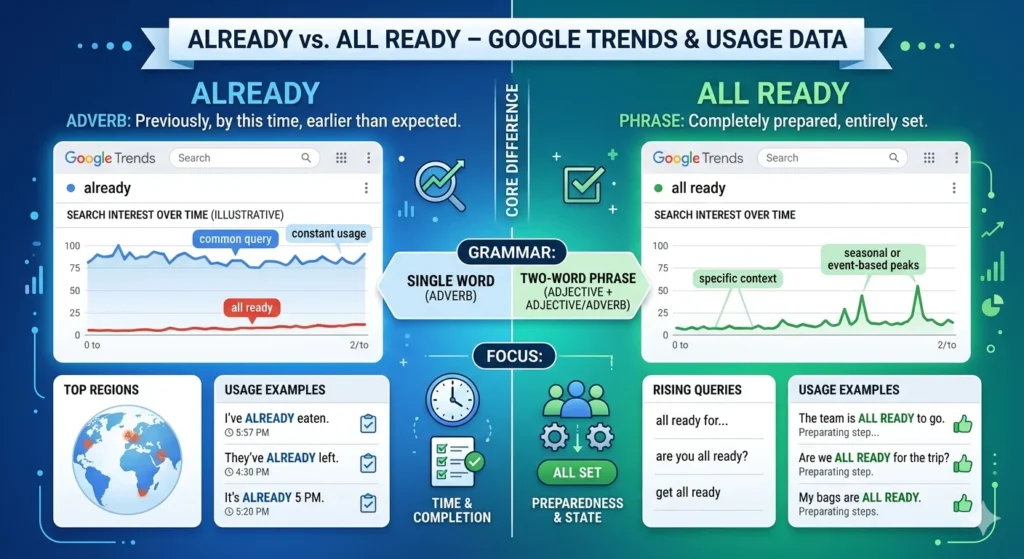
- Already → Used worldwide, very common
- All ready → Less common, used in specific contexts
Countries like the US, UK, Canada, and Australia use both, but already appears more often in searches and writing.
Comparison Table: Already vs All Ready
| Feature | Already | All Ready |
|---|---|---|
| Type | Adverb | Phrase |
| Meaning | Before now | Fully prepared |
| Usage | Time-related | Preparation-related |
| Example | I already ate | I am all ready |
FAQs
1. What is the difference between already vs all ready?
Already means something happened earlier.
All ready means fully prepared.
2. What is “all ready meaning”?
It means completely prepared for something.
3. Can I use already instead of all ready?
No. They have different meanings.
4. Give “all ready in a sentence”
We are all ready for the exam.
5. What is “already ready meaning”?
It is not standard. Use either already or all ready correctly.
6. Are there already vs all ready exercises?
Yes. Try filling blanks:
- I have ___ finished. (already)
- We are ___ to go. (all ready)
7. Is there an already vs all ready quiz?
Yes, quizzes test your understanding of time vs preparation usage.
Conclusion
Understanding already vs all ready is simple once you know the difference. One word talks about time, and the other talks about being prepared. This small detail can improve your writing a lot.
If you remember one rule, let it be this:
Already = done before now
All ready = fully prepared
This difference is important in emails, school work, and professional writing. Many learners make mistakes, but with practice and examples, you can avoid them easily.
Use already when something is finished. Use all ready when everything is set. With this clear idea, you will never mix them again.

“M.R. James, a playful storyteller at PunsBlast, crafting sharp puns and clever humor that turn everyday words into unforgettable laughs.”