Many people get confused by foregoing or forgoing. These two words look almost the same, but they mean very different things.
That’s why people often search questions like “is it foregoing or forgoing?” or “which is correct foregoing or forgoing?”
This confusion happens because both words come from old English roots and sound similar.
But using the wrong one can change your sentence meaning completely. For example, writing “for the forgoing reasons” is incorrect, even though many people do it.
In this guide, you will learn the exact difference, when to use each word, and how to avoid common mistakes. We will also show simple examples, tables, and tips so you can use both words with confidence.
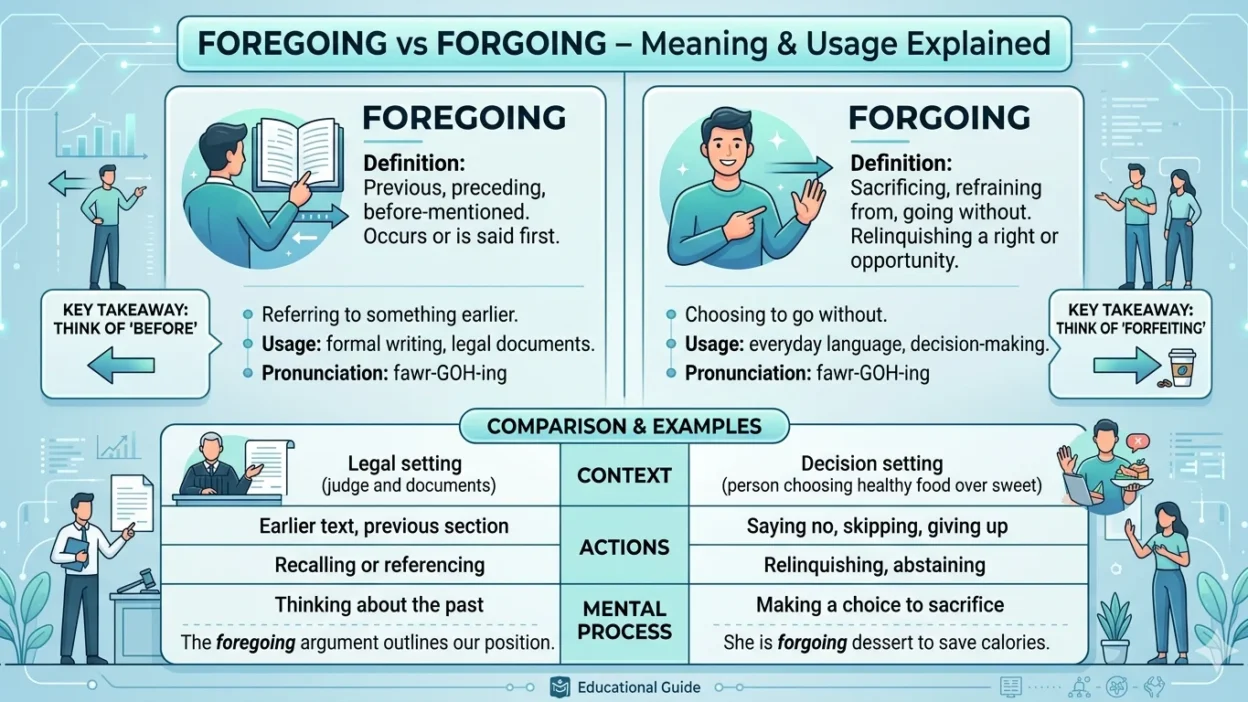
Foregoing or Forgoing means
- Foregoing = something mentioned before (previous)
- Forgoing = choosing to go without something
Examples:
- Foregoing in a sentence: “For the foregoing reasons, we reject the plan.”
- Forgoing in a sentence: “She is forgoing dessert to stay healthy.”
👉 So, if you mean previous, use foregoing.
👉 If you mean giving up, use forgoing.
The Origin of Foregoing or Forgoing
Both words come from Old English, but they have different roots:
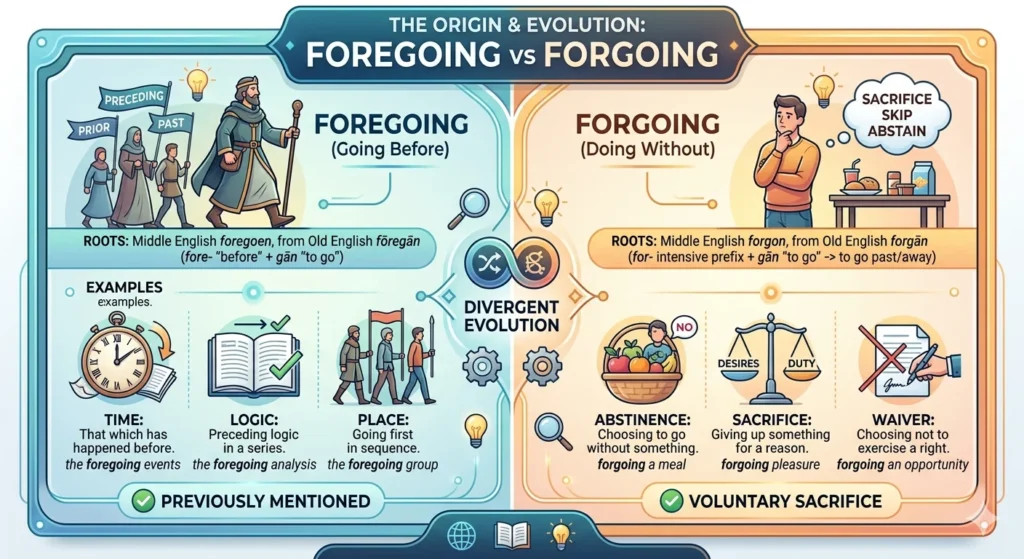
- Foregoing comes from “fore” (before) + “go” → meaning going before
- Forgoing comes from “forgo” → meaning to do without
The spelling difference exists because the meanings changed over time. Even though they look similar, they developed into two separate words.
British English vs American English Spelling
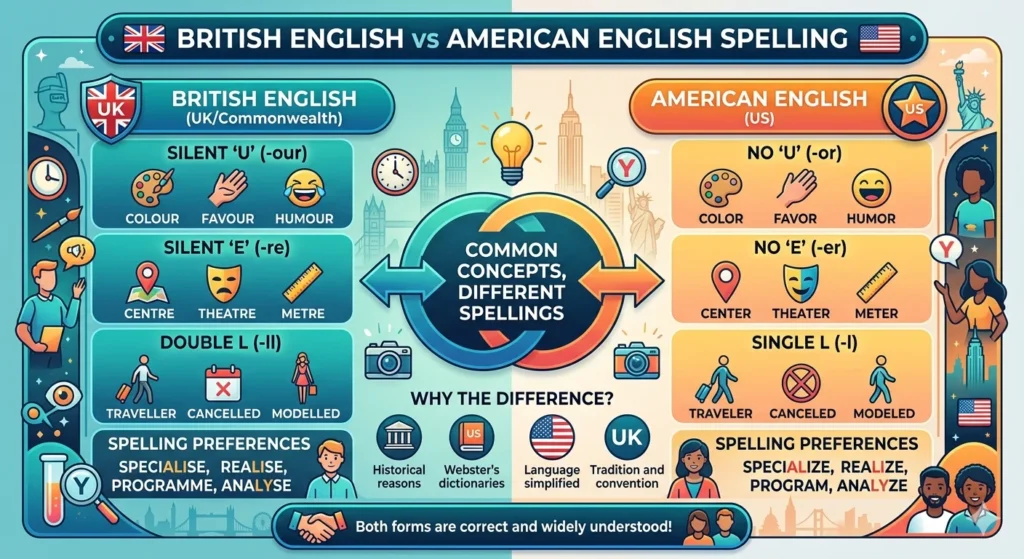
Good news: there is no spelling difference between British and American English for these words.
| Word | British English | American English | Meaning |
|---|---|---|---|
| Foregoing | Foregoing | Foregoing | Previous |
| Forgoing | Forgoing | Forgoing | Giving up |
👉 The confusion is not about region. It’s about meaning.
Which Spelling Should You Use?
Use based on meaning, not location:
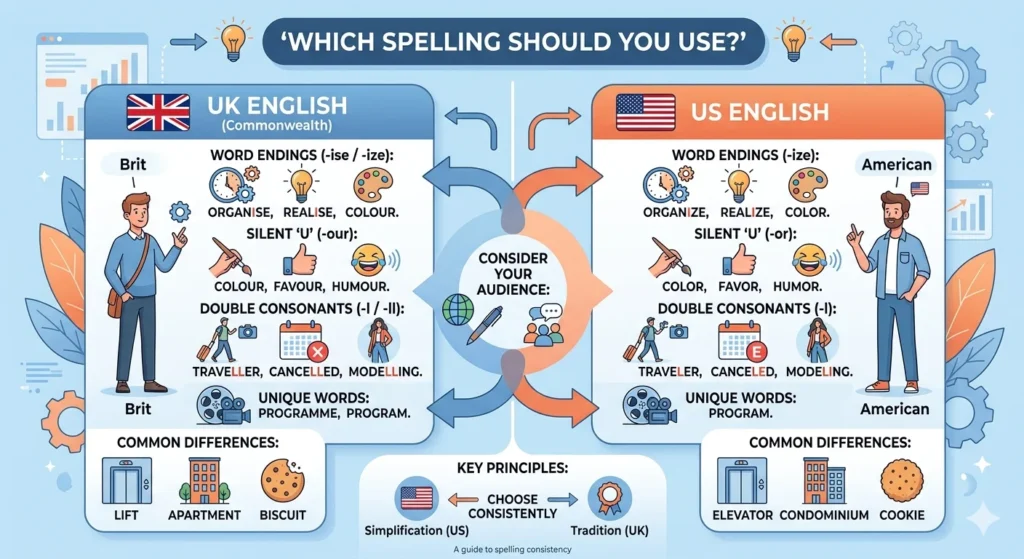
- US audience → Same rule
- UK/Commonwealth → Same rule
- Global writing → Focus on correct meaning
Simple rule:
- Writing formal text? → likely foregoing
- Talking about sacrifice? → use forgoing
Common Mistakes with Foregoing or Forgoing
❌ Wrong:
- “For the forgoing reasons…”
✔️ Correct: “For the foregoing reasons…”
❌ Wrong:
- “He is foregoing his turn” (if meaning previous)
✔️ Correct: “He is forgoing his turn” (giving up)
❌ Mixing with “preceding”:
Many ask: “What is the difference between preceding and foregoing?”
- Preceding = comes before in order
- Foregoing = already mentioned before
Foregoing or Forgoing in Everyday Examples
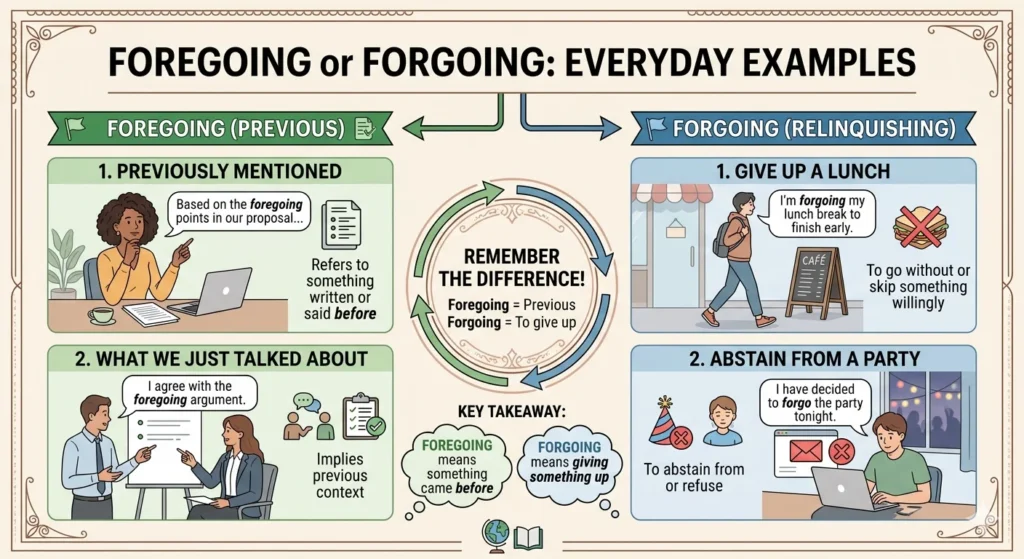
Emails:
- “For the foregoing reasons, we cannot approve this request.”
News:
- “The athlete is forgoing the event due to injury.”
Social Media:
- “I’m forgoing sugar this week!”
Formal Writing:
- “The foregoing paragraph meaning is clear and supports the argument.”
Foregoing – Google Trends & Usage Data
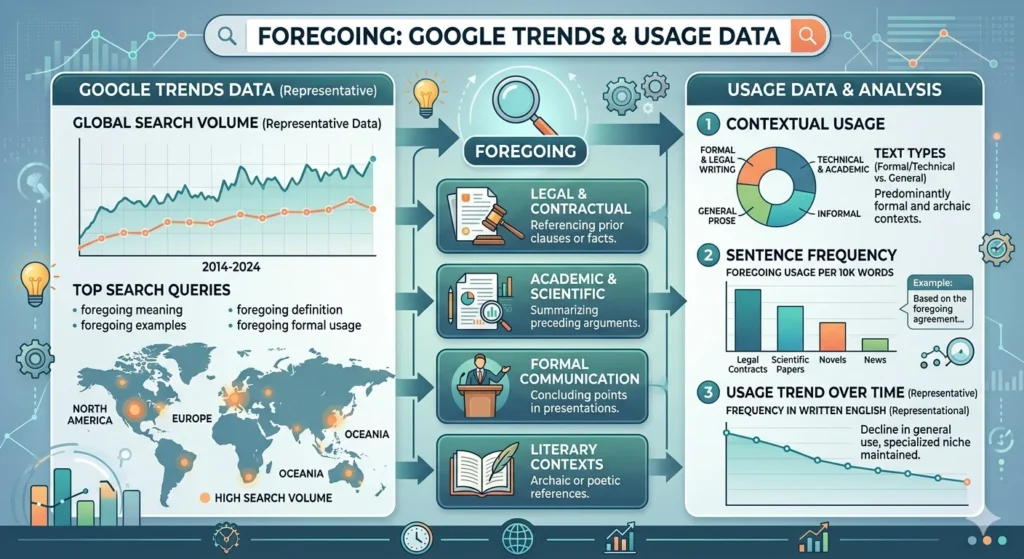
- Foregoing is more common in legal and formal writing
- Forgoing is common in lifestyle, health, and daily speech
Popular by context:
- USA & UK → Both used correctly in different contexts
- Legal documents → Mostly foregoing
- Blogs & health topics → Often forgoing
Comparison Table: Foregoing vs Forgoing
| Feature | Foregoing | Forgoing |
|---|---|---|
| Meaning | Previous / mentioned before | Giving up / doing without |
| Usage | Formal writing | Everyday language |
| Example | Foregoing paragraph | Forgoing dessert |
| Synonym | Previous | Abstaining |
| Opposite of foregoing | Following | — |
FAQs
1. What is the difference between foregoing and forgoing?
Foregoing means previous, while forgoing means giving something up.
2. What does “forgoing” mean?
It means choosing to go without something.
3. When to use foregoing?
Use it when referring to something already mentioned.
4. Foregoing vs preceding – are they the same?
No. Both mean before, but foregoing refers to text already mentioned, while preceding refers to order.
5. What is a foregoing synonym?
“Previous” is the most common synonym.
6. What is the opposite of foregoing?
The opposite is “following.”
7. Is it foregoing or forgoing in formal writing?
Usually foregoing, especially in phrases like “for the foregoing reasons.”
Conclusion
Understanding foregoing or forgoing is simple once you know the key difference. Foregoing refers to something that came before, often used in formal or legal writing. Forgoing, on the other hand, means choosing to give something up.
Many people mix these words because they look alike, but using the wrong one can confuse your readers. A simple trick is to remember:
- “Fore” = before → foregoing
- “Forgo” = give up → forgoing
If you are writing emails, reports, or articles, always double-check the meaning. In formal phrases like “for the foregoing reasons,” only one option is correct.
By learning this difference, you can write more clearly and professionally. Keep practicing with examples, and soon you won’t need to ask “is it foregoing or forgoing?” again.

“Margaret Oliphant, a witty wordsmith at PunsBlast, blending charm and clever humor to turn everyday moments into laugh-worthy puns.”