Many people type “havn’t or haven’t” into search because they feel unsure about the correct spelling. It looks like a small difference, but it matters in writing. One version is correct English, and the other is a mistake. This confusion often happens because English contractions can be tricky. Words like don’t, can’t, and won’t follow patterns—but not always in obvious ways.
If you’ve ever wondered “Is havn’t correct?” or “Is haven’t correct English?”, you’re not alone. Students, bloggers, and even professionals make this error. This article will clear everything up in a simple way. You will learn the correct form, why it exists, and how to use it in real life. By the end, you will confidently know the difference and avoid common mistakes.
Havn’t or Haven’t means
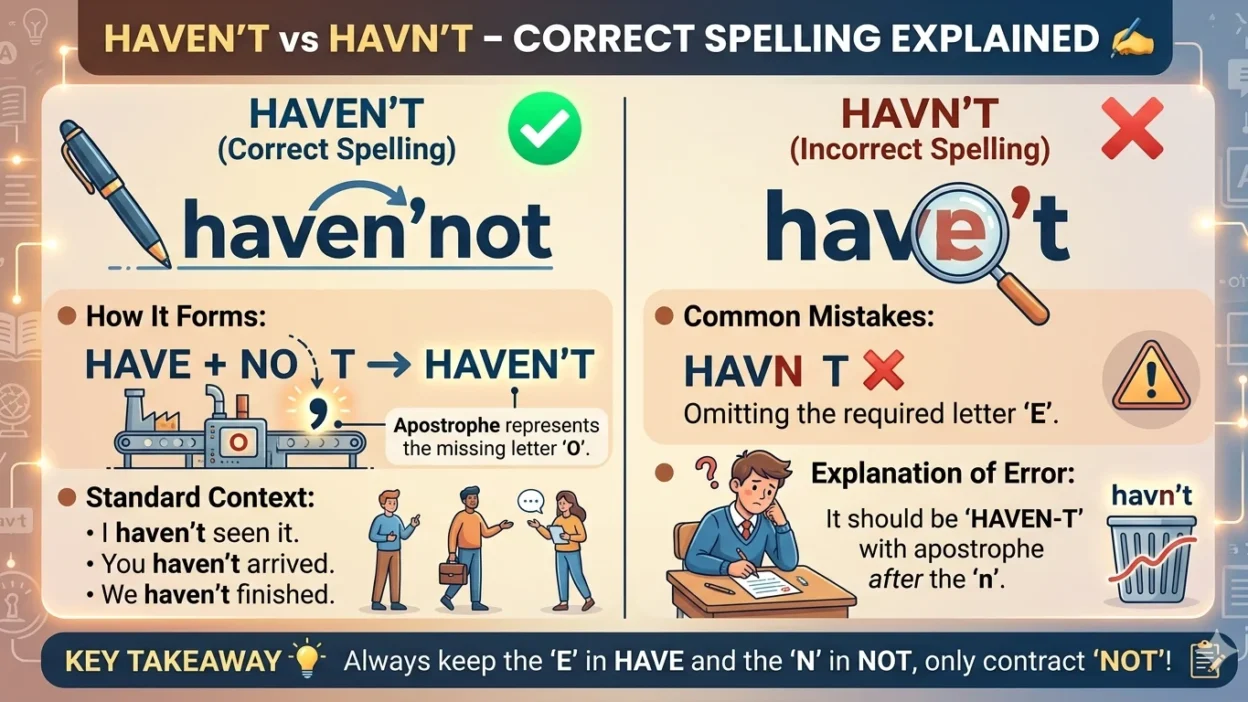
Correct spelling: “haven’t”
Wrong spelling: “havn’t” ❌
“Haven’t” is a contraction of “have not.”
Examples:
- I haven’t finished my work.
- They haven’t arrived yet.
❌ Wrong:
- I havn’t finished my work.
👉 So if you ask:
- Is havn’t correct? → No
- Is haven’t correct English? → Yes
The Origin of Havn’t or Haven’t
“Haven’t” comes from combining:
- Have + not = haven’t
In English, contractions remove letters and add an apostrophe (’).
Here, the letter “o” from “not” is removed.
That’s why:
- Have not → Haven’t
- Do not → Don’t
The form “havn’t” is wrong because it breaks this rule. It removes the wrong letter and does not match standard grammar patterns.
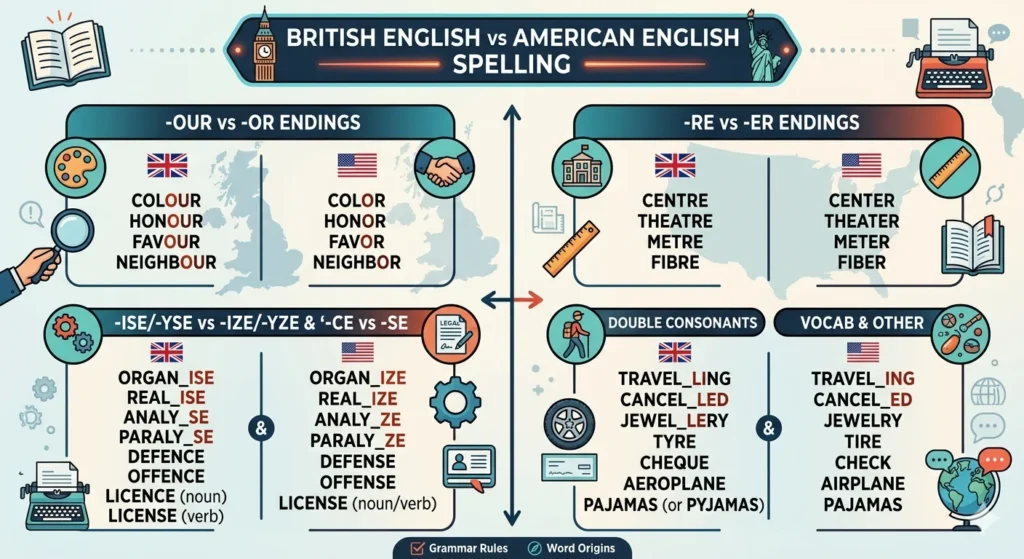
British English vs American English Spelling
Good news: there is no difference here. Both use “haven’t.”
| Form | British English | American English | Correct? |
|---|---|---|---|
| Haven’t | ✅ Yes | ✅ Yes | ✔ Correct |
| Havn’t | ❌ No | ❌ No | ✘ Wrong |
Unlike words like colour/color, this word stays the same everywhere.
Which Spelling Should You Use?
Always use “haven’t.”
Based on audience:
- 🇺🇸 US → Haven’t
- 🇬🇧 UK → Haven’t
- 🌍 Global → Haven’t
There is no case where “havn’t” is correct.
👉 If you are writing:
- Blogs
- Emails
- Social media
- Academic work
Use haven’t every time.
Common Mistakes with Havn’t or Haven’t
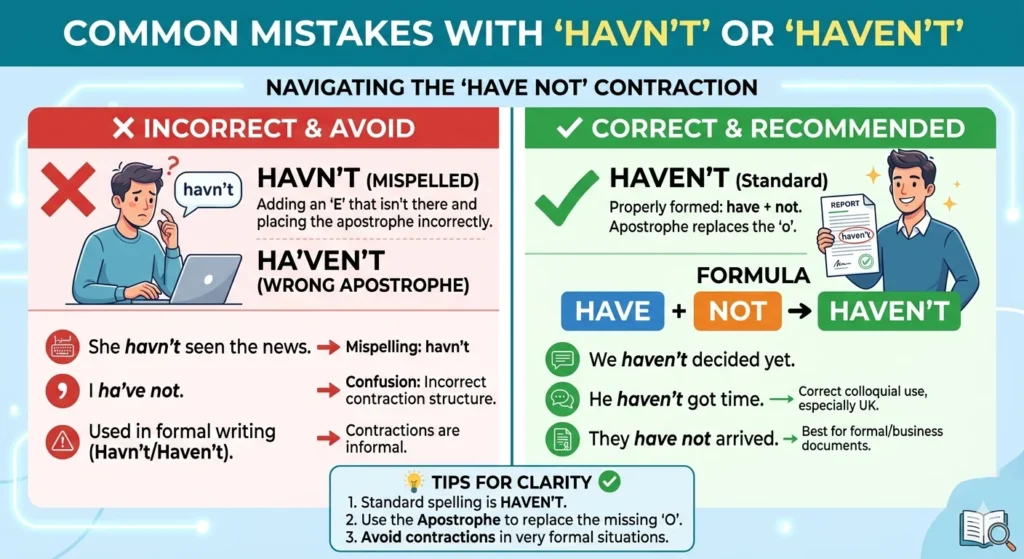
❌ Mistakes:
- Writing havn’t instead of haven’t
- Forgetting the apostrophe → havent
- Mixing with “hasn’t”
✔ Corrections:
- Havn’t → Haven’t
- Havent → Haven’t
- Hasn’t = “has not” (different meaning)
👉 If you ask:
- What is meant by haven’t? → It means have not
- What is meant by hasn’t? → It means has not
Havn’t or Haven’t in Everyday Examples
Emails:
- I haven’t received your message yet.
News:
- Officials say they haven’t confirmed the report.
Social Media:
- I haven’t watched that show!
Formal Writing:
- The researchers haven’t found enough evidence.
👉 Haven t in a sentence:
- I haven’t seen this before.
👉 I haven ‘t meaning:
- It means “I have not.”
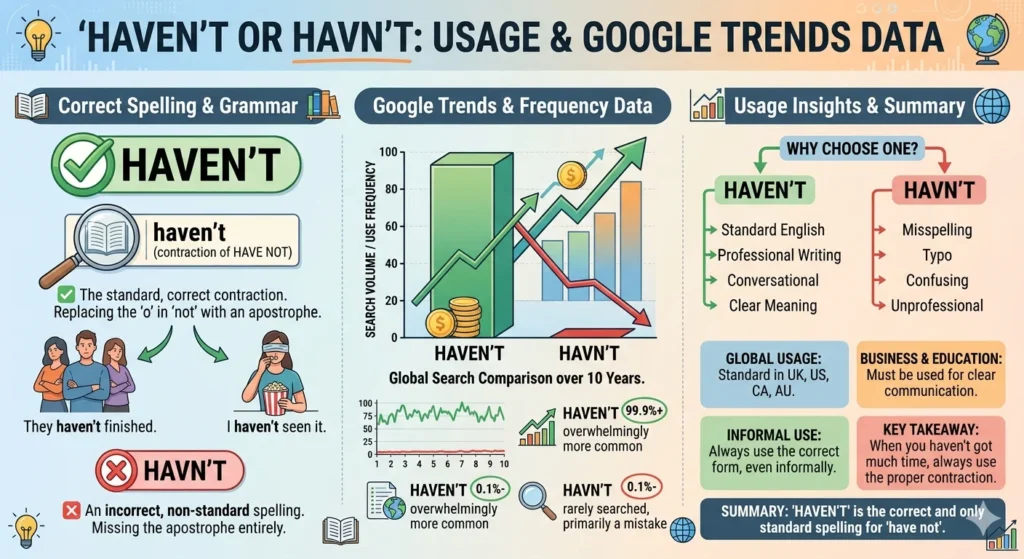
Havn’t or Haven’t Google Trends & Usage Data
Search data shows that many users type:
- Havn t or haven t meaning
- Havn t or haven t grammar
- Havn t or haven t examples
This happens because:
- People hear the word but don’t see it written
- Apostrophes confuse learners
Popular usage:
- “Haven’t” is used worldwide
- “Havn’t” appears mostly in mistakes or search queries
👉 Haven ‘t pronunciation:
Sounds like: /ˈhæv.ənt/ (hav-uhnt)
Comparison Table: Havn’t or Haven’t
| Variation | Meaning | Correct? | Notes |
|---|---|---|---|
| Haven’t | Have not | ✅ Yes | Standard English |
| Havn’t | None | ❌ No | Spelling mistake |
| Havent | Have not | ❌ No | Missing apostrophe |
| Hasn’t | Has not | ✅ Yes | Different subject |
FAQs
1. Is havn’t correct?
No, “havn’t” is incorrect spelling.
2. Is haven’t correct English?
Yes, it is the correct contraction of “have not.”
3. What is meant by haven’t?
It means “have not.”
4. What is meant by hasn’t?
It means “has not.”
5. Haven t or have not – which is better?
Both are correct. “Haven’t” is informal. “Have not” is more formal.
6. How do you use haven’t in a sentence?
Example: I haven’t completed my homework.
7. What are havn t or haven t exercises?
They are grammar practice tasks to learn correct spelling and usage.
Conclusion
The confusion between “havn’t or haven’t” is very common, but the answer is simple. Only “haven’t” is correct English. It comes from “have not” and follows standard contraction rules. The form “havn’t” is just a spelling mistake and should never be used.
There is no difference between British and American English in this case. Both use “haven’t.” Whether you are writing emails, blog posts, or academic work, always choose the correct form. Understanding this small rule can improve your writing and make it look more professional.
If you remember one thing, let it be this:
👉 Haven’t = correct | Havn’t = wrong
Use it with confidence in every situation.

“Margaret Oliphant, a witty wordsmith at PunsBlast, blending charm and clever humor to turn everyday moments into laugh-worthy puns.”