Many people search for “vary or very” because these two words look similar but mean very different things.
This confusion often leads to spelling mistakes, grammar errors, and wrong usage in writing. If you’ve ever asked, “is it vary or very?” or “how do you spell vary or very?”—you’re not alone.
The problem is simple: both words sound close, but they serve different purposes in English. One is a verb (action), and the other is an adverb (description). Because of this, using the wrong word can change the meaning of your sentence.
In this guide, you’ll learn the vary or very meaning, correct grammar, examples, pronunciation, and when to use each word. We’ll also answer common questions like “How do you use vary?” and “What is the difference between vary and wary?” so you can write clearly and confidently.
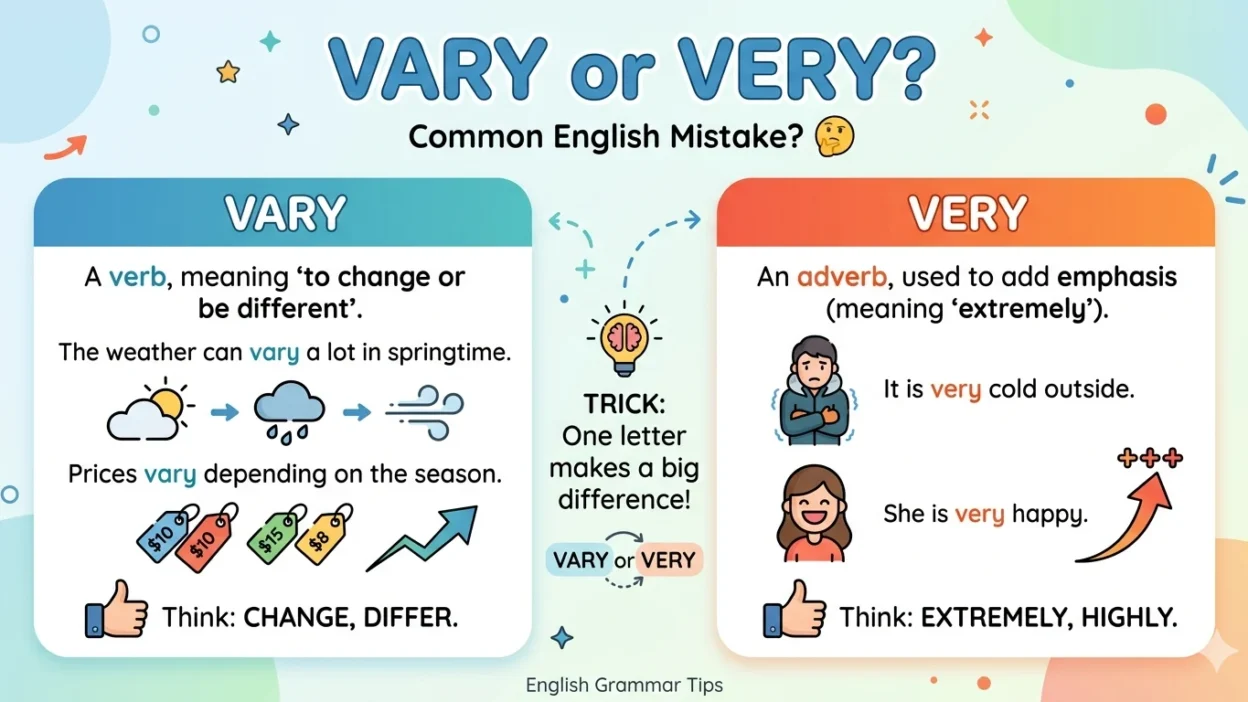
Vary or Very means
Vary = to change or differ
Very = used to add emphasis (means “extremely”)
Examples:
- Prices vary by location. ✅
- This is very good. ✅
👉 Quick tip:
- If you mean change, use vary
- If you mean strong feeling, use very
The Origin of Vary or Very
Vary Meaning & Origin
The word vary comes from Latin variare, meaning “to change.” It is used when something is not the same.
- Example: Results vary from person to person.
Very Meaning & Origin
The word very comes from Old French verai, meaning “true.” Over time, it became an intensifier.
- Example: She is very happy.
👉 This is why the spelling difference exists—each word comes from a different language root.
British English vs American English Spelling
Good news: there is NO spelling difference between British and American English for vary and very.
| Word | British English | American English | Meaning |
|---|---|---|---|
| Vary | Vary | Vary | To change |
| Very | Very | Very | Extremely |
👉 Unlike other words, this confusion is not about region—it’s about meaning.
Which Spelling Should You Use?
Choosing between vary or very depends on your sentence, not your location.

- 🇺🇸 US Audience → Use based on meaning (same spelling)
- 🇬🇧 UK/Commonwealth → Same rule applies
- 🌍 Global Writing → Focus on clarity, not region
Simple Rule:
- Action → Vary
- Emphasis → Very
✔ Example:
- Prices vary a lot.
- Prices are very high.
Common Mistakes with Vary or Very
Here are frequent errors and how to fix them:
❌ This is vary good
✔ This is very good
❌ Prices are very between stores
✔ Prices vary between stores
❌ I am vary happy
✔ I am very happy
❌ Results very from test to test
✔ Results vary from test to test
👉 Always check: Is it action or emphasis?
Vary or Very in Everyday Examples
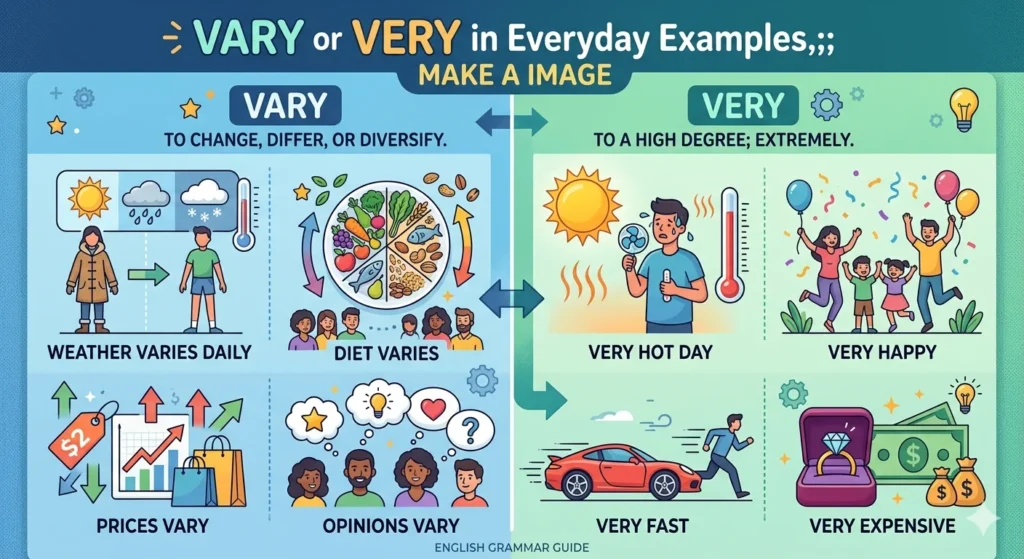
Emails
- Prices may vary depending on quantity.
- Thank you for your very quick response.
News
- Weather conditions vary across regions.
- The situation is very serious.
Social Media
- My mood can vary daily 😅
- This is very funny 😂
Formal Writing
- Data may vary due to external factors.
- The results are very significant.
Vary or Very Google Trends & Usage Data
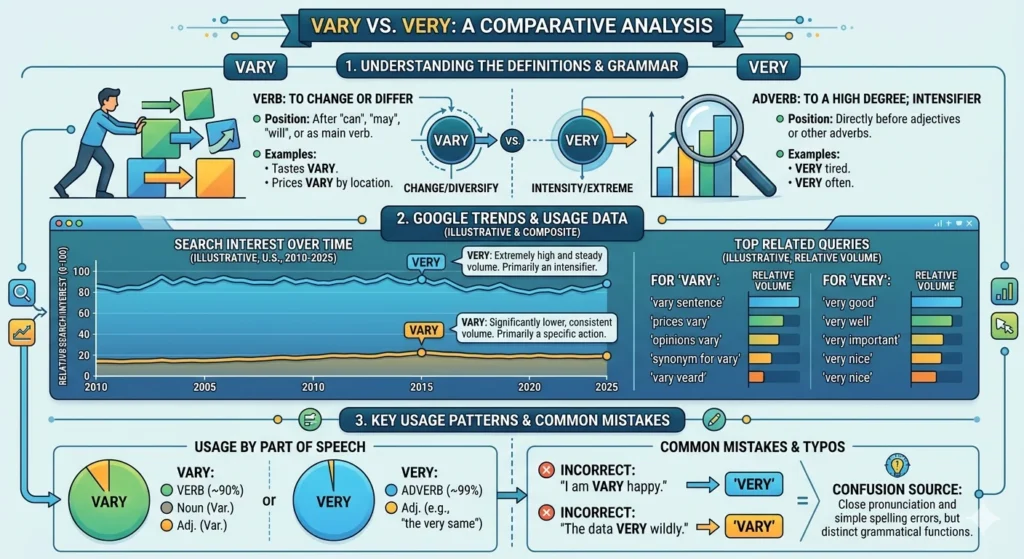
- Very is used much more often in daily English.
- Vary appears more in formal, academic, and business writing.
Usage by Context:
- Casual speech → Very
- Reports & data → Vary
Popularity:
- Global searches show people often type:
- vary or very which is correct
- how to spell vary or very
- vary or very grammar
👉 This shows confusion is common worldwide.
Comparison Table: Vary vs Very
| Feature | Vary | Very |
|---|---|---|
| Part of Speech | Verb | Adverb |
| Meaning | To change | Extremely |
| Example | Prices vary | Very good |
| Usage | Action | Emphasis |
| Synonyms | Change, differ | Extremely, really |
FAQs
1. What’s the difference between two and very?
“Two” is a number. “Very” is an intensifier. They are not related.
2. How do you use vary?
Use vary when something changes.
Example: Prices vary by season.
3. What is the difference between vary and wary?
- Vary = to change
- Wary = careful or cautious
4. How to use word vary?
Use it as a verb:
- Results vary
- Opinions vary
5. What is vary meaning?
Vary meaning = to differ or change.
6. Very pronunciation vs vary pronunciation?
- Very pronunciation: VEH-ree
- Vary pronunciation: VAIR-ee
7. Vary synonym?
Change, differ, alter.
Conclusion
Understanding vary or very is simple once you know their roles. Vary is about change, while very adds strength to a statement. Many learners mix them up because they sound similar, but their meanings are completely different.
If you remember one thing, make it this:
- Use vary when something changes
- Use very when you want to emphasize
Practice with real sentences, emails, and daily writing to build confidence. Over time, you will stop asking “is it vary or very” because the difference will feel natural. Clear writing comes from small details like this, and mastering them improves your English quickly.

“M.R. James, a playful storyteller at PunsBlast, crafting sharp puns and clever humor that turn everyday words into unforgettable laughs.”