
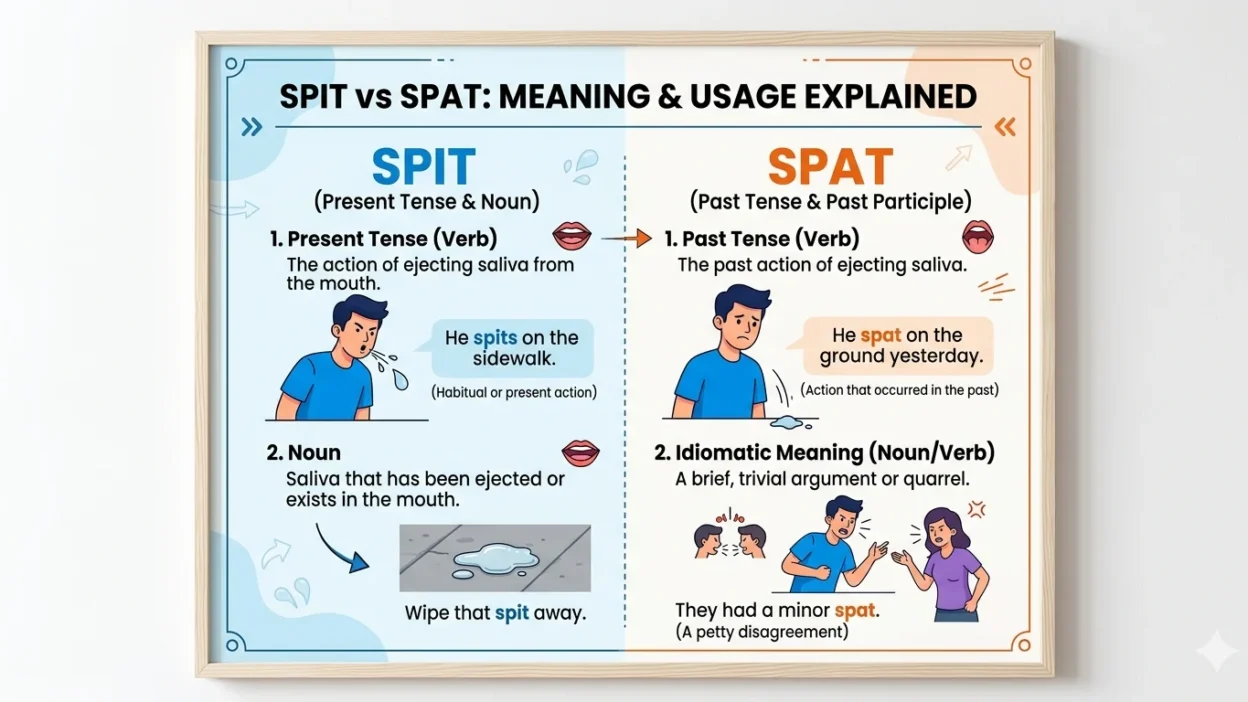
Many people get confused about “spit or spat” when writing or speaking English. You might have asked yourself: Do you say “spit” or “spat”?
or Is it spat on or spit on? This confusion is very common because both words are correct—but they are used in different ways.
The problem comes from verb forms. English verbs can change in the past tense, and some verbs have irregular forms.
That is where spit or spat past tense confusion begins. Some people use “spit” for both present and past, while others use “spat” only for the past.
This article will give you a quick answer, explain the spit or spat meaning, and show you when to use each one.
You will also learn about grammar rules, real-life examples, and common mistakes. By the end, you will clearly understand spit or spat difference and never feel unsure again.
Spit or Spat means
“Spit” is the present tense. “Spat” is the past tense (mainly in British English).
- Present: I spit on the ground.
- Past: He spat on the ground.
- Also correct (especially US): He spit on the ground.
👉 So, is spit and spat the same thing?
No. They are forms of the same verb, but used in different tenses.
The Origin of Spit or Spat
The word “spit” comes from Old English spittan, meaning to throw saliva from the mouth.
Over time, English developed irregular verbs. Some verbs changed in the past tense:
- sit → sat
- spit → spat
That’s why “spat” appeared as the past form.
But English keeps evolving. In modern use, especially in American English, people often use “spit” as both present and past.
👉 This is why the past tense of spit or spat can feel confusing.
British English vs American English Spelling
There is a small difference between how British and American English use these forms.
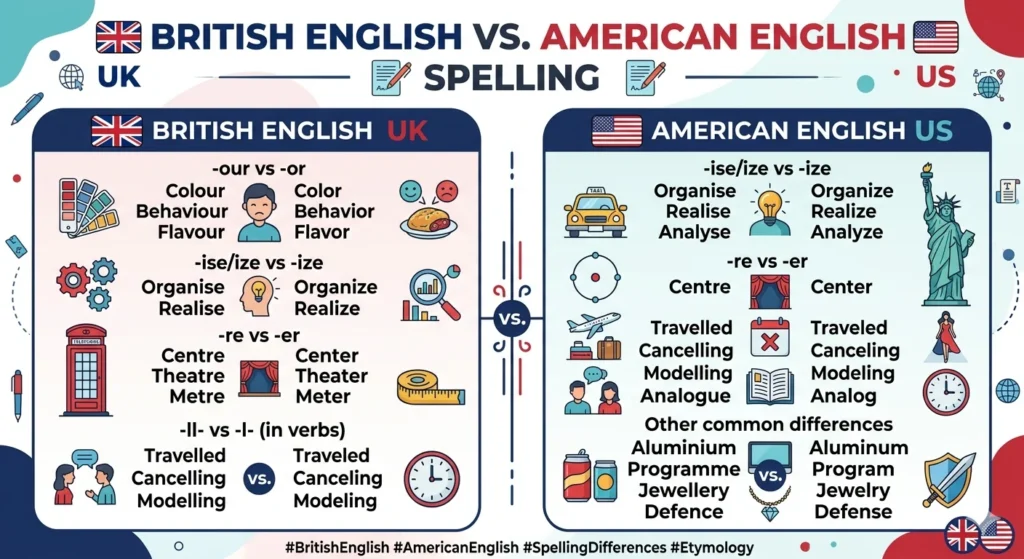
Key Difference:
- British English prefers spat (past tense)
- American English often uses spit for both
Comparison Table
| Form | British English | American English |
|---|---|---|
| Present | spit | spit |
| Past | spat | spit / spat |
| Past Participle | spat | spit |
Examples:
- UK: He spat on the floor.
- US: He spit on the floor.
👉 So if you ask, “is it spit or spat?” — the answer depends on location and style.
Which Spelling Should You Use?
Here is simple advice:
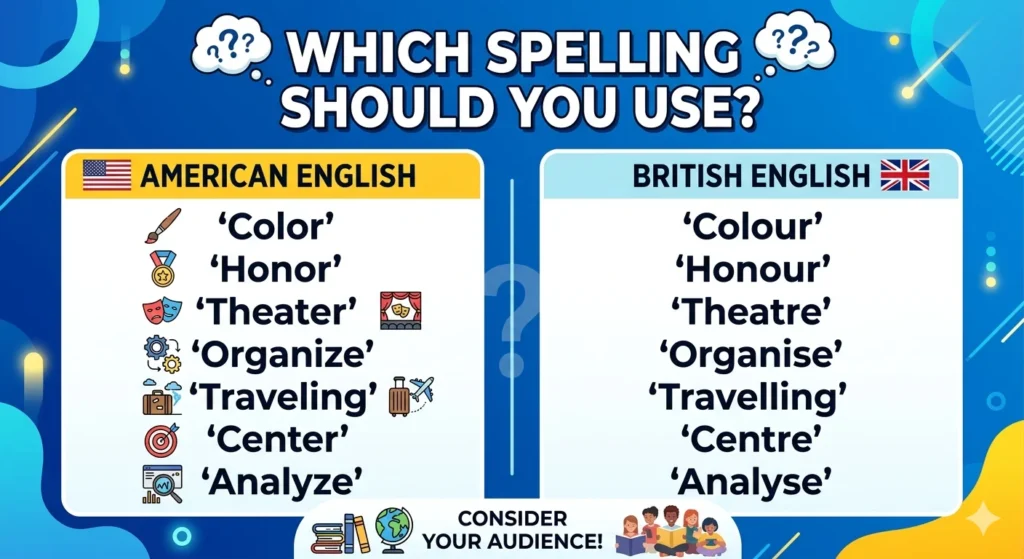
- For US audience: Use spit (safe and common)
- For UK audience: Use spat (more correct)
- For global writing: Both are okay, but stay consistent
👉 If you are unsure, using “spit” everywhere is the safest choice.
Common Mistakes with Spit or Spat
Here are frequent errors in spit or spat grammar:
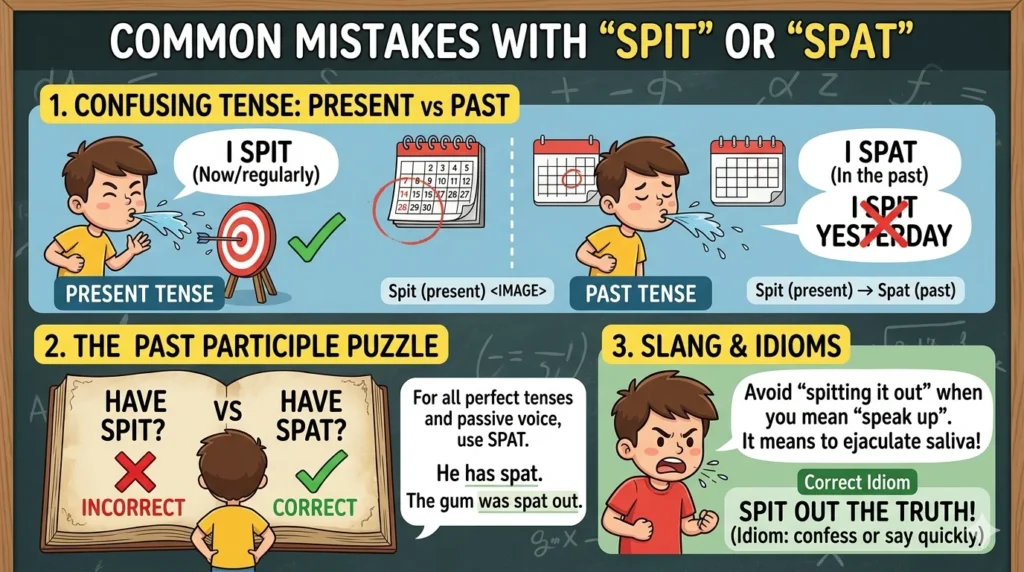
❌ Wrong: He spitted on the ground
✔ Correct: He spit or spat on the ground
❌ Wrong: She has spat (in US informal writing)
✔ Correct: She has spit
❌ Wrong: Is spat a word? (thinking it’s wrong)
✔ Correct: Yes, spat meaning = past tense of spit (mainly UK)
👉 Always remember:
- Never use spitted
- Choose spit or spat past tense based on audience
Spit or Spat in Everyday Examples
Here are real-life spit or spat examples:
Emails
- He spit out his drink after reading the joke.
News
- The protester spat at the police officer.
Social Media
- I literally spit my coffee laughing 😂
Formal Writing
- The man spat on the ground in anger.
👉 This shows how spit meaning changes with tense and tone.
Spit or Spat Google Trends & Usage Data
Search data shows:

- “Spit” is more popular worldwide
- “Spat” is more common in the UK and Commonwealth countries
- People often search:
- Is it spit or spat?
- Spit or spat past tense
- What is the meaning of spat?
👉 This proves that when to use spit or spat is a common global question.
Comparison Table: Spit vs Spat
| Feature | Spit | Spat |
|---|---|---|
| Meaning | To eject saliva | Same action (past) |
| Tense | Present + Past (US) | Past (UK) |
| Usage | Global | Mostly British |
| Example | I spit | He spat |
FAQs
1. Is spit and spat the same thing?
No. They are different forms of the same verb. “Spit” is present, “spat” is past.
2. Do you say “spit” or “spat”?
Both are correct. Use spit in US English and spat in UK English.
3. What is the meaning of spat?
Spat meaning: It is the past tense of “spit,” meaning expelled saliva.
4. Is it spat on or spit on?
Both are correct:
- UK: spat on
- US: spit on
5. What is the past tense of spit or spat?
It can be spat (UK) or spit (US).
6. Is spat a word?
Yes, it is a correct English word.
7. What is spit past and past participle?
In American English:
- Past: spit
- Past participle: spit
Conclusion
Understanding spit or spat is simple once you know the basics. Both words come from the same verb, but they are used in different ways depending on tense and region. “Spit” is the present tense and is also widely used as the past tense in American English. “Spat” is the traditional past tense, mainly used in British English.
The confusion happens because English does not always follow strict rules. That is why questions like “is it spit or spat” or “past tense spit or spat” are so common. The good news is that both forms are correct, so you will not be wrong if you choose either—just stay consistent.
If you write for a global audience, using “spit” is the safest option. If you write for a UK audience, use “spat” for better accuracy. Now you understand the spit or spat difference, you can use them with confidence in any situation.

“George Gissing, a humor-loving writer at PunsBlast, crafting witty puns and playful word magic to make readers laugh every single day.”