Have you ever paused while writing and wondered whether to use later or latter? You are not alone.
Many English learners and native speakers confuse these two words because they look and sound similar. However, their meanings are very different.
People often search for later vs latter because they want to avoid grammar mistakes in emails, essays, business writing, and everyday conversations. Using the wrong word can change the meaning of a sentence and make your writing unclear.
The confusion becomes even greater when words like letter, former, and latter appear together.
Questions such as former or latter or later, later or latter part of the week, and letter vs latter are common among writers and students.
In this guide, you will learn the later vs latter meaning, correct usage, pronunciation, grammar rules, real-life examples, and professional writing advice. By the end, you will know exactly when to use each word and how to avoid common mistakes.
Later vs Latter means
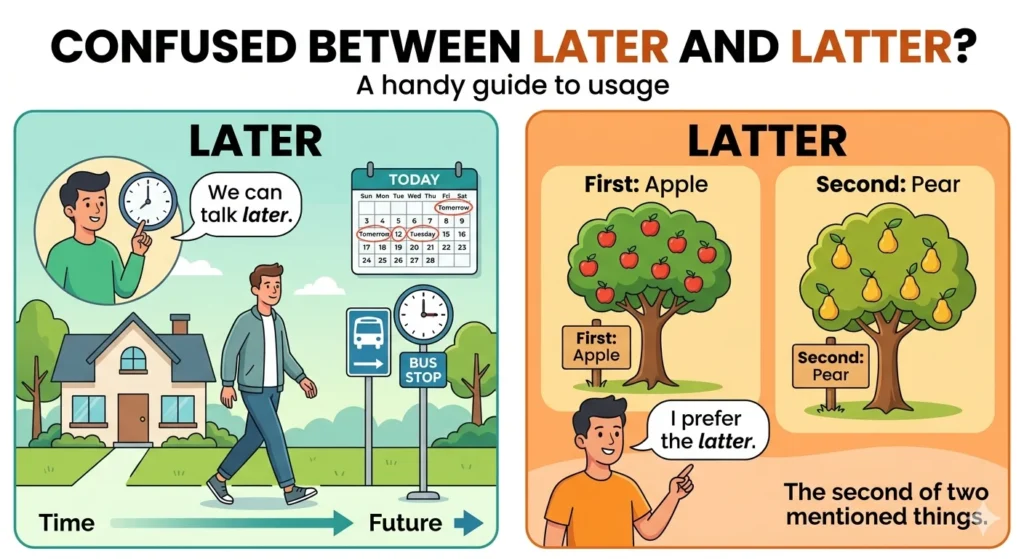
The difference is simple:
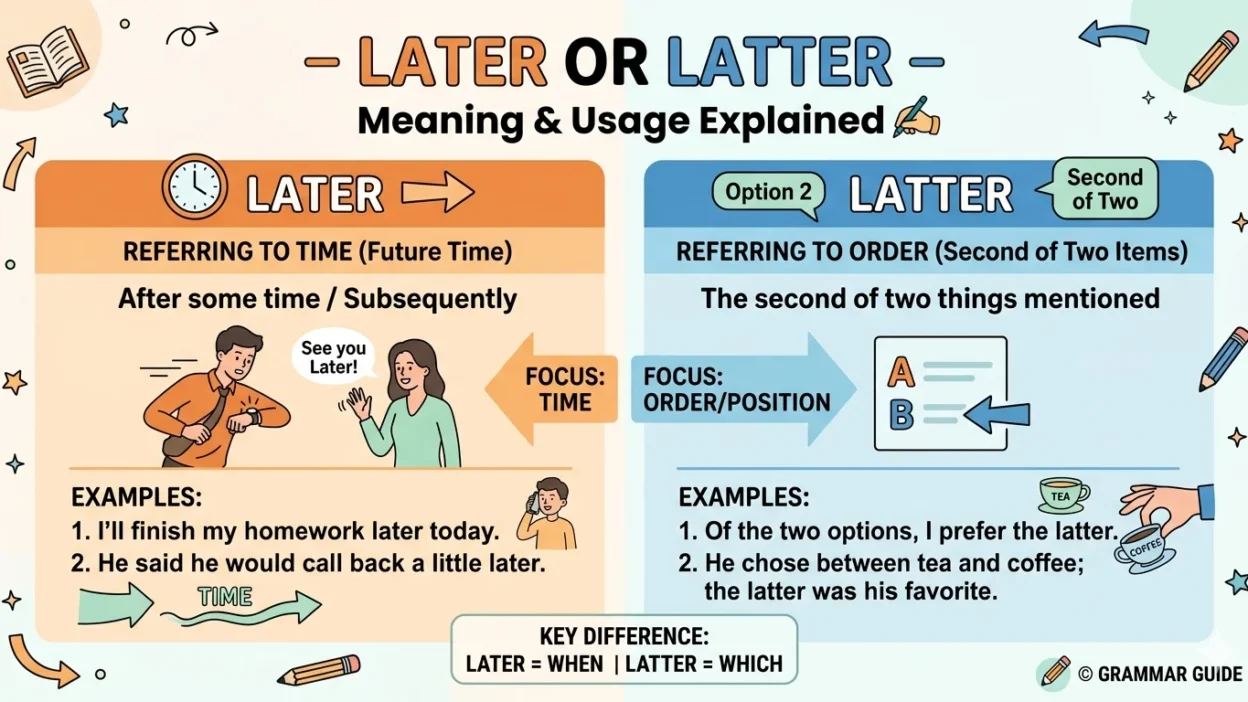
- Later refers to time. It means after the present moment or after another time.
- Latter refers to the second of two things mentioned.
Examples
Later
- I will call you later.
- Let’s discuss it later this week.
- The meeting was moved to a later date.
Latter
- We discussed tea and coffee. I prefer the latter.
- Between summer and winter, the latter is colder.
- The latter option is more affordable.
Quick Memory Trick
- Later = Time
- Latter = Second Choice
The Origin of Later vs Latter
Understanding the history of these words helps explain why they look similar.
Later
The word later comes from the Latin word later, meaning “more late” or “afterward.” It developed as the comparative form of “late.”
Examples:
- Come back later.
- We can finish the project later.
Latter
The word latter comes from the Old English word lætra, meaning “the second of two.”
Its purpose has always been to identify the second item in a pair.
Examples:
- Between science and history, the latter interests me more.
- We reviewed two plans and selected the latter.
Why the Spelling Difference Exists
Although both words come from similar historical roots related to comparison, they evolved with different meanings:
| Word | Meaning | Main Use |
|---|---|---|
| Later | After a time | Time reference |
| Latter | Second of two items | Comparison reference |
British English vs American English Spelling
Unlike many English words, later and latter have the same spelling in both British and American English.
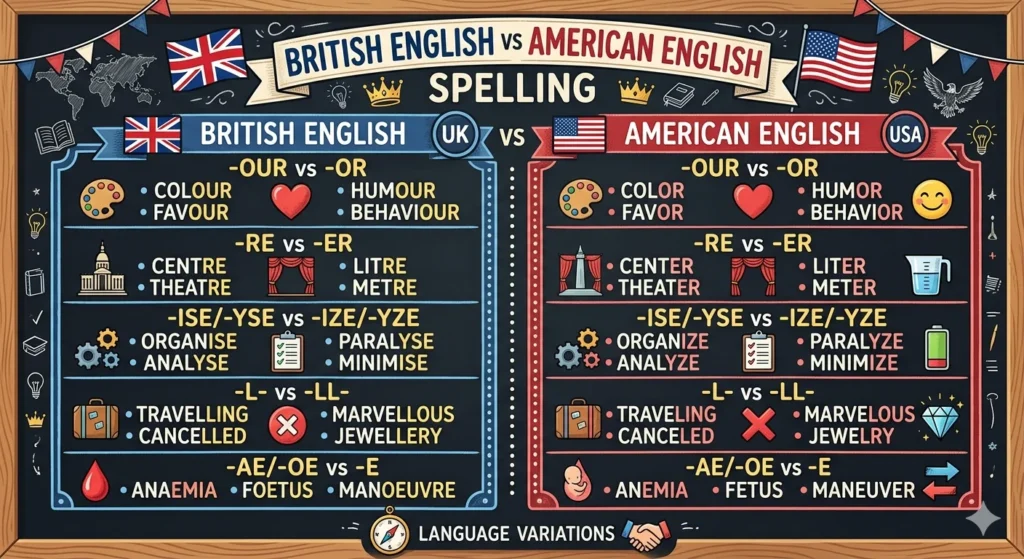
The difference is not regional. The challenge is understanding their meanings.
Examples
| Context | British English | American English |
|---|---|---|
| Time | See you later. | See you later. |
| Second option | I chose the latter. | I chose the latter. |
| Business writing | A later meeting was arranged. | A later meeting was arranged. |
| Comparison | The latter proposal won. | The latter proposal won. |
Key Point
Whether you write for the UK, USA, Canada, Australia, New Zealand, or another English-speaking country, the rules remain the same.
Which Spelling Should You Use?
Since both words are correct, your choice depends on meaning.
Use “Later” When Talking About Time
Examples:
- I will reply later.
- We will discuss this later this month.
- The event starts later today.
Use “Latter” When Referring to the Second Item
Examples:
- Between cats and dogs, I prefer the latter.
- We considered two options and selected the latter.
Audience-Based Advice
| Audience | Recommended Usage |
|---|---|
| US Readers | Use later for time, latter for second option |
| UK Readers | Use later for time, latter for second option |
| Commonwealth Countries | Same rule applies |
| Global Audience | Use the standard definitions |
The distinction is universal.
Common Mistakes with Later vs Latter
Many writers mix these words because of their similar spelling and later vs latter pronunciation.
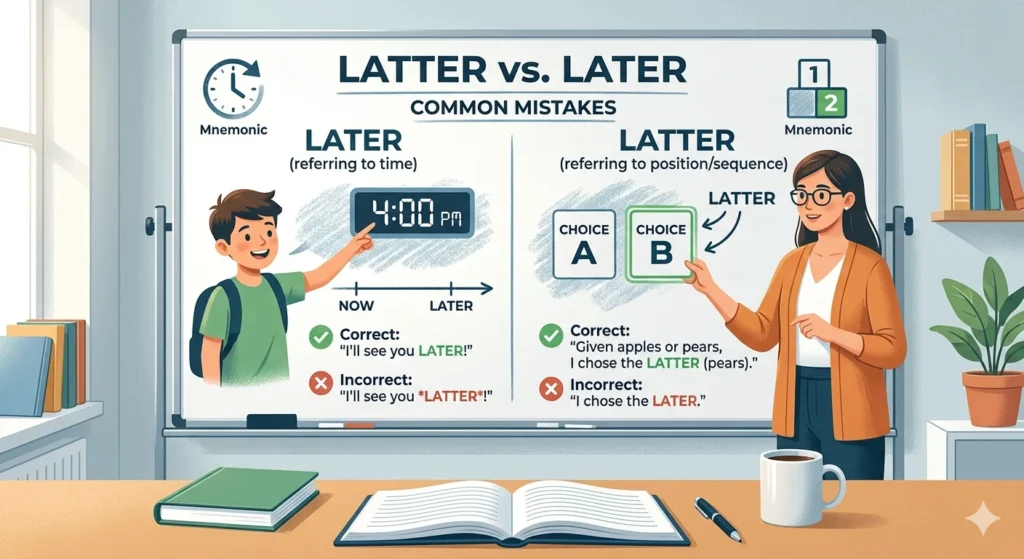
Mistake #1
❌ I will call you latter.
✅ I will call you later.
Reason: The sentence refers to time.
Mistake #2
❌ Between coffee and tea, I prefer the later.
✅ Between coffee and tea, I prefer the latter.
Reason: You are selecting the second item.
Mistake #3
❌ The latter part of next month means the second choice.
✅ The latter part of next month means the later section of the month.
Context matters.
Mistake #4: Letter vs Latter
Many people accidentally type letter instead of latter.
❌ I prefer the letter option.
✅ I prefer the latter option.
Letter vs latter is a common spelling error because the words look similar.
Later vs Latter in Everyday Examples
Understanding real-world usage makes the difference easier.
Emails
Later
- I will send the report later today.
- We can discuss the issue later.
Latter
- We reviewed two proposals. The latter seems stronger.
News Writing
Later
- The announcement came later in the evening.
Latter
- The company compared two products. The latter generated more sales.
Social Media
Later
- Catch you later!
Latter
- Between Instagram and TikTok, the latter has more engagement among younger users.
Formal Writing
Later
- Further research was conducted at a later stage.
Latter
- Of the two approaches, the latter produced better results.
Later vs Latter Sentences
- I’ll see you later.
- The latter argument was more convincing.
- We can finish the project later.
- Between red and blue, I chose the latter.
- A later review revealed additional information.
Later vs Latter Grammar Examples
- Correct: We met later that day.
- Correct: The latter suggestion was accepted.
- Incorrect: We met latter that day.
- Incorrect: I chose the later of the two options.
Later vs Latter – Google Trends & Usage Data
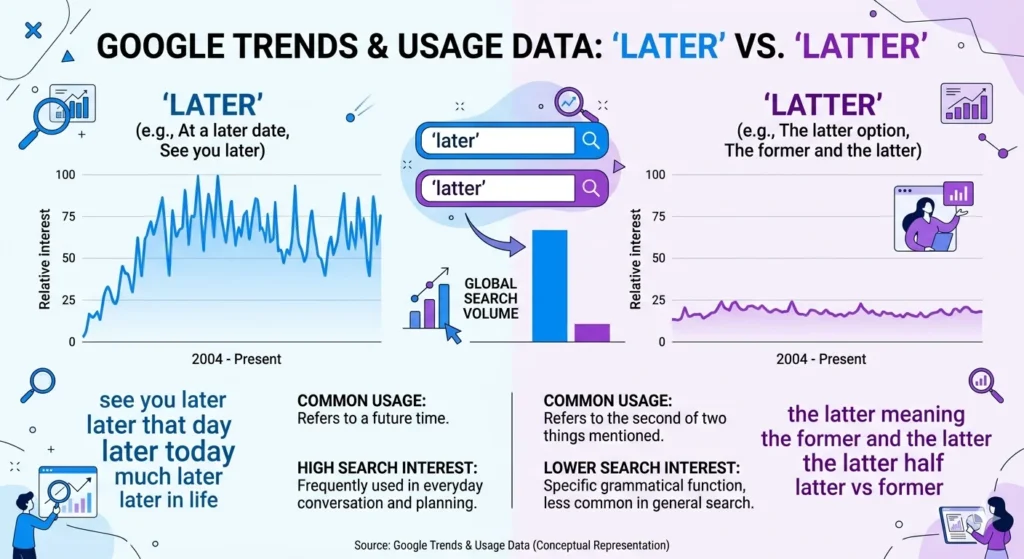
Search behavior shows that many people regularly look up later vs latter meaning, later vs latter definition, and later vs latter grammar because the words are frequently confused.
Popular Countries for Searches
- United States
- United Kingdom
- Canada
- Australia
- India
- Pakistan
Common Search Intent
Users frequently search:
- later vs latter
- later vs latter examples
- later vs latter pronunciation
- later vs latter dictionary
- later vs latter exercises
- later vs latter grammar examples
- later vs latter vs letter
- former or latter or later
- later or latter part of the week
Usage Context Comparison
| Phrase | Meaning |
|---|---|
| Later meaning | After a certain time |
| Latter meaning | Second of two items |
| Later part of the week | End of the week |
| Latter option | Second option mentioned |
| Former or latter | First or second item |
| Later vs latter definition | Difference between time and sequence |
Comparison Table: Later vs Latter vs Letter
| Word | Meaning | Example |
|---|---|---|
| Later | After a time | I’ll call you later. |
| Latter | Second of two things | I chose the latter. |
| Letter | Written character or message | She sent a letter. |
This table helps avoid confusion between later vs latter vs letter.
FAQs
What is the difference between later and latter?
Later refers to time. Latter refers to the second of two items.
Is latter related to time?
Usually no. It identifies the second item in a comparison.
How do you use latter in a sentence?
Example: We discussed tea and coffee. I preferred the latter.
What does later mean?
The later meaning is “afterward” or “at a future time.”
Which is correct: later part of the week or latter part of the week?
Both can appear, but later part of the week is more common when discussing time.
How do you remember later vs latter?
Remember:
- Later = Time
- Latter = Second Choice
Are later and latter pronounced differently?
Yes. Later vs latter pronunciation differs slightly because of the extra “t” sound in latter.
Are there later vs latter exercises for practice?
Yes. Try filling blanks with the correct word:
- I’ll finish it _____.
- Between the two options, I chose the _____.
- We met again _____ that evening.
Answers:
- later
- latter
- later
Conclusion
The difference between later vs latter is simple once you understand their core meanings. Later relates to time and means “afterward” or “at a future point.” Latter refers to the second of two items already mentioned. Although the words look similar, they serve completely different purposes in English grammar.
A useful trick is to remember that later helps answer “when?” while latter helps answer “which one?” When discussing schedules, events, or future actions, use later. When comparing two choices, ideas, or people, use latter.
Writers often confuse these terms because of their similar spelling and pronunciation. Learning the distinction can improve your emails, essays, business communication, and everyday writing. It also helps avoid confusion with words such as letter and former.
Whenever you are unsure, ask yourself whether the sentence refers to time or the second item in a pair. That simple check will help you choose the correct word every time.

“George Gissing, a humor-loving writer at PunsBlast, crafting witty puns and playful word magic to make readers laugh every single day.”