Many people search for device vs devise because the two words look almost the same.
They differ by only one letter, but their meanings are very different. This small spelling change often causes grammar mistakes in emails, essays, blog posts, and social media writing.
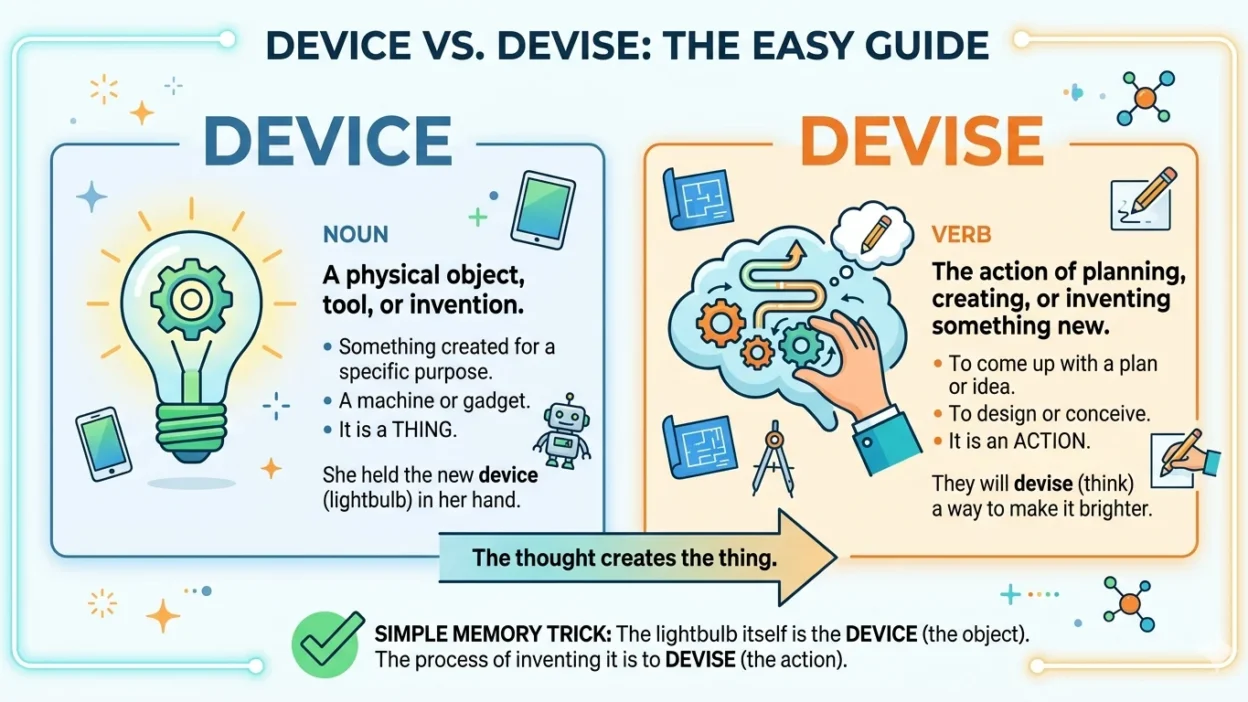
So, is it a device or devise? The answer depends on how you use the word. Device is a noun.
It means a tool, machine, or object like a phone or laptop. Devise is a verb. It means to create, invent, or plan something.
This confusion is common because both words come from similar language roots and sound alike in fast speech.
Many learners also ask questions like “What does devise mean?”, “What is an example of devise?”, and “What does devise mean in phone?” These questions show that users want both a quick answer and deeper grammar help.
In this guide, you will learn the meaning, spelling, pronunciation, grammar, examples, and usage differences between device vs devise in simple English.
Device vs Devise means
The difference between device vs devise is simple:
| Word | Part of Speech | Meaning | Example |
|---|---|---|---|
| Device | Noun | A tool or machine | My phone is a useful device. |
| Devise | Verb | To invent or create | She will devise a new plan. |
Quick Examples
- Device: I bought a new gaming device.
- Devise: The team must devise a better strategy.
So, if you talk about an object, use device.
If you talk about creating or planning something, use devise.
This is the core meaning behind device vs devise definition and device vs devise meaning.
The Origin of Device vs Devise
The words device and devise come from old French and Latin roots. Long ago, both words were connected to ideas of planning and thinking.
Device Origin
The word device started as a noun. It first meant a plan, design, or invention. Over time, it became linked to tools and machines.
Today, people use device for:
- Phones
- Tablets
- Medical tools
- Smart home gadgets
Example:
- This device helps people track their sleep.
Devise Origin
The word devise became a verb. It means to invent, create, or arrange something carefully.
Example:
- Engineers devised a safer system.
The spelling difference exists because English changed over time. One word stayed mainly a noun (device), while the other became a verb (devise verb).
British English vs American English Spelling
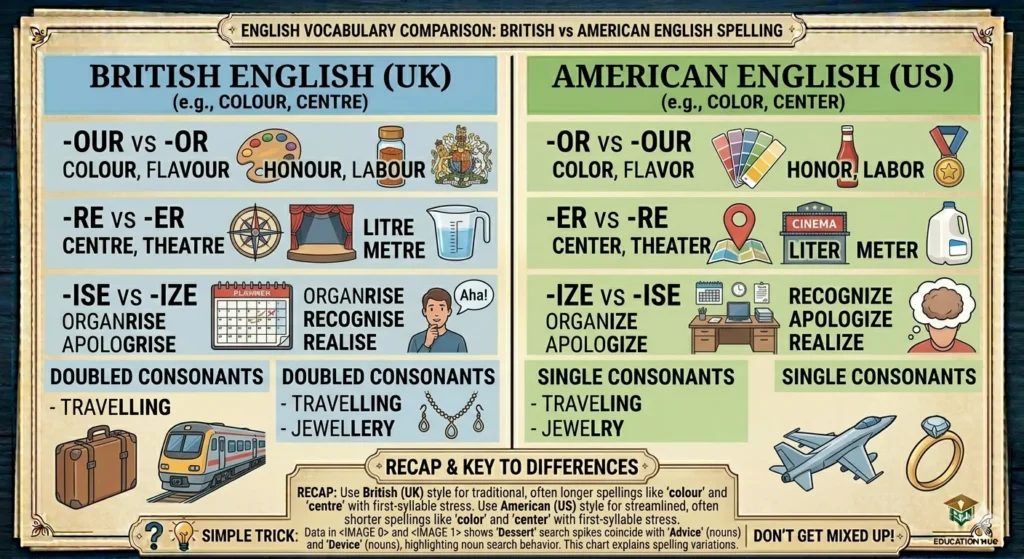
Unlike many English words, device vs devise does not change spelling between British and American English. Both countries use the same spellings.
However, confusion still happens because the words sound similar.
Comparison Table
| Usage | British English | American English |
|---|---|---|
| Tool or machine | Device | Device |
| Create or invent | Devise | Devise |
| Example sentence | This device is useful. | This device is useful. |
| Example sentence | They devised a solution. | They devised a solution. |
Spelling Rule
- Device = noun
- Devise = verb
This is the most important rule in device vs devise grammar.
Which Spelling Should You Use?
The correct spelling depends on your meaning.
Use “Device” When Talking About Objects
Choose device if you mean:
- A phone
- A laptop
- A machine
- A tool
Example:
- My smart device needs charging.
Use “Devise” When Talking About Ideas
Choose devise if you mean:
- Create
- Invent
- Plan
- Design
Example:
- We must devise a new marketing plan.
Audience-Based Advice
| Audience | Best Choice |
|---|---|
| US readers | Device / Devise |
| UK readers | Device / Devise |
| Global audience | Device / Devise |
The spellings stay the same worldwide.
Common Mistakes with Device vs Devise
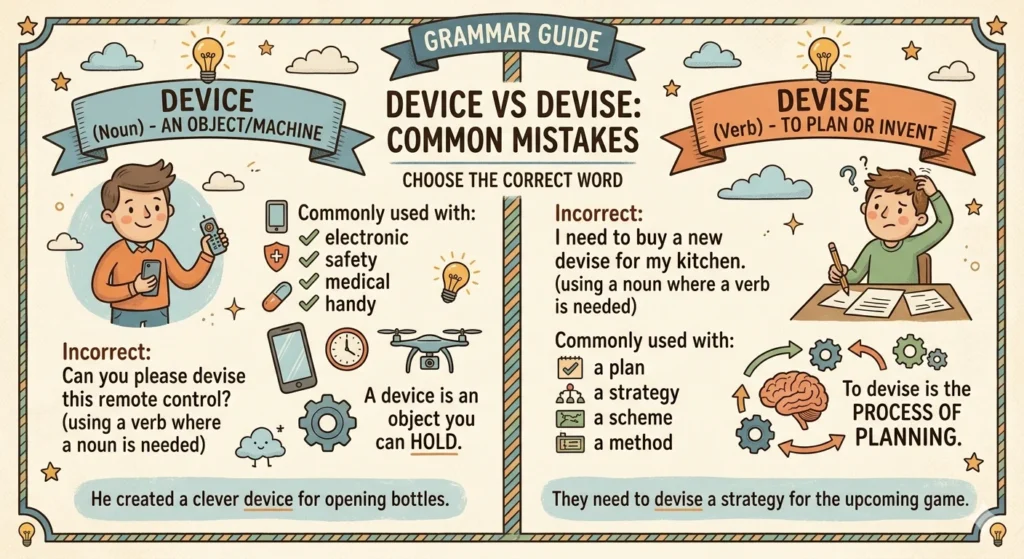
People often mix these words because they look similar.
Mistake 1
❌ I bought a new devise.
✅ I bought a new device.
Reason: A phone or tool is a noun.
Mistake 2
❌ We need to device a plan.
✅ We need to devise a plan.
Reason: Creating a plan uses the verb.
Mistake 3
❌ This devise is expensive.
✅ This device is expensive.
Mistake 4
❌ They device new ideas daily.
✅ They devise new ideas daily.
Easy Memory Trick
- C in device = computer or cellphone
- S in devise = strategy or solution
This trick helps avoid common device vs devise examples mistakes.
Device vs Devise in Everyday Examples
Here are real-life examples of how people use these words.
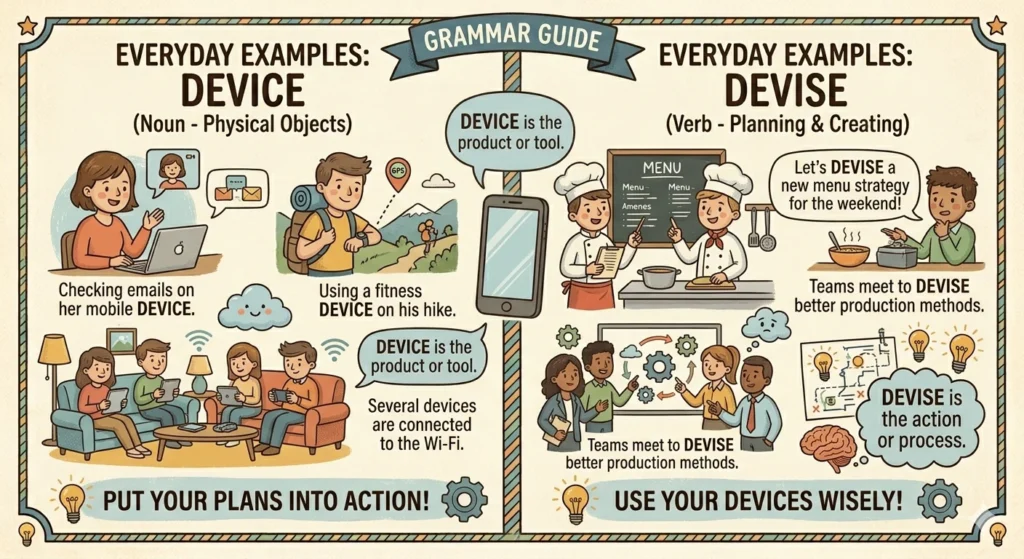
In Emails
- Please bring your electronic device to the meeting.
- We need to devise a better sales strategy.
In News Articles
- The company launched a medical device.
- Scientists devised a new treatment method.
On Social Media
- My new gaming device is amazing.
- Fans devised funny memes online.
In Formal Writing
- The device collects user data securely.
- Researchers devised a testing process.
In Technology
Some users ask: What does devise mean in phone?
Actually, people usually mean device, not devise.
Correct sentence:
- Your mobile device is connected.
Incorrect sentence:
- Your mobile devise is connected.
Device vs Devise – Google Trends & Usage Data
The word device is much more popular than devise because technology is everywhere today.
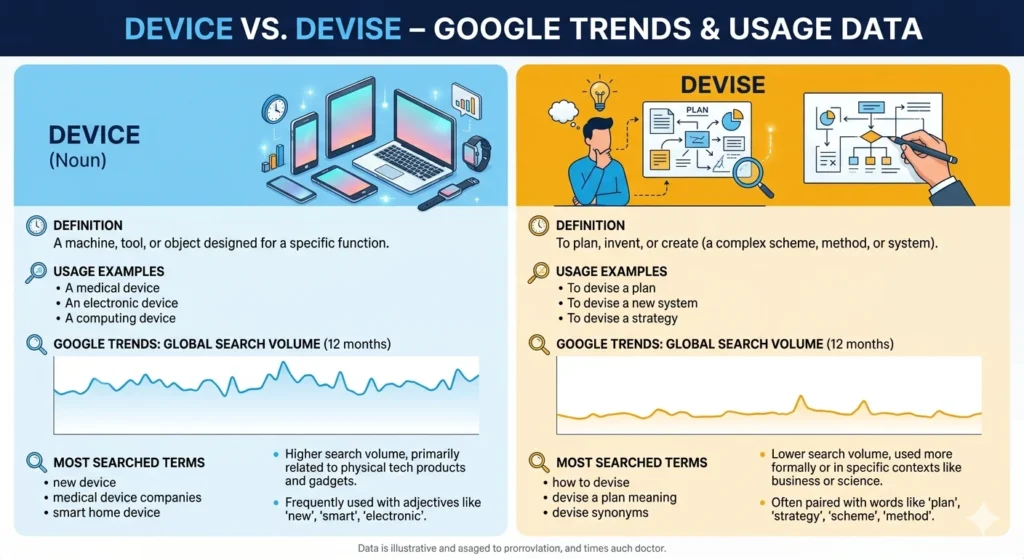
Device Usage
People often search for:
- Mobile device
- Smart device
- Electronic device
Countries with high usage:
- United States
- United Kingdom
- India
- Canada
Devise Usage
The word devise appears more in:
- Academic writing
- Business plans
- Legal writing
- News reports
People search:
- Devise meaning
- Devise part of speech
- Devise noun
- Devise verb
Usage Context Table
| Word | Most Common Context |
|---|---|
| Device | Technology |
| Devise | Planning and creation |
Device vs Devise Pronunciation
Many learners also ask about devise vs device pronunciation.
| Word | Pronunciation |
|---|---|
| Device | dih-VICE |
| Devise | dih-VIZE |
The ending sound changes:
- Device → “s” sound
- Devise → “z” sound
Device vs Devise Examples
Device Examples
- This device tracks heart rate.
- My device battery is low.
- The doctor used a medical device.
Devise Examples
- She devised a smart solution.
- The company devised a new system.
- Teachers devised online lessons.
Device vs Device
Some users search for device vs device by mistake. The correct comparison is device vs devise.
Remember:
- Device = thing
- Devise = action
FAQs About Device vs Devise
1. Is it a device or devise?
Use device for objects and devise for creating ideas or plans.
2. What does devise mean?
Devise meaning: to invent, create, or plan something carefully.
Example:
- They devised a business strategy.
3. What is an example of devise?
Example:
- Engineers devised a safer bridge design.
4. What does devise mean in phone?
In phone-related writing, people usually mean device, not devise.
Correct:
- Mobile device
Incorrect:
- Mobile devise
5. Is devise a noun or verb?
Devise is mainly a verb.
Example:
- We devised a solution.
6. What part of speech is device?
Device is a noun.
Example:
- This device is useful.
7. How do you remember device vs devise?
Use this trick:
- Device = object
- Devise = create
Conclusion
Understanding device vs devise is easy once you know the grammar rule. The word device is a noun that refers to a tool, machine, or electronic object. The word devise is a verb that means to invent, plan, or create something new.
This small spelling difference causes many writing mistakes, especially in technology topics and business writing. People often confuse the words because they look alike and sound similar. Still, their functions in a sentence are completely different.
A good way to remember the difference is simple. If you can touch it, it is usually a device. If you create or plan it, you devise it.
Whether you write emails, blog posts, academic papers, or social media captions, using the correct spelling improves clarity and professionalism. Now you know the full device vs devise definition, grammar, pronunciation, examples, and correct usage.

“Margaret Oliphant, a witty wordsmith at PunsBlast, blending charm and clever humor to turn everyday moments into laugh-worthy puns.”