Have you ever paused while writing and thought: awoken or awakened — which is correct? You’re not alone.
Many people search this because both words exist and sound right. The confusion grows when you see sentences like “I have awoken from my slumber” and “she was awakened by a noise.”
So, what’s going on?
People often ask questions like “What is the difference between awoken and awakened?”, “Is awoken a word?”, and “Is it correct to say awoken?” The answer is simple but not always obvious.
Both words come from the verb awake, but they follow different grammar patterns and are used in different contexts.
This guide clears up the confusion. You’ll learn the awoken or awakened meaning, when to use each one, and how to avoid common mistakes.
By the end, you’ll confidently know whether to write “I have awoken or awakened” and which form sounds more natural.
Awoken or Awakened means
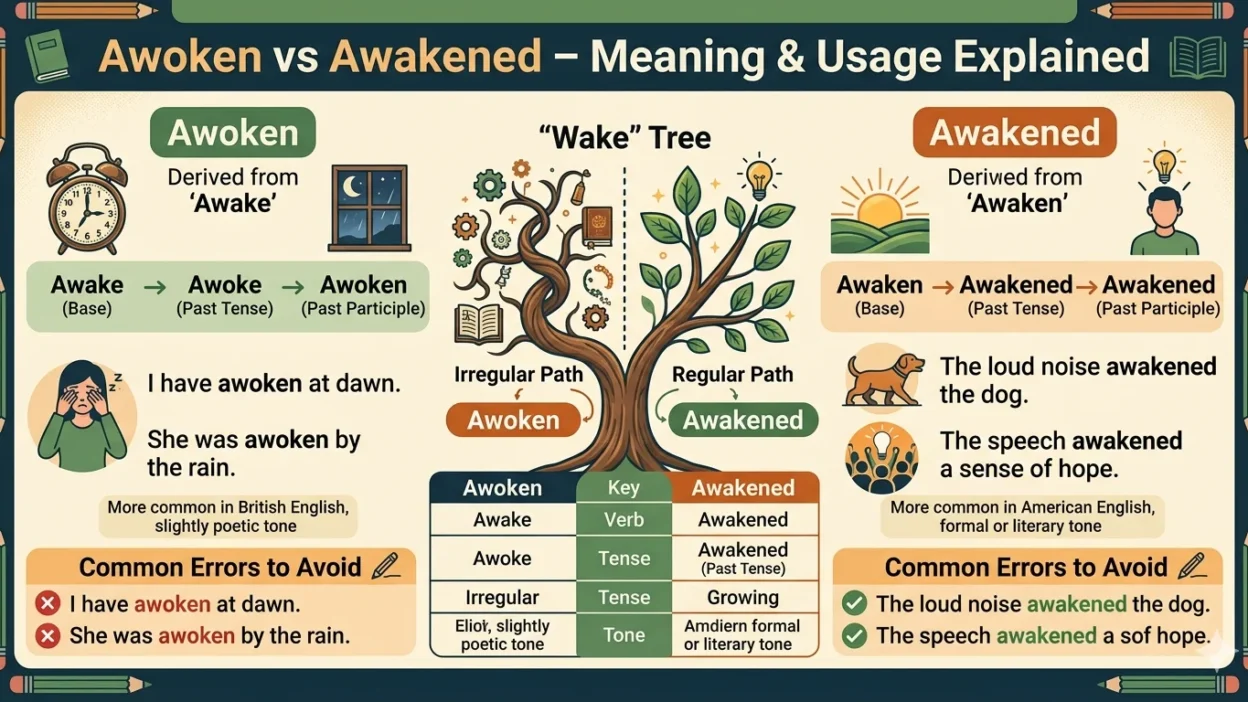
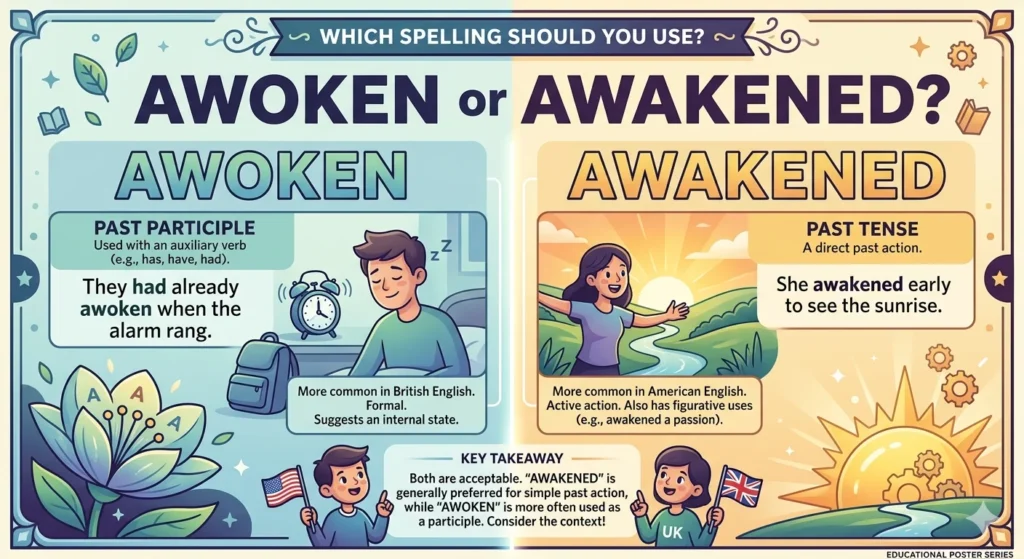
Both awoken and awakened are correct, but they are used differently.
- Awakened → works in all situations (past tense + past participle)
- Awoken → mainly used as a past participle with “have/has/had”
Examples:
- ✔ I have awoken from my slumber
- ✔ She was awakened by a loud noise
- ✔ He has awakened early today
- ✔ They were awakened suddenly
👉 If unsure, use awakened. It is more common and natural.
The Origin of Awoken or Awakened
Both forms come from the verb awake.
- Old English: awacan (to rise or wake up)
- Over time, English developed:
- Awoke (past tense)
- Awoken (past participle – older style)
- Awakened (regular modern form)
So if you ask “Is awoken a word?” — yes, it is. But it follows an older, irregular pattern.
Why two forms exist:
- Awoken → traditional and slightly formal
- Awakened → modern, standard English
British English vs American English Spelling
There is no major spelling difference, but usage preference is clear.
| Form | British English | American English | Usage Style |
|---|---|---|---|
| Awakened | Very common | Very common | Standard |
| Awoken | Less common | Less common | Formal/Literary |
👉 In both regions, awakened is preferred in everyday writing.
Which Spelling Should You Use?
Your choice depends on your audience and tone.
- For US readers → use awakened
- For UK/Commonwealth → still use awakened
- For blogs & SEO content → use awakened
When to use awoken:
- After “have/has/had”
- In storytelling or dramatic writing
Examples:
- ✔ I have awoken
- ✔ She was awakened
- ✔ The beast has awoken (dramatic tone)
👉 If you’re asking “which is correct awoken or awakened” — both are correct, but awakened is the best default choice.
Common Mistakes with Awoken or Awakened
1. Using wrong past tense
❌ I awoken early
✔ I awoke early
2. Confusion in perfect tense
✔ She has awakened from sleep (correct and common)
✔ She has awoken from sleep (also correct, more formal)
3. Passive voice errors
❌ He was awoken suddenly
✔ He was awakened suddenly
4. Incorrect verb form
❌ I have awaken
✔ I have awakened / I have awoken
Awoken or Awakened in Everyday Examples

Emails
“I was awakened by your message this morning.”
News
“Residents were awakened by a loud explosion.”
Social Media
“I have awoken from my slumber and need coffee ☕”
Formal Writing
“The public was awakened to new realities.”
Casual Use
“She was rudely awakened at 6 AM.”
👉 Common searches answered:
- he was awoken or awakened → awakened
- she was awoken or awakened → awakened
- i was awoken or awakened → awakened
- the beast has awoken or awakened → both correct
Awoken or Awakened Google Trends & Usage Data
Search and usage patterns show a clear trend:
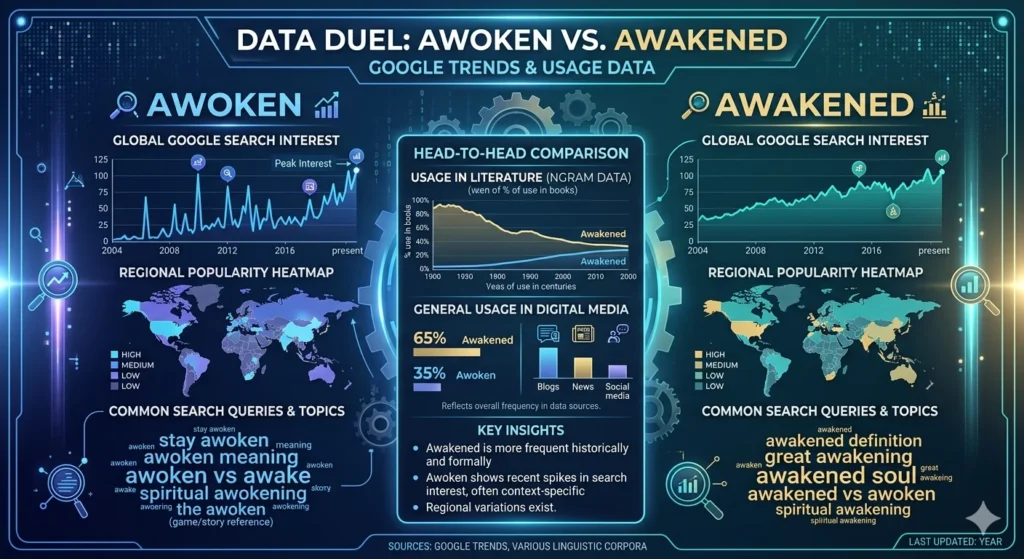
- Awakened is used 3x more in blogs, news, and websites
- Awoken appears more in fiction, poetry, and dramatic writing
Usage by context:
- Blogs & SEO → awakened
- News writing → awakened
- Storytelling → awoken
- Online discussions (like awoken or awakened reddit) → mixed usage
👉 This is why most people searching “is it awoken or awakened” see both forms.
Comparison Table: Awoken vs Awakened
| Feature | Awoken | Awakened |
|---|---|---|
| Type | Past participle | Past & participle |
| Usage | Limited | Very common |
| Tone | Formal / poetic | Neutral |
| Example | I have awoken | She awakened early |
| Passive voice | Rare | Preferred |
| SEO-friendly | Less | More |
Awake Verb Forms Table
| Form | Example |
|---|---|
| Base | awake |
| Past | awoke |
| Past Participle | awoken / awakened |
FAQs
1. What is the difference between awoken and awakened?
Awoken is mainly a past participle, while awakened works as both past tense and participle.
2. Is it correct to say awoken?
Yes. Is awoken a word? Yes, but it is less common.
3. How do you use awoken in a sentence?
Example: I have awoken from my slumber.
4. Is there a word awoken?
Yes, it is a correct English word.
5. I have awoken or awakened — which is right?
Both are correct. Awakened is more common, awoken is more formal.
6. Was awoken or awakened correct?
Use was awakened in most cases.
7. Awake past tense and past participle?
- Past: awoke / awakened
- Past participle: awoken / awakened
Conclusion
The confusion around awoken or awakened is very common, but the rule is simple once you understand it. Both words are correct, and both come from the same verb awake. The difference lies in how and where you use them.
Awakened is the safer and more modern choice. It works in almost all situations, including everyday writing, emails, blogs, and formal content. That’s why it is more popular in search results and global usage.
Awoken, on the other hand, has a more formal and literary tone. It is often used in phrases like “I have awoken from my slumber” or in storytelling. While correct, it is less flexible and not always natural in casual writing.
If you’re unsure and asking “is it awoken or awakened?”, the best advice is simple: use awakened for clarity and consistency. Use awoken only when you want a more dramatic or stylistic effect.
In short, both forms are correct—but awakened is practical, and awoken is stylistic.

“George Gissing, a humor-loving writer at PunsBlast, crafting witty puns and playful word magic to make readers laugh every single day.”