Many people search for “brake vs break” because these two words sound the same but mean very different things.
This confusion is common in writing, emails, exams, and even social media posts. If you’ve ever asked, “Is it break or brake?” or “Does a car break or brake?”, you’re not alone.
These words are called homophones—they have the same pronunciation but different meanings and spellings.
Using the wrong one can make your writing look unprofessional or confusing. For example, writing “I need to brake from work” instead of “I need to break from work” changes the meaning completely.
In this guide, you’ll learn the brake vs break difference, how to use each word correctly, and avoid common mistakes.
We’ll also look at examples, tables, and real-life usage so you can master both words with confidence.
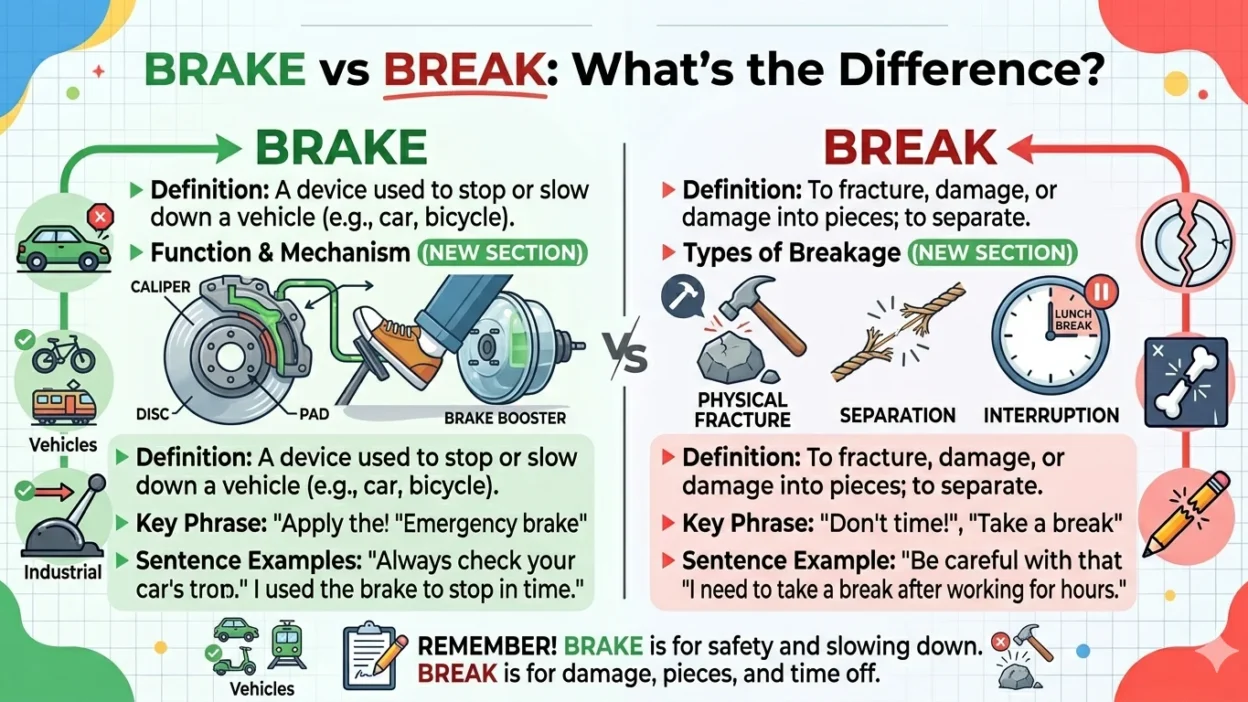
Brake vs Break means
Break = to separate, damage, or pause
Brake = a device used to stop motion (like in a car)
Examples:
- I need to take a break. ✅
- Press the brake to stop the car. ✅
Quick tip:
- Break = rest or damage
- Brake = stop movement
The Origin of Brake vs Break
The break meaning comes from Old English “brecan,” which means to split or shatter. Over time, it also came to mean taking rest, like a lunch break.
The word brake comes from a different root. It originally meant a tool used for crushing or slowing things down. Later, it became the word for the stopping system in vehicles.
So even though they sound the same (brake vs break pronunciation is identical), their origins are completely different.
British English vs American English Spelling
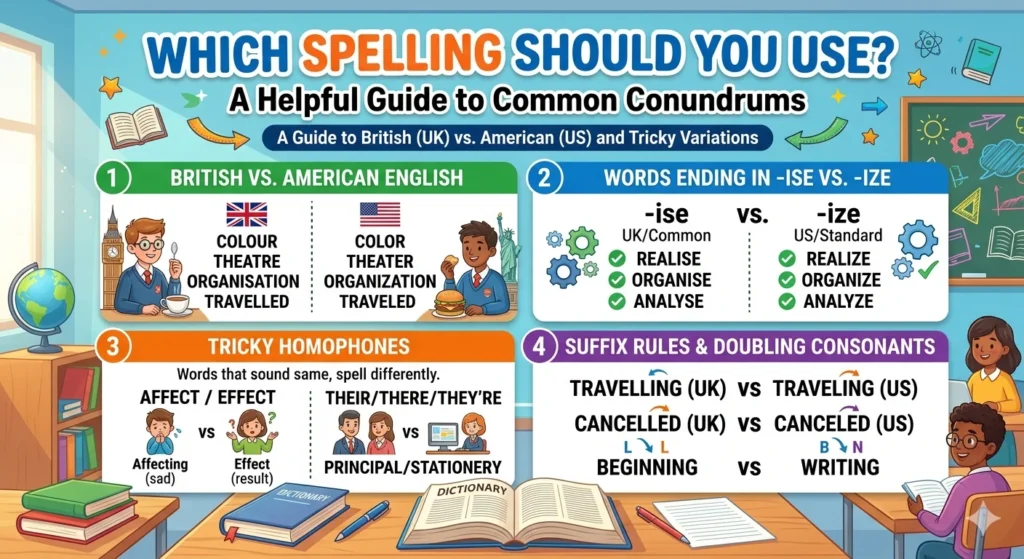
Good news: there is no spelling difference between British and American English for these words. Both use break and brake in the same way.
| Word | Meaning | Example (UK & US) |
|---|---|---|
| Break | Pause or damage | Let’s take a break |
| Brake | Stop movement | Use the brake |
Unlike other words, this confusion is not about region—it’s about meaning.
Which Spelling Should You Use?
Use the correct word based on context:
- US audience: Follow standard meanings (same rules apply)
- UK/Commonwealth: Same usage—no changes
- Global writing: Always match meaning, not pronunciation
Simple rule:
- Writing about rest, pause, or damage → break
- Writing about stopping motion → brake
Common Mistakes with Brake vs Break
Here are frequent errors and how to fix them:
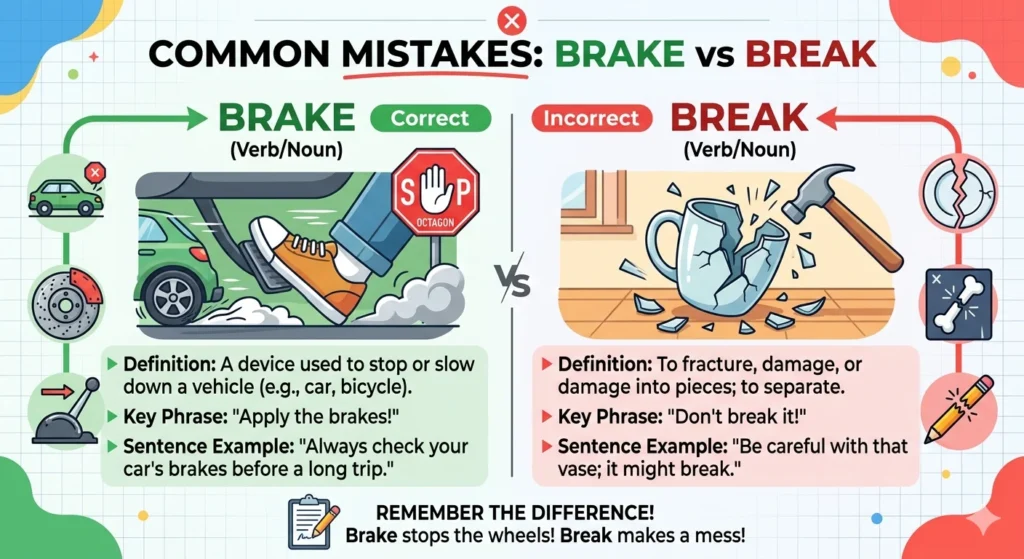
- ❌ Is it lunch break or brake? → ✅ Lunch break
- ❌ Take a brake → ✅ Take a break
- ❌ Does a car break? → ✅ Does a car brake?
- ❌ Break time or brake time? → ✅ Break time
- ❌ Break or brake a bone? → ✅ Break a bone
Brake vs Break in Everyday Examples
Emails:
- I will reply after my lunch break.
News:
- The driver failed to brake in time.
Social Media:
- Time to take a break 😴
Formal Writing:
- The machine has an emergency brake system.
Break and brake in one sentence:
- I took a break when my car’s brake stopped working.
Brake vs Break – Google Trends & Usage Data
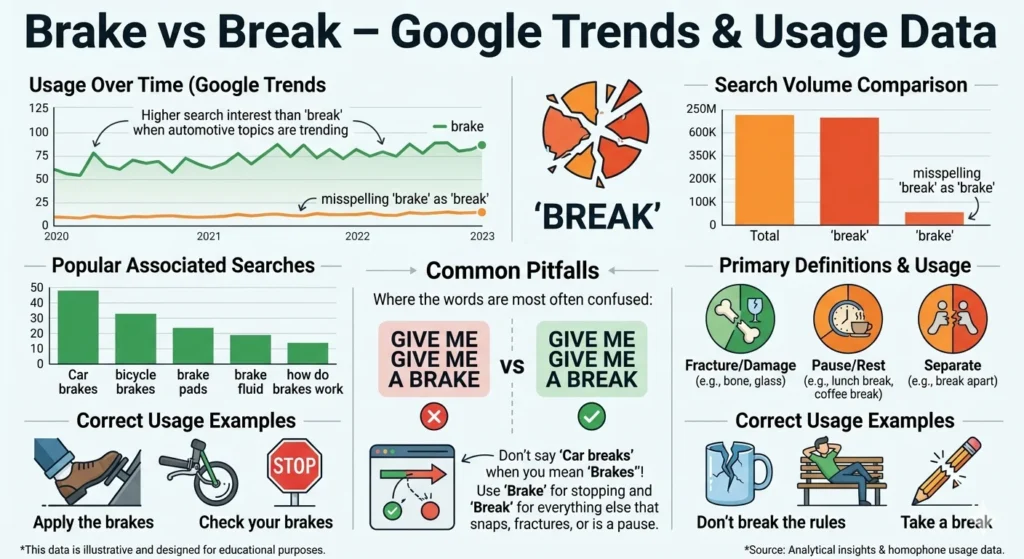
- Break is used far more often because it applies to daily life (rest, damage, pauses).
- Brake is mostly used in driving, mechanics, and technical topics.
- Countries with high search volume:
- USA, UK, India, Pakistan → high confusion due to homophones
People often search:
- How to use break and brake?
- Is it break or brake?
- Brake vs break meaning in English
Comparison Table: Brake vs Break
| Feature | Break | Brake |
|---|---|---|
| Meaning | Pause, damage | Stop motion |
| Usage | Daily language | Vehicles/mechanics |
| Example | Take a break | Press the brake |
| Type | Verb/Noun | Noun/Verb |
| Confusion Level | High | High |
FAQs
1. Is it break or brake?
Use break for rest or damage. Use brake for stopping movement.
2. Is it lunch break or brake?
Correct: Lunch break.
3. Does a car break or brake?
A car brakes, not breaks.
4. Take a break or brake?
Correct: Take a break.
5. Break or brake for holiday?
Correct: Break for holiday.
6. What is brake vs break pronunciation?
They sound the same, which is why they confuse people.
7. What is a muzzle brake vs break?
Correct term: muzzle brake (a device on firearms).
Conclusion
Understanding brake vs break is simple once you focus on meaning instead of sound. Both words are pronounced the same, but their uses are very different. Break is used when talking about rest, damage, or pauses in daily life. Brake, on the other hand, is related to stopping motion, especially in vehicles or machines.
This confusion happens because English has many homophones, but learning small tricks can help. Just remember: you take a break, but you press a brake. Using the correct word improves your writing, makes your message clear, and avoids misunderstandings.
Whether you’re writing emails, posts, or professional content, always double-check the context. With practice, choosing between break and brake will become natural. Keep this guide in mind, and you’ll never mix them up again.

“Witty McGiggles, PunsBlast’s resident pun master, spins clever wordplay and playful humor to turn every moment into a laugh.”