
Have you ever paused while writing, wondering if you should describe a chat as unformal or informal?
You’re not alone. Thousands of people search for the phrase “unformal or informal” every month, caught in a common language trap.
This search reveals a fundamental user need: the desire to communicate correctly and avoid embarrassing mistakes. The confusion often stems from the logical assumption that if something has a “formal” state, its opposite should be “un-formal.”
This article cuts through the uncertainty. We will provide a quick, definitive answer and then dive deep into the “unformal or informal meaning,” explore spelling rules, and offer clear professional advice.
By the end, you’ll never second-guess your choice between these words again, whether you’re crafting an email, writing a report, or posting on social media.
Unformal or Informal – Quick Answer
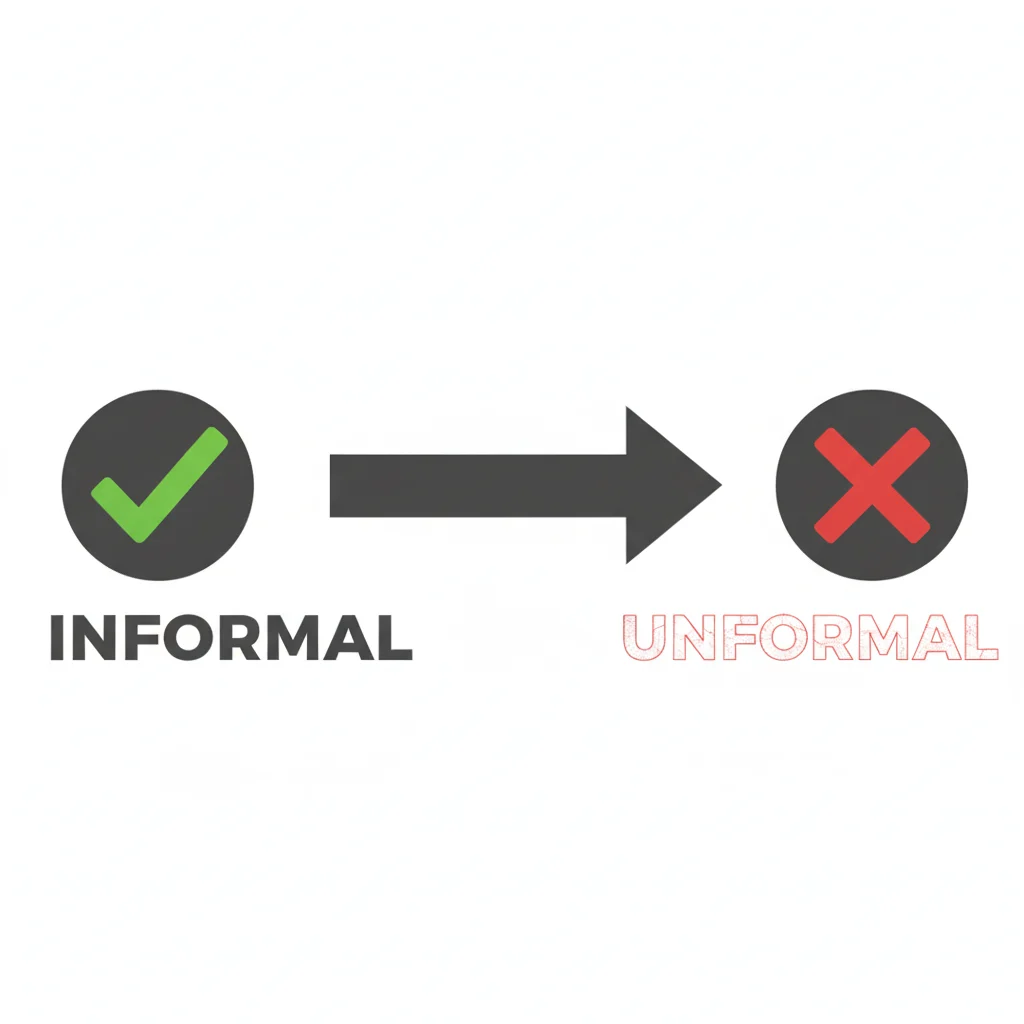
The correct word is informal. “Unformal” is not a standard word in modern English and should be avoided in writing and speech. “Informal” is the direct antonym of “formal.” It describes something relaxed, casual, or suited for everyday situations, not bound by strict rules or conventions.
Examples:
- “The office has an informal dress code on Fridays.”
- “We use informal language when texting friends.”
- “The meeting was informal, with no set agenda.”
Think of the prefix “in-,” which often means “not” (like inactive or inexpensive). Therefore, informal literally means “not formal.” While you may occasionally hear “unformal” in spoken language, it is considered nonstandard and incorrect.
The Origin of Informal
The word “informal” has a straightforward history that explains its dominance. It entered English in the mid-15th century, derived from the Latin word informalis, which breaks down into *in-* (meaning “not”) and formalis (“formal”). Its meaning—”not in the prescribed form”—has remained consistent.
So, why does “unformal” pop up? The confusion is understandable. English uses both the prefixes “in-” and “un-” to create negatives (e.g., indirect, unhappy). The prefix “un-” is Germanic in origin and is incredibly common, often feeling more intuitive. People sometimes apply this familiar pattern to “formal,” creating “unformal” by analogy. However, language evolution is not always logical. Through centuries of usage, “informal” became the standardized, correct form, while “unformal” remains a persistent error or a very rare, archaic variant with no place in contemporary standard English.
British English vs American English Spelling
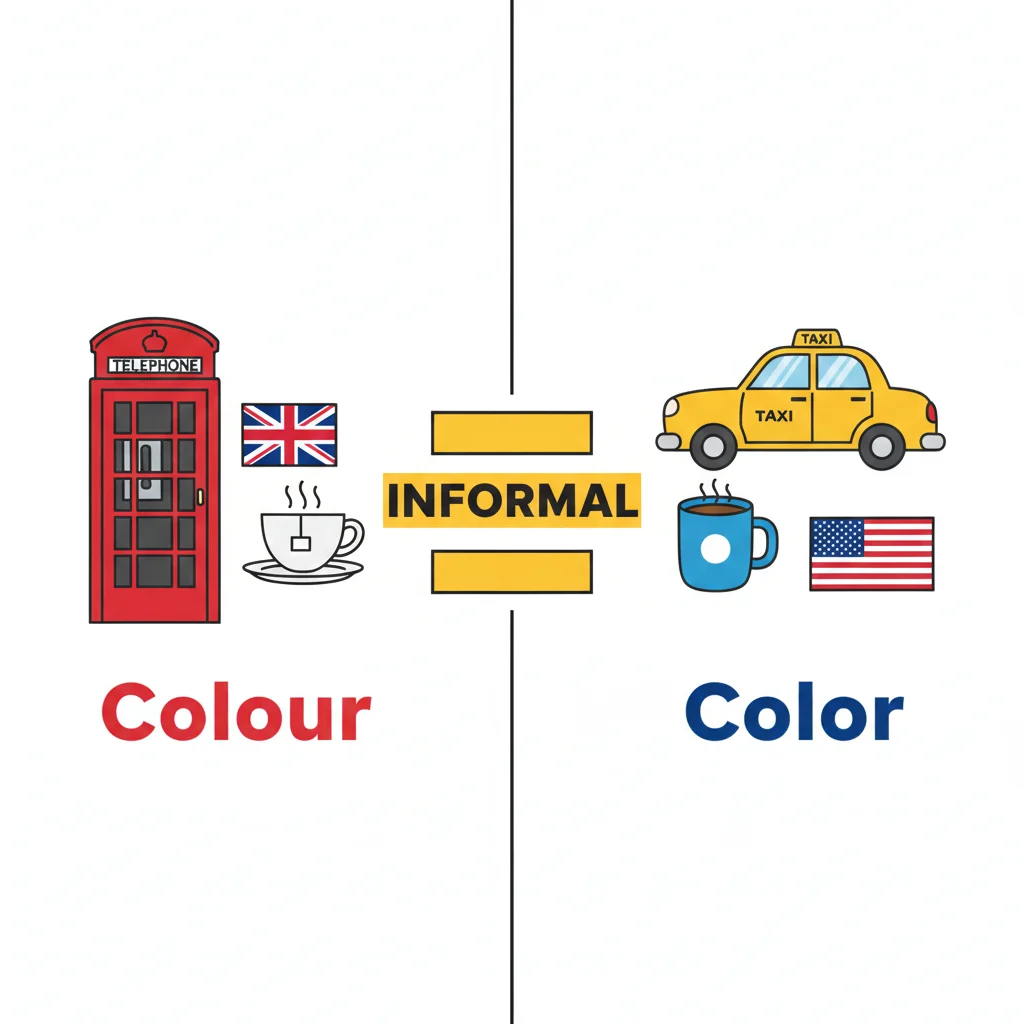
Here’s an important point: the “unformal or informal grammar” question is not a matter of British vs. American English. Both dialects agree that “informal” is correct and “unformal” is not.
However, understanding general spelling differences between these dialects can help avoid other common errors. British English often retains spellings closer to the word’s origins (like French or Latin), while American English, influenced by reformers like Noah Webster, often simplified spellings.
Key Spelling Rules with Examples:
- -our vs. -or: BrE: colour, flavour | AmE: color, flavor
- -re vs. -er: BrE: centre, theatre | AmE: center, theater
- -ise/-yse vs. -ize/-yze: BrE: realise, analyse | AmE: realize, analyze
- Double Consonants (L): BrE: travelled, labelling | AmE: traveled, labeling
Comparison Table: Informal vs. Unformal Across Dialects
| Term | American English | British English | Status |
|---|---|---|---|
| Informal | Correct & Standard | Correct & Standard | The only correct choice. |
| Unformal | Nonstandard / Incorrect | Nonstandard / Incorrect | Not a standard word. Avoid. |
| Casual (synonym) | Correct & Standard | Correct & Standard | Perfectly acceptable synonym. |
Which Spelling Should You Use?
Your choice is simple: always use “informal.” But the context in which you use it matters. Here’s audience-based advice:
- For a US Audience: Use “informal.” Words like “casual” or “colloquial” are also great informal synonyms.
- For a UK/Commonwealth Audience: Use “informal.” The same synonyms apply. Spelling of informal does not change.
- For a Global/International Audience (Business, Academia): Use “informal.” It is the universally recognized and correct term. Using “unformal” could undermine your credibility by signaling a lack of language proficiency.
The rule is absolute: in any context where standard English is expected, “informal” is the word you need.
Common Mistakes with Informal
- Using “Unformal”: The most frequent error.
- Incorrect: “Keep the tone unformal.”
- Correct: “Keep the tone informal.”
- Confusing “Informal” with “Nonformal”: These are not perfect synonyms. “Nonformal” is a more technical term, often used in education (e.g., nonformal learning) to mean structured but not within the official school system. “Informal” is broader, meaning casual in general.
- Example: “The community workshop is a nonformal education program.” vs. “We had an informal discussion.”
- Overusing “Informal” in Truly Formal Contexts: While describing a tone, don’t use overly casual language.
- Poor: “Hey guys, let’s have an informal chinwag about the Q3 stats.”
- Better: “Let’s schedule a brief, informal meeting to review the Q3 data.”
Informal in Everyday Examples
Let’s see “unformal or informal examples” in real contexts:

- Emails:
- To a colleague: “Informal catch-up tomorrow at 3 PM?”
- To a client (still professional but less rigid): “Hi [Name], Hope you’re well. Just following up informally on our proposal.”
- News: “The President held informal talks with foreign leaders on the sidelines of the summit.”
- Social Media: “Posting an informal poll: Beach vacation or mountain cabin? 🏖️⛰️”
- Formal Writing: “The study acknowledges the limitations of data gathered through informal interviews.”
Informal – Google Trends & Usage Data
Data from Google Trends and language corpora clearly shows the dominance of “informal.” Searches for “informal” are consistently 100 times more frequent than for “unformal.” Searches for “unformal” are often tied to the question format “Is unformal a word?” or “What does ‘unformal’ mean?”, indicating user confusion rather than intentional use.
Interest in “informal” is global, with high search volume in countries like the Philippines, India, the UK, and the US—often from learners and professionals seeking to understand tone and register. The data confirms that “informal” is the term with real-world utility and relevance.
FAQs: Unformal or Informal
Q1: Is “unformal” a word?
A: No, “unformal” is not a recognized word in standard modern English dictionaries. It is a common error. The correct word is informal.
Q2: What does “unformal” mean?
A: Since it is not a standard word, it has no defined meaning. People who use it intend it to mean “not formal,” but they should use informal instead.
Q3: What do you mean by informal?
A: “Informal” describes something relaxed, casual, and without strict rules or structure. It applies to language, clothing, events, and behavior. Its informal antonyms are formal, official, or ceremonial.
Q4: What’s the difference between informal and nonformal?
A: “Informal” is general-purpose, meaning casual. “Nonformal” is a niche term, often used in education and sociology to describe organized learning outside the formal school system (e.g., a community gardening class).
Q5: Is it informal or non-formal?
A: For nearly all everyday situations, use informal. Use “non-formal” (or “nonformal”) only if you are specifically discussing technical contexts like education theory.
Q6: What are some informal synonyms?
A: Common informal synonyms include: casual, relaxed, colloquial, everyday, simple, familiar, and unofficial.
Q7: Can I use “unformal” in creative writing or dialogue?
A: Possibly, but with caution. You might use it in dialogue to portray a character who makes a grammatical mistake. Otherwise, it’s best avoided.
Conclusion
The journey from confusion to clarity on “unformal or informal” is short but important. The definitive answer is that “informal” is the only correct choice. The persistent error of using “unformal” stems from a logical but incorrect application of the common “un-” prefix. Remember, understanding “unformal or informal meaning” is about more than just spelling; it’s about using language precisely to convey the right tone. Whether you’re communicating with a global team, writing for an academic audience, or simply texting a friend, choosing “informal” ensures you are correct. Embrace its useful informal synonyms like casual or colloquial when needed, and confidently leave “unformal” out of your vocabulary. Clear communication always begins with the right word.

“M.R. James, a playful storyteller at PunsBlast, crafting sharp puns and clever humor that turn everyday words into unforgettable laughs.”