Many people search “sceptic or skeptic” because they see both spellings online and feel confused. One article may write skeptic, while another uses sceptic. So which one is correct?
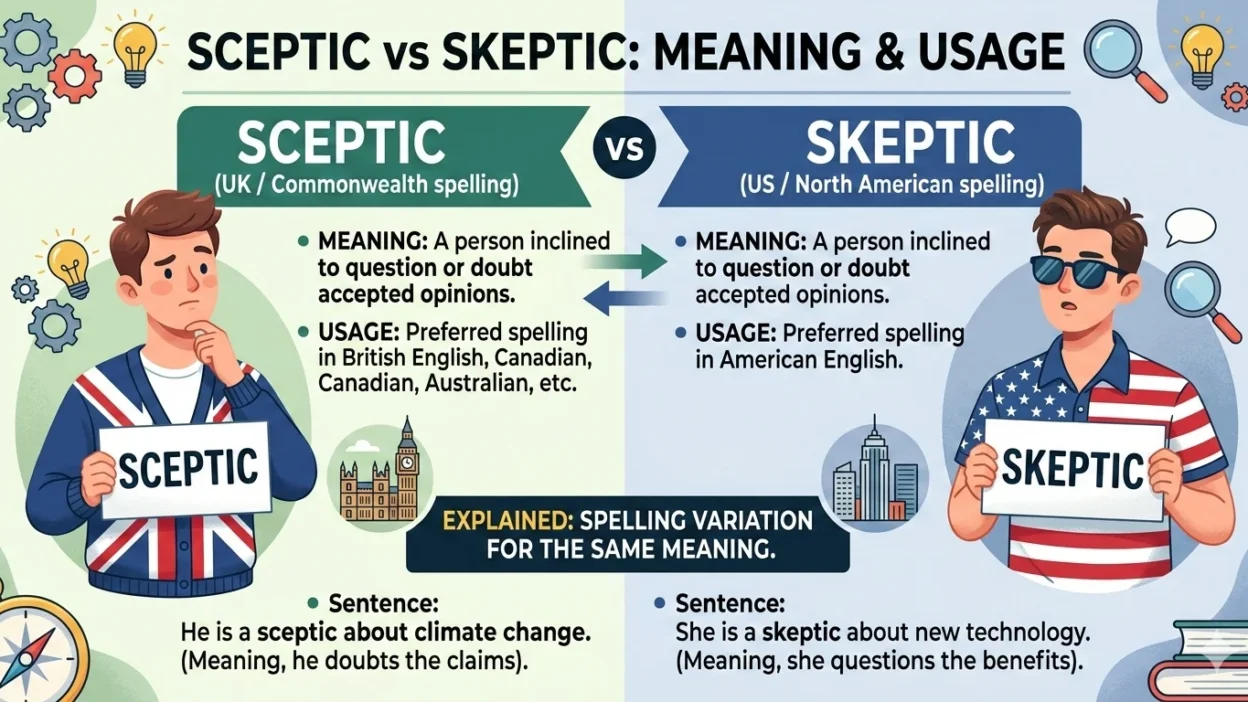
The truth is simple: both spellings are correct, but they depend on the type of English used. American English prefers skeptic, while British English prefers sceptic. This small spelling change happens in many English words.
Another reason people search this topic is to understand the skeptic meaning. A skeptic person is someone who questions claims and wants proof before believing something.
People also ask related questions like “How do you spell skeptic in the UK?”, “Is it sceptic or septic?”, and “What is the difference between sceptic and skeptic?”. This article will answer all these questions clearly.
By the end, you will understand the sceptic or skeptic meaning, when to use each spelling, and how to avoid common mistakes.
Sceptic or Skeptic means
Sceptic and skeptic mean the same thing.
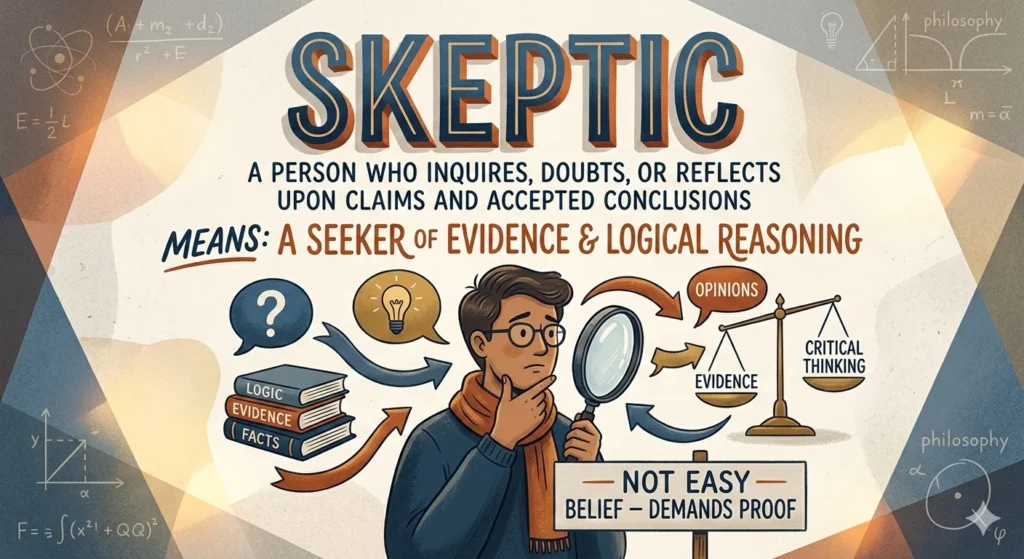
A skeptic person is someone who doubts claims until they see proof or strong evidence.
The only difference is spelling style:
- Skeptic → American English
- Sceptic → British English
Examples
- American English:
She is a skeptic about miracle diets. - British English:
He is a sceptic about online rumors.
So if you ask “is it sceptic or skeptic?”, the answer is both are correct depending on your audience.
The Origin of Sceptic or Skeptic
The word comes from the ancient Greek word “skeptikos.” It means someone who thinks carefully or questions ideas.
Later, the word moved into Latin and then into English.
Early English spelling often used “sc”, which led to the British form “sceptic.”
Over time, American English simplified many spellings. The “sc” became “sk”, creating skeptic.
This is why both forms exist today.
Sceptical Etymology
- Greek: skeptikos – to examine or question
- Latin: scepticus
- English: sceptic / skeptic
This history explains why the two spellings developed.
British English vs American English Spelling
English spelling often changes between the UK and the US.
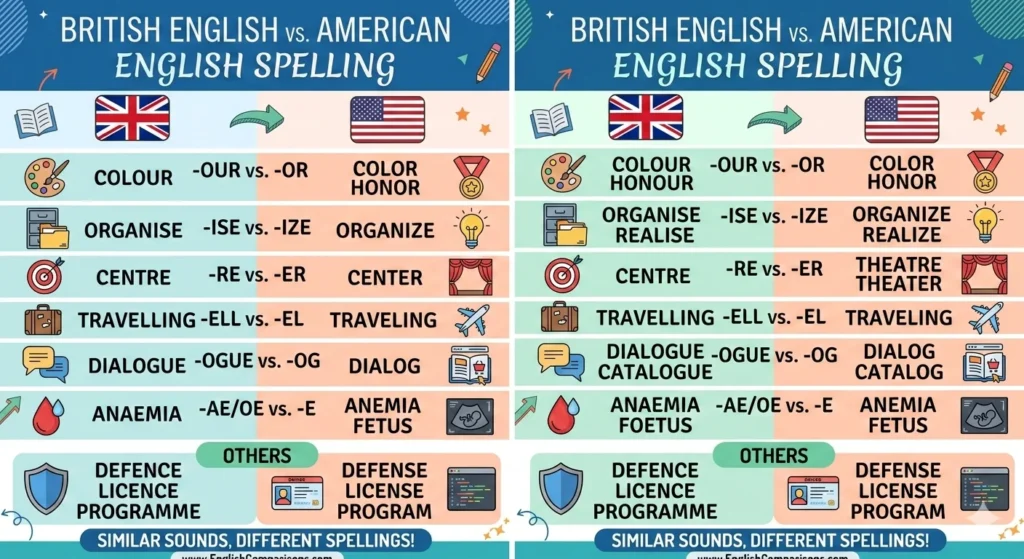
For example:
| British English | American English |
|---|---|
| Sceptic | Skeptic |
| Sceptical | Skeptical |
| Centre | Center |
| Colour | Color |
| Theatre | Theater |
So when people search “Skeptical spelling UK”, the correct form is sceptical.
Comparison Table
| Word Form | British Spelling | American Spelling |
|---|---|---|
| Noun | Sceptic | Skeptic |
| Adjective | Sceptical | Skeptical |
| Adverb | Sceptically | Skeptically |
Both versions have the same skeptical or sceptical meaning synonyms, such as:
- doubtful
- questioning
- unconvinced
- suspicious
Which Spelling Should You Use?
Choosing the right spelling depends on your audience.
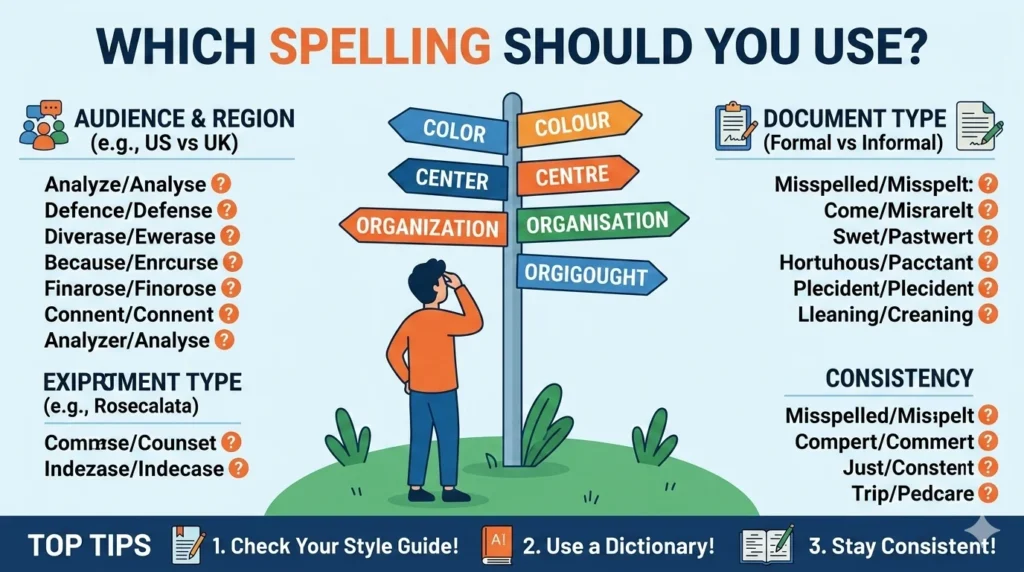
Use Skeptic if your audience is:
- United States readers
- American websites
- US-based companies
Use Sceptic if your audience is:
- United Kingdom readers
- Australia
- Canada
- Commonwealth countries
For global audiences
Most global websites prefer skeptic because American spelling is more common online.
So if you ask “sceptic or skeptic which is correct?” — both are correct, but context matters.
Common Mistakes with Sceptic or Skeptic
Many writers make simple spelling mistakes with this word.
1. Confusing Sceptic with Septic
❌ He is septic about the news.
✔ He is sceptic about the news.
If you ask “Is it sceptic or septic?”, remember:
- Sceptic / skeptic → someone who doubts
- Septic → related to infection or bacteria
2. Mixing British and American spelling
❌ He is a sceptic but very skeptical.
✔ Choose one style.
3. Wrong adjective spelling
Some people ask “Is sceptical a word?”
Yes. Both forms exist:
- Sceptical (UK)
- Skeptical (US)
Sceptic or Skeptic in Everyday Examples
Here are simple examples of how the word appears in daily writing.

Emails
I am a bit skeptical about this marketing strategy. Can we review the data first?
News
Many scientists remain sceptic about the new discovery.
Social Media
I’m still a skeptic about AI predictions.
Formal Writing
A sceptic questions claims until there is strong evidence.
These examples show the skeptic meaning in real communication.
You may also see discussions like “Sceptic or skeptic reddit”, where users debate the correct spelling.
Sceptic or Skeptic – Google Trends & Usage Data
Online usage shows clear regional patterns.
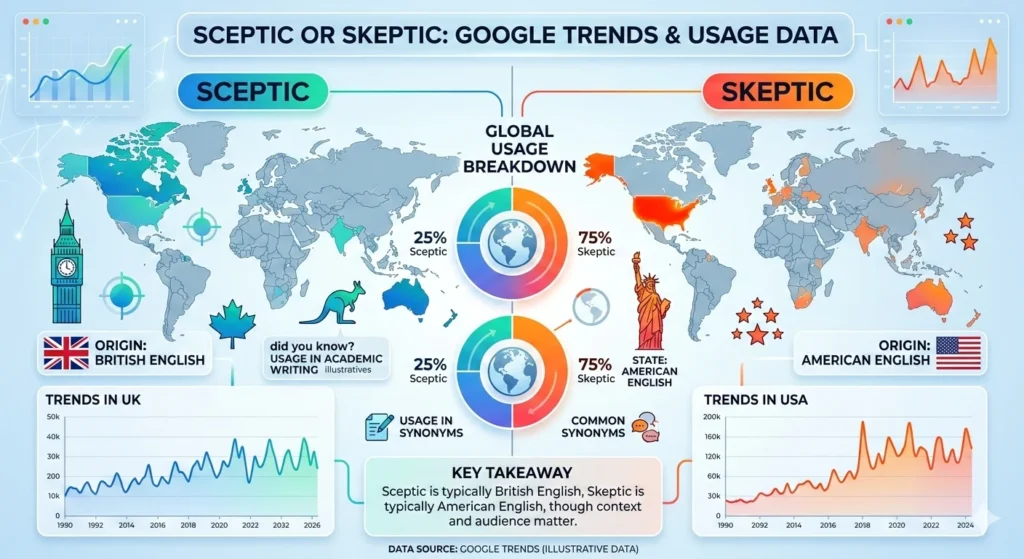
- United States → Mostly skeptic
- United Kingdom → Mostly sceptic
- Australia / Canada → Mostly sceptic
Search engines also show that skeptic appears more often worldwide because many websites use American English.
However, academic and British publications still strongly prefer sceptic.
FAQs
What is the difference between sceptic and skeptic?
There is no meaning difference. The only difference is spelling style.
Sceptic = British English
Skeptic = American English
How do you spell skeptic in the UK?
In the UK, the correct spelling is sceptic.
The adjective form is sceptical.
What is a skeptic person?
A skeptic person is someone who questions ideas or claims and wants evidence before believing them.
Is it sceptic or skeptic?
Both spellings are correct.
The choice depends on whether you use British English or American English.
Is sceptical a word?
Yes. Sceptical is the British spelling.
The American spelling is skeptical.
Skeptical or sceptical pronunciation?
Both spellings have the same pronunciation:
SKep-ti-kul
Skeptical or sceptical meaning synonyms?
Common synonyms include:
- doubtful
- questioning
- suspicious
- unconvinced
- wary
Conclusion
The spelling debate around sceptic or skeptic is actually very simple. Both words mean the same thing: a person who questions claims and asks for proof. The only difference is regional spelling.
British English uses sceptic and sceptical, while American English prefers skeptic and skeptical. This pattern follows many other spelling differences in English, such as colour vs color and centre vs center.
Understanding your audience helps you choose the right spelling. If you write for American readers, use skeptic. If your audience is in the UK or other Commonwealth countries, use sceptic. For global audiences, many websites choose skeptic because it appears more frequently online.
It is also important not to confuse the word with septic, which has a completely different meaning related to infection or bacteria.
In simple terms, if you remember that both spellings are correct and choose one style consistently, you will always use the word correctly.

“Sylvia Townsend, a witty humorist at PunsBlast, crafting clever puns and playful wordplay that bring smiles to readers everywhere.”