Have you ever typed “peon or pion” into a search bar, your fingers hesitating over the keys? You’re not alone.
This simple pair of words causes widespread confusion, leading to thousands of searches every month. Is it a spelling mistake, a regional difference, or two entirely different words?
People search for this keyword to solve a specific puzzle: they’ve heard the term in conversation, seen it in a game, or encountered it in an old text, and now they need the correct spelling and meaning.
The confusion often stems from pronunciation quirks and the blending of formal definitions with modern slang. This article cuts through the noise.
We’ll solve the “peon or pion” dilemma, clarify the peon meaning, explore its controversial edge, and provide clear, professional advice so you can use the term with confidence, whether in writing, gaming, or everyday conversation.
Peon or Pion – Quick Answer
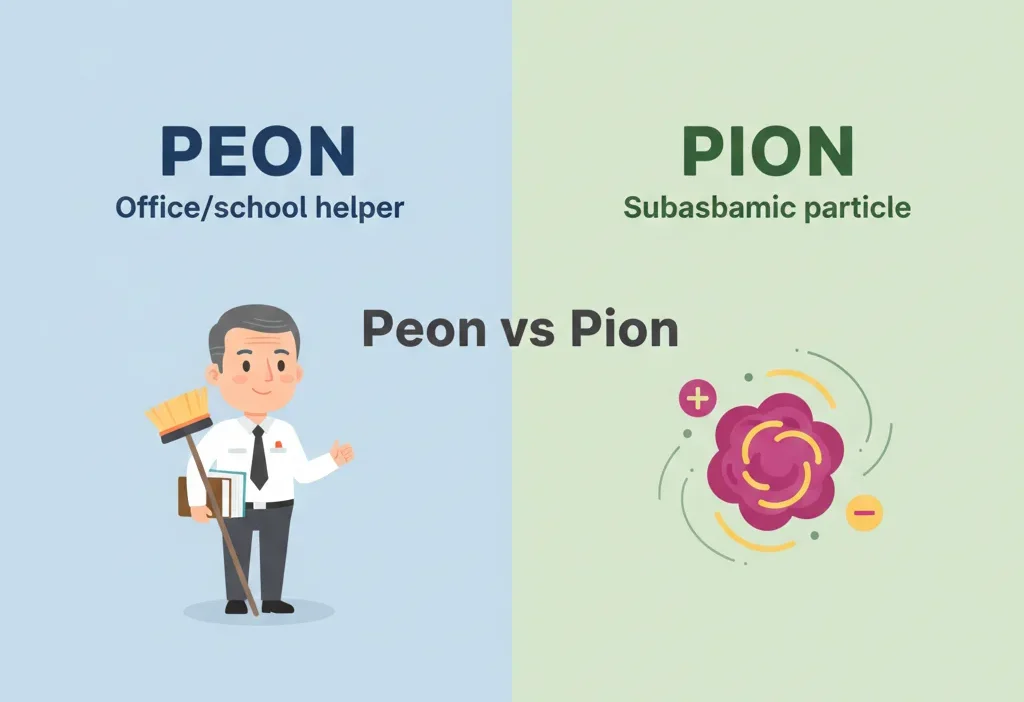
The quick and definitive answer is peon. “Pion” is almost always a misspelling of “peon” in common usage. A peon (pronounced PEE-on) has two primary meanings:
- Historical/Labor Context: A low-ranking worker or laborer, often one in a position of servitude or debt bondage, historically found in Latin America and parts of Asia.
- Modern Slang: A person considered unimportant, low-level, or expendable, frequently used in online gaming (e.g., “Just a cannon-fodder peon”) or corporate slang (e.g., “I’m just a peon in this big company”).
Example: “The manager never listens to the peons in the mailroom.” Here, it uses the slang sense of an unimportant, low-level employee.
The Origin of Peon
The word peon has a journey that explains its modern weight. It entered English in the early 17th century from the Spanish word peón, meaning a “day laborer” or “foot soldier.” The Spanish term itself derives from the Medieval Latin pedonem, meaning “foot soldier” or “one who goes on foot,” rooted in pes (foot). This origin paints a clear picture: a peon was literally a man on the ground, doing the walking, the laboring, the fighting.

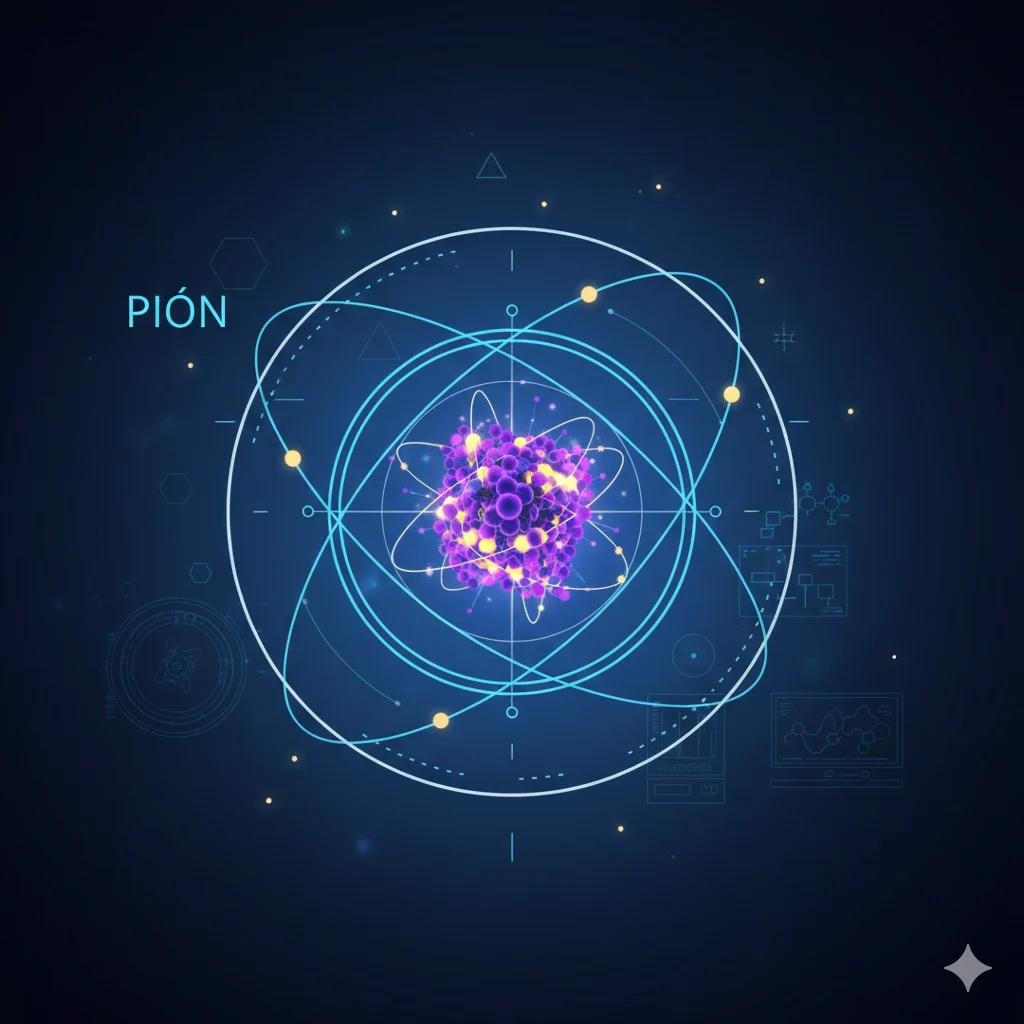
The spelling confusion with “pion” arises naturally from English pronunciation. The “e” in “peon” sounds like a long “e” (PEE-on). When people hear the word without seeing it written, they might phonetically spell it as “pion,” similar to how “pioneer” starts. However, “pion” is a separate, specialized scientific term in particle physics for a type of meson. In everyday writing about people or roles, “pion” is incorrect. This etymological trail—from foot soldier to laborer to a metaphor for low status—is key to understanding why asking “Is peon offensive?” is a valid and important question today.
British English vs American English Spelling
Interestingly, for the core word in question, there is no difference between British and American English spelling. Both standard varieties use peon. The confusion with “pion” is a phonetic error, not a regional spelling variation like “color” (US) and “colour” (UK).
Where slight differences may appear is in derived forms. The noun denoting the system or state of being a peon is uniformly peonage. However, you might occasionally see stylistic variations in compounding or hyphenation, though “peon” itself remains constant.
Here is a comparison table to clarify the keyword variations:
| Correct Term | Incorrect Variation | Part of Speech | Meaning & Context |
|---|---|---|---|
| Peon | Pion | Noun | A laborer; a person of low rank. (Correct for all contexts). |
| Peonage | Pionage | Noun | The state of being a peon; a system of bonded labor. |
| N/A | Pion | Noun | A subatomic particle (physics). NOT a substitute for “peon.” |
Which Spelling Should You Use?
Your audience and context dictate everything.
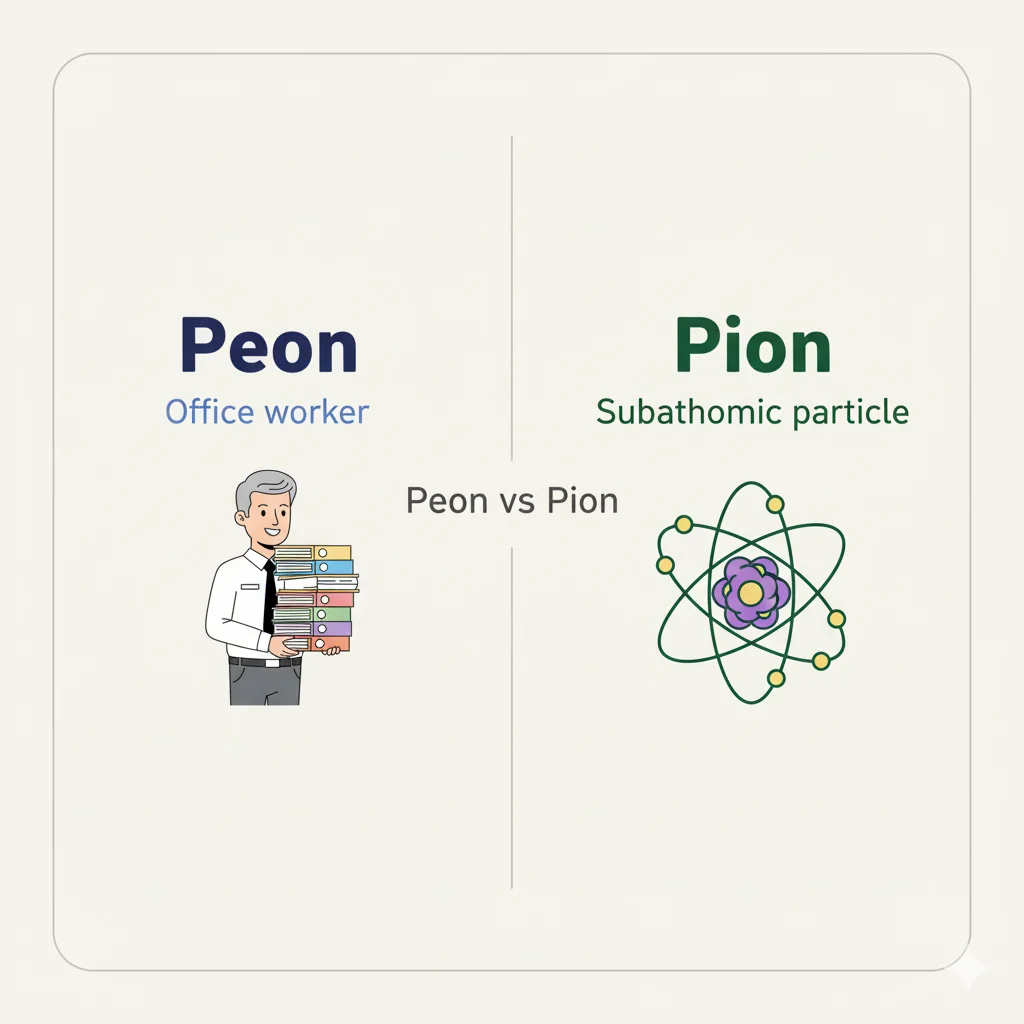
- For a US, UK, or Global Audience: Always use peon when referring to a person or role. It is the only internationally accepted spelling for this meaning.
- In Formal Writing (Reports, Academic Papers): Use peon if discussing historical labor systems. Exercise extreme caution or avoid it when describing modern people due to its derogatory connotations. Consider a peon synonym like “subordinate,” “junior staffer,” or “laborer.”
- In Informal Settings (Gaming, Slang, Internal Chat): “Peon” is common but understand it carries a dismissive tone. The slang usage is widely recognized in these digital and casual spaces.
- In Scientific Writing (Physics): Use pion. This is the only context where “pion” is correct.
The rule is simple: unless you are writing a physics paper, the correct choice is peon.
Common Mistakes with Peon
- Misspelling as “Pion”: This is the most frequent error. Correction: Remember, a peon has employees above them (or an exploitative history). Use peon.
- Confusing “Peon” with “Pawn”: People often ask, “Is it a pawn or peon?” While both can imply expendability, a pawn is specifically a piece in chess or a person used manipulatively by another. A peon is defined by low status or rank, not necessarily by being a tool in someone else’s scheme. Correction: Use “pawn” for strategic exploitation, “peon” for low hierarchical position.
- Using “Peon” in Offensive Contexts: The biggest mistake is using the term carelessly in professional or diverse settings. Correction: If questioning “Who is called a peon?” in a modern workplace, don’t. Use a more neutral term to avoid disrespect.
- Incorrect Pronunciation: While “PEE-on” is standard, some mistakenly say “PEE-un” or “PYE-on.” Correction: For clear peon or pion pronunciation, stick with two syllables: PEE-on.
Peon in Everyday Examples
- Email (Internal, Casual): “Can one of the peons from the IT desk come take a look at my printer?” (Note: This is risky and potentially demeaning.)
- News/Historical Article: “The new law aimed to abolish peonage and break the cycle of debt bondage on the plantations.”
- Social Media/Gaming: “Just spent all match getting owned. Felt like a total peon out there! #gamingfail”
- Formal Business Writing: AVOID. Instead write: “The task was delegated to a junior member of the support team.”
Peon – Google Trends & Usage Data
Analysis of search data reveals clear patterns. Searches for “peon” consistently and significantly outnumber those for “pion” globally, confirming “peon” as the dominant and correct term. Interest in the keyword “peon” spikes in regions with strong gaming cultures and in countries like India and the Philippines, where the historical and modern hierarchical term is more commonly referenced or searched for in an explanatory context. The related query “peon slang” shows steady interest, indicating users are actively trying to decode its contemporary, often online, usage. The data solidly supports that the core user intent is understanding the word “peon,” its spelling, and its evolving meaning in digital culture.
Frequently Asked Questions (FAQs)
1. Who is called a peon?
Historically, a peon was a low-wage laborer, often in a state of debt servitude. In modern slang, it’s used to refer to anyone perceived to be at the bottom of a hierarchy, like an entry-level employee or an unimportant character in a video game.
2. What is a peon in slang?
Peon slang refers to its use as a derogatory or self-deprecating term for someone with no power, influence, or status in a given situation (e.g., in a corporation, online game, or social group).
3. Is it a pawn or peon?
A pawn is a person manipulated by another for a larger strategy (like a chess piece). A peon is defined primarily by low rank or menial work. A pawn is used; a peon is overlooked.
4. Is pion an English word?
Yes, but not for a person. Pion is a standard English word in particle physics for a type of subatomic particle. It is not an alternative spelling for the laborer/slang term.
5. Is peon offensive?
It can be, and often is. Due to its history of describing exploited laborers and its current use as a belittling slang term, calling someone a peon is generally considered disrespectful and demeaning, especially in professional or formal contexts.
6. What is a good peon synonym?
Neutral synonyms include: laborer, worker, subordinate, junior, underling, grunt (informal), or minion (often humorous). The best choice depends on context.
7. How do you pronounce peon?
The standard peon or pion pronunciation is two syllables: PEE-on. It rhymes with “see on.”
Conclusion
The “peon or pion” debate has a clear winner: peon is the correct spelling for the term describing a low-status laborer or a slang put-down. Understanding this word requires navigating its heavy history, from Spanish foot soldiers to systems of bondage, and its modern, casual-yet-cutting use in games and offices. While “pion” exists as a physics term, it has no place in this discussion. The key takeaway is to use “peon” wisely. Recognize that its casual slang use can easily cross into offense. Before using it, ask yourself if a more precise and respectful term would be better. Whether you’re editing a document, leveling up in a game, or deciphering its meaning, you now have the definitive guide to this deceptively complex word.

“May Sinclair, a playful wordsmith at PunsBlast, turning clever puns and witty humor into daily laughs that brighten readers’ days.”