You are writing a heartfelt card for your mother. You pause. Your fingers hover over the keyboard. Is it “moma” or “momma”? Both look familiar. Both feel right. But which one is actually correct?
This small spelling question stops thousands of writers every day. People search for “moma or momma” because they want to get it right.
Maybe you are texting a friend about your “momma.” Perhaps you are writing a song, a social media post, or a school assignment. The confusion is real, and the internet gives mixed answers.
Some say “moma” is a mistake. Others use it naturally. Who is right?
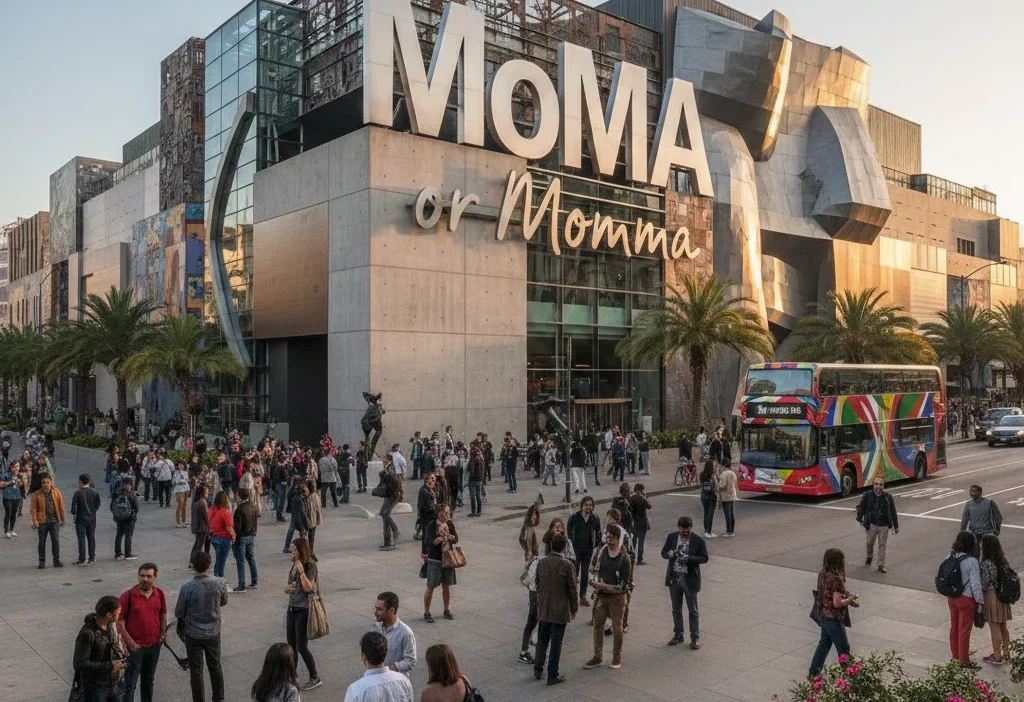
Here is the simple truth: “Momma” is the standard informal spelling for mother. “Moma” is usually a spelling error, though it appears in specific contexts like the Museum of Modern Art (MoMA).
This article explains everything you need to know so you never second-guess this word again.
Moma or Momma means
Momma is the correct informal spelling for “mother.” It is a casual, affectionate term used mainly in American English.
Moma is typically a misspelling of “momma.” However, “MOMA” (all caps) correctly refers to the Museum of Modern Art in New York.
Examples:
- ✅ I love you, Momma.
- ❌ I love you, Moma.
- ✅ My momma always said life was like a box of chocolates.
- ✅ We visited MoMA during our trip to New York.
Is moma a correct spelling? Generally, no. When referring to your mother, “moma” is not standard. Spell-checkers will flag it as an error.
Is moma a word? Yes, but only as an acronym for the Museum of Modern Art, or as a rare surname. It is not a standard variant of “mother.”
The Origin of Moma and Momma
Words for “mother” are among the oldest in human language. They often begin with “ma” because this is one of the first sounds babies make. “Mama” appears in nearly every language—from English to Mandarin to Swahili.
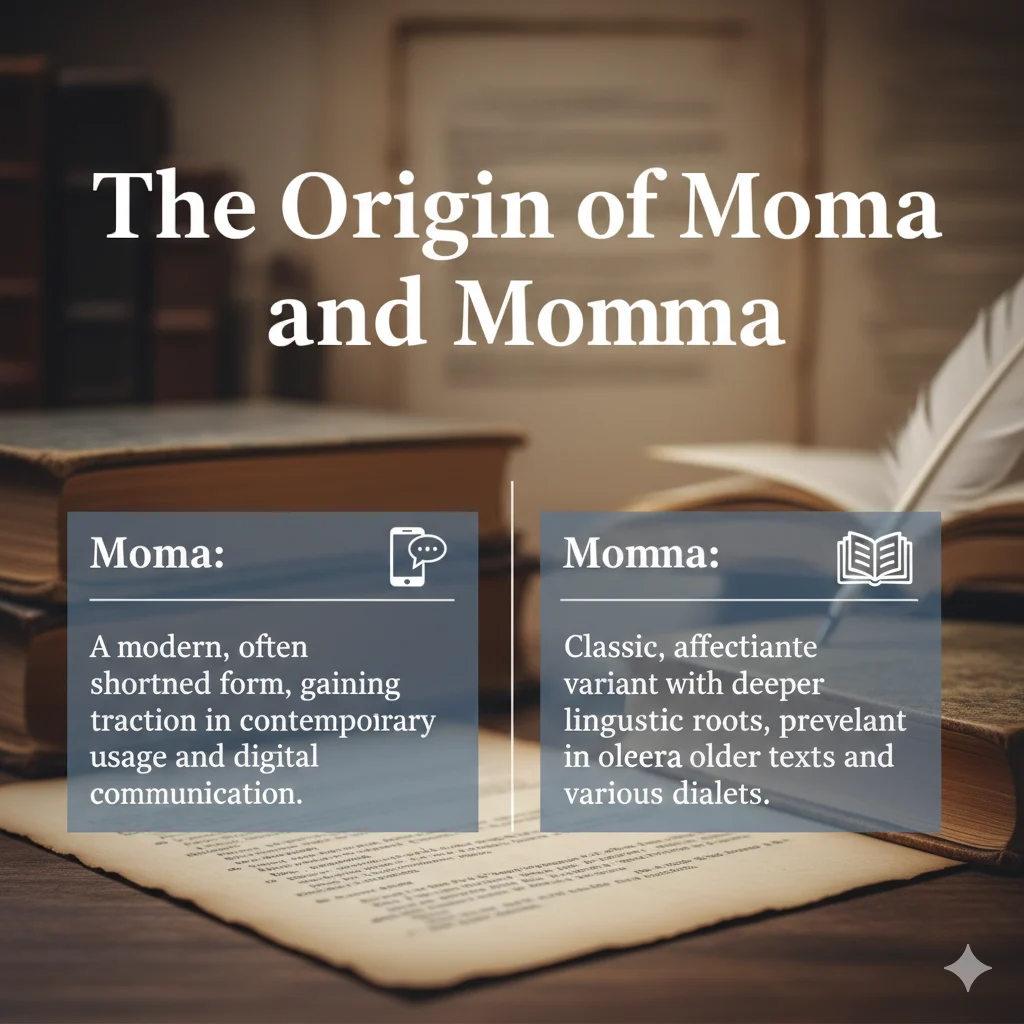
Momma developed as a spoken variant of “mama” in American English. In the 19th and early 20th centuries, regional accents softened the second “a” into more of an “ah” sound. Writers captured this sound as “momma.” Over time, it became a standard informal spelling in American English.
So why does “moma” appear? Simple: typos and phonetic guessing. When people hear “momma,” they sometimes drop the second “m” because the sound is soft. They write what they hear. But dictionaries never adopted “moma” as a valid spelling for mother.
What is the meaning of Moma in love? Some people search for this because they see “moma” in song lyrics or social media posts. In romantic contexts, “moma” is usually a misspelling of “momma” used as a term of endearment. However, this is nonstandard.
What is a momma in slang? In slang, “momma” can mean:
- An attractive woman (“Hey momma!”)
- A respected older woman in the community
- A female leader or boss figure
British English vs American English Spelling
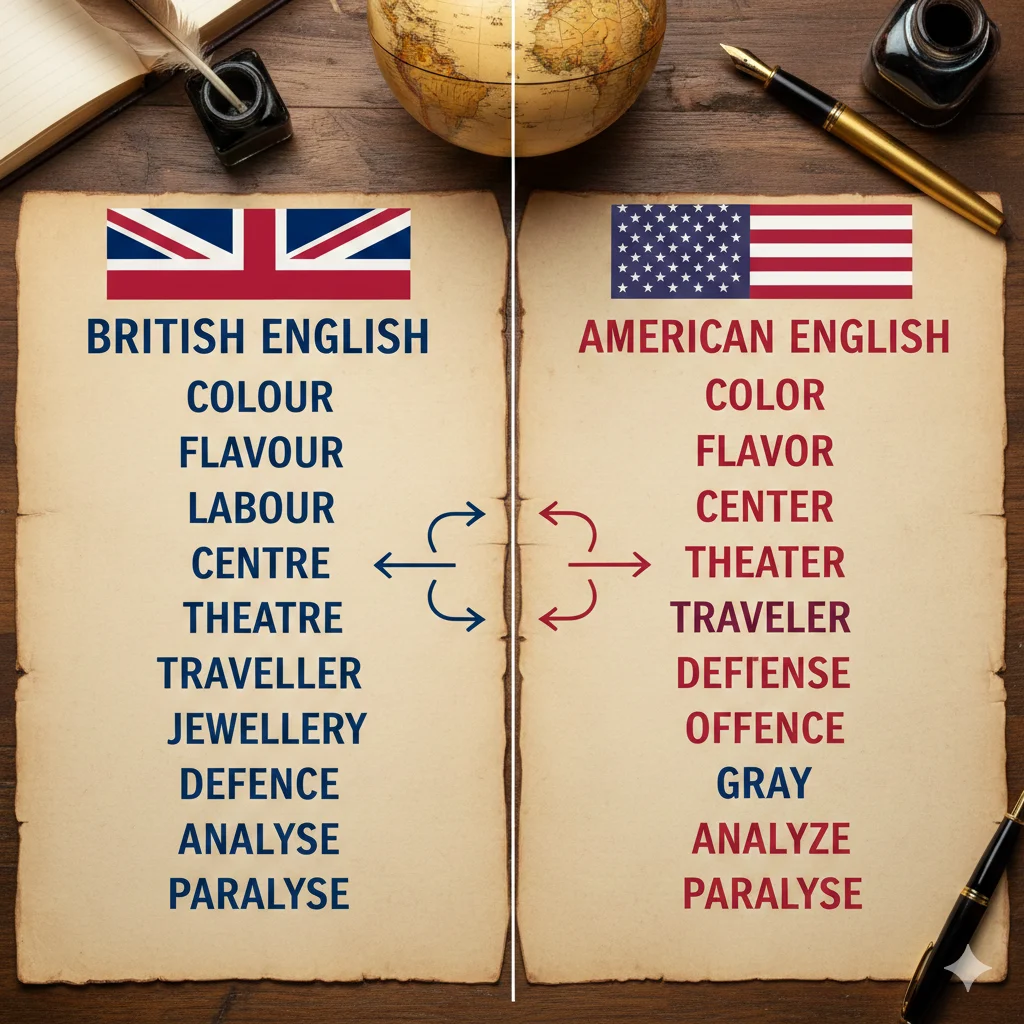
This is where many writers get confused. Both the US and the UK use “mum” as the standard informal term. But “momma” is specifically American.
| Variation | American English | British English | Common Usage |
|---|---|---|---|
| Momma | ✅ Common informal | ❌ Rare | Affectionate term for mother |
| Mama | ✅ Used | ✅ Used | Universal; more common in UK for “mother” |
| Moma | ❌ Incorrect for mother | ❌ Incorrect for mother | Only as MoMA (museum) |
| Mum | ✅ Less common | ✅ Standard | Primary informal term in UK |
| Mom | ✅ Standard | ❌ Rare | Primary informal term in US |
Key difference: Americans who say “mom” in formal situations often switch to “momma” for warmth. British English speakers rarely use “momma” at all. They prefer “mum” or “mama.”
Pronunciation note: “Mama” and “momma” sound different. Mama = MAH-mah. Momma = MOM-mah. The first syllable rhymes with “father” versus “mother.”
Mama vs Momma pronunciation is a common search. Say them aloud: “Mama” opens the mouth wider. “Momma” is softer and more relaxed.
Which Spelling Should You Use?
Your audience determines the correct choice.
Write “momma” when:
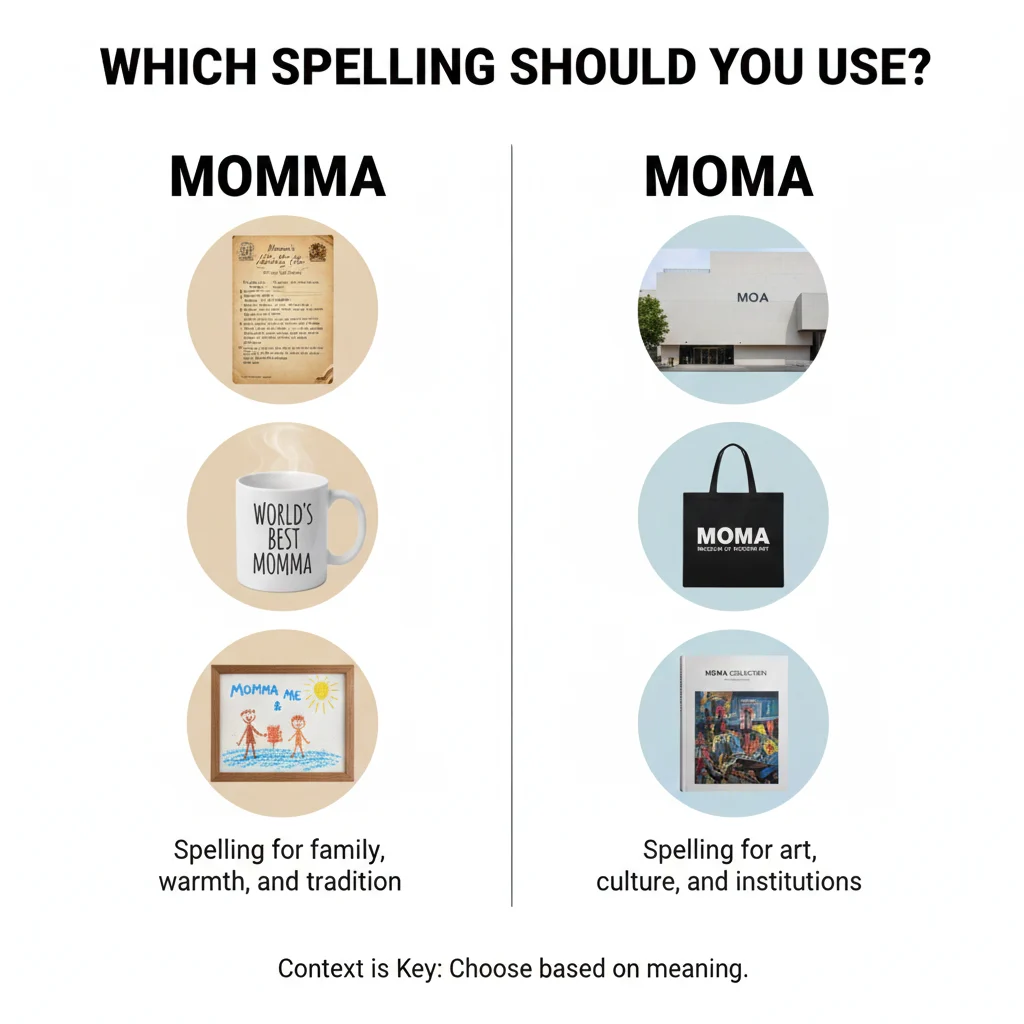
- You are writing for an American audience
- You want an affectionate, warm tone
- You are quoting someone’s speech
- You are writing fiction with Southern or regional American characters
Avoid “momma” when:
- You are writing for a British or Australian audience (use “mum” or “mama”)
- You are writing formal documents
- You are addressing your mother in a professional context
Momma or mama in the South: In the American South, “momma” is deeply embedded in regional speech. It carries cultural weight. Southern writers often use “momma” to convey authenticity and place. “Mama” is more common in other regions.
Mama or momma reddit: Reddit discussions show that Americans raised with “momma” feel the spelling looks wrong without the double M. Many users report their spell-check automatically corrects “moma” to “momma.”
Moma or momma in english: International English speakers learning American media often encounter “momma” in movies and songs. They search for clarification because it does not match the “mum” they learned in class.
Common Mistakes with Moma and Momma
Mistake 1: Using “moma” for mother
- ❌ I called my moma yesterday.
- ✅ I called my momma yesterday.
Mistake 2: Forgetting the MoMA acronym
- ❌ We went to the moma museum.
- ✅ We went to the MoMA museum. (Capital M, small o, capital M, capital A)
Mistake 3: Confusing “mama” and “momma”
These are not interchangeable in all contexts. “Mama” is universal. “Momma” is regionally American.
- Mama bear (correct)
- Momma bear (correct, informal)
- Moma bear (incorrect)
Mistake 4: Overcorrecting
Some writers assume “momma” is always wrong because it feels slangy. But it is a legitimate informal spelling. Do not change “momma” to “mama” in quoted speech or character dialogue.
Mistake 5: Spelling inconsistencies
Pick one spelling and stick with it throughout your writing. Do not switch between “momma” and “moma.”
Moma or Momma in Everyday Examples
Email to family:
“Hi Momma, just checking in. Hope you have a wonderful weekend. Love you!”
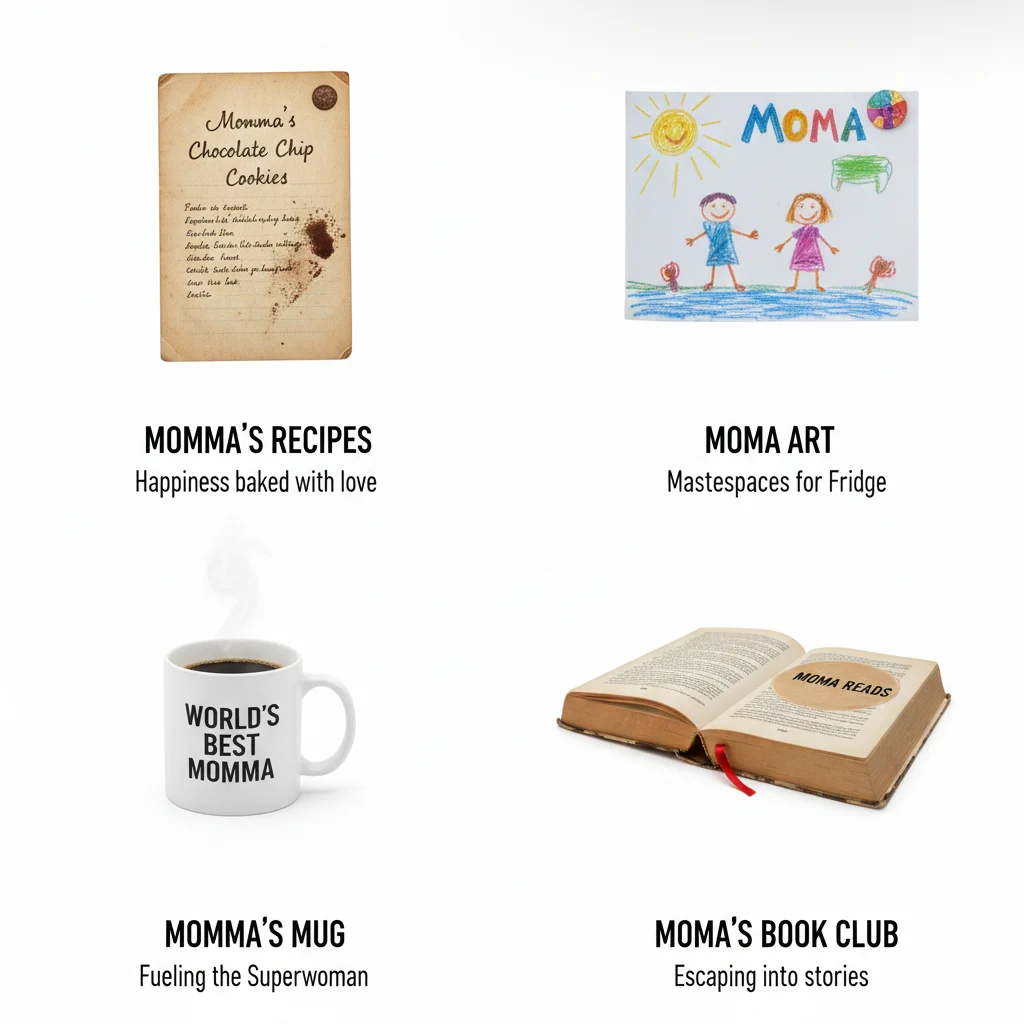
Social media caption:
“Happy birthday to my beautiful momma. You are my best friend and my hero. ❤️”
News article:
“Local woman known as ‘Momma Jean’ has served free meals to the community for thirty years.”
Song lyrics:
“Momma said knock you out.” – LL Cool J
Formal writing (incorrect usage):
❌ The role of the moma in child development…
✅ The role of the mother in child development…
Literary fiction:
“She called out for her momma, but the house was silent.”
What is a momma in slang? Example:
“Look at that momma over there.” (Informal, sometimes considered disrespectful)
Moma or Momma – Google Trends & Usage Data
Google search data reveals interesting patterns:
United States: “Momma” searches peak around Mother’s Day. “Mama” is searched more frequently overall. “Moma” searches almost always relate to the museum, not mothers.
United Kingdom: Searches for “momma” are nearly nonexistent. Users search “mum” or “mama.” When Brits search “momma,” they are usually checking American spelling.
Global English: Countries with heavy American media influence (Philippines, India, Nigeria) show moderate “momma” search volume. Countries with British English influence (Australia, New Zealand, South Africa) show almost none.
Reddit and forums: Discussions about “moma or momma” appear in:
- Writing communities
- Parenting forums
- Non-native English learner groups
- Genealogy forums (people reading old family letters)
The data confirms that this is primarily an American English question. Non-American writers rarely encounter this confusion because they default to “mum” or “mama.”
Comparison Table: All Variations Side by Side

| Spelling | Pronunciation | Meaning | Correct? | Region |
|---|---|---|---|---|
| Momma | MOM-mah | Mother (informal) | ✅ Yes | US primarily |
| Mama | MAH-mah | Mother | ✅ Yes | Universal |
| Moma | MO-mah | Mother | ❌ No | Common error |
| MoMA | MOH-mah | Museum of Modern Art | ✅ Yes | Proper noun |
| Mum | MUMM | Mother | ✅ Yes | UK, Australia, NZ |
| Mommy | MOM-ee | Mother (childish) | ✅ Yes | US, Canada |
| Mamma | MAH-mah | Mother | ✅ Yes | Italian, older English |
| Mom | MOM | Mother | ✅ Yes | US, Canada |
Mama or mamma italian: In Italian, “mamma” is the standard spelling with double M. This sometimes confuses English speakers who see “mamma” in Italian restaurants or media and assume it is a variant of “momma.”
Frequently Asked Questions
1. Is moma a correct spelling for mother?
No. “Moma” is not a standard spelling for mother in any major variety of English. Use “momma” or “mama” instead.
2. Is moma a word?
Yes, but only as an acronym for the Museum of Modern Art, or as a rare surname. It is not a word for mother.
3. What is the meaning of Moma in love?
This usually refers to a misspelling of “momma” used as a term of endearment. Some people write “I love you, moma” in texts or social media, but the correct spelling is “momma.”
4. What is a momma in slang?
Slang uses of “momma” include addressing an attractive woman (“Hey momma”), referring to a respected older woman, or describing a female leader. It can be affectionate or informal.
5. Should I write “mama” or “momma”?
Both are correct. “Mama” is universal and slightly more formal. “Momma” is specifically American and more informal. Choose based on your audience and tone.
6. Do British people say momma?
Very rarely. British English speakers use “mum” as their primary informal term. Some use “mama.” “Momma” is understood from American media but not commonly used.
7. How do Southerners spell it?
In the American South, “momma” is very common. You will see it in literature, dialogue, and personal writing from this region.
8. Is “momma” childish?
Not necessarily. Adults use “momma” affectionately. “Mommy” is more commonly associated with young children.
9. What about “mamma”?
“Mamma” is an older spelling found in 19th-century literature. It is also the correct Italian spelling. In modern English, it has mostly been replaced by “mama.”
10. Why does autocorrect flag “momma”?
Some spell-checkers mark “momma” as informal but accept it. Older or more conservative programs may flag it. This does not mean it is incorrect.
Conclusion
Language changes slowly. Words shift. Regional preferences harden into rules. For the question of “moma or momma,” the answer is clear.
Momma is the correct informal spelling for mother in American English. It carries warmth, familiarity, and regional identity. Moma is simply a mistake—a missing letter that turns an affectionate word into an error.
When you write about your mother, choose “momma” if you want that American, informal feel. Choose “mama” if you want a term understood everywhere. And if you are writing about modern art, remember the capital letters: MoMA.
The next time your fingers pause over the keyboard, you will know exactly which spelling to use. No second-guessing. No doubt. Just the right word for the moment.
Whether you say momma, mama, or mum, the meaning is the same. Love. Family. Home. Get the spelling right, and let the feeling come through.

“May Sinclair, a playful wordsmith at PunsBlast, turning clever puns and witty humor into daily laughs that brighten readers’ days.”