Everyone knows the colorful plastic bricks that have sparked creativity for generations. But when it’s time to talk about them, many people stumble over the words.
Is it Legos or Legoes? This simple question drives thousands of online searches every month.
People want to use the right term in conversation, in writing, or even in heated online debates. The confusion is real because English has tricky rules for turning brand names into plurals.
This article solves that exact problem. We’ll cut through the spelling confusion, explain why people argue about “Legos”, and give you a clear, authoritative answer based on both common usage and the official company stance.
Whether you’re a parent, a fan, a writer, or just someone who wants to get it right, this guide provides the definitive explanation. You’ll learn the history, the regional differences, and the practical advice you need to use the term confidently in any situation. Let’s build the answer, brick by brick.
[Keyword] – Quick Answer
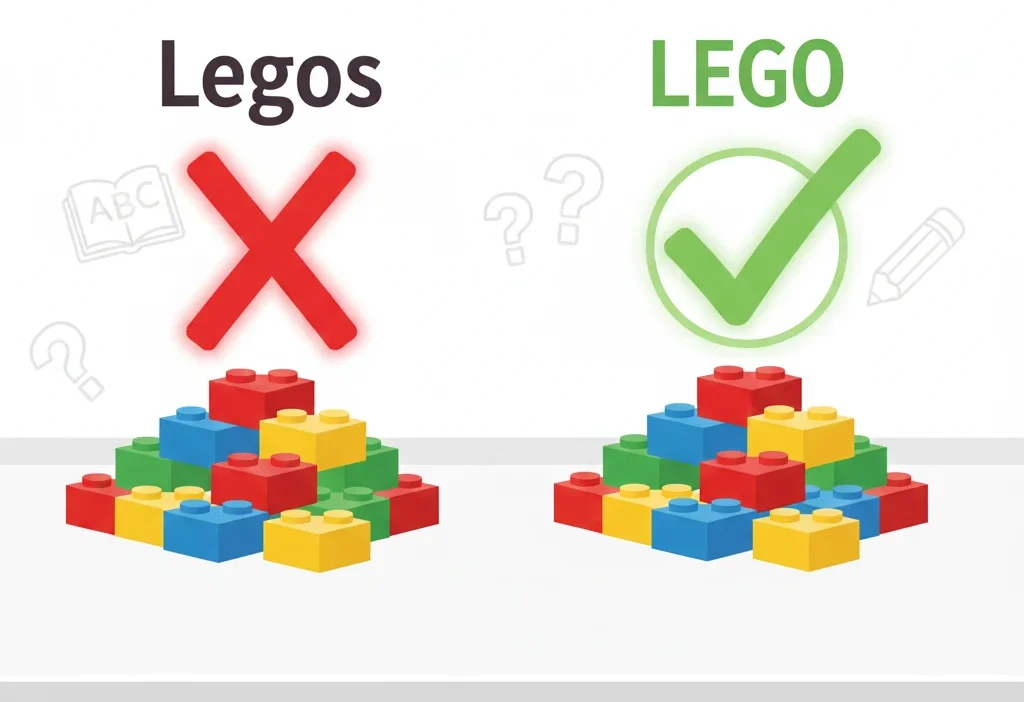
The quick answer is that the correct plural of LEGO is LEGO bricks or LEGO sets. The LEGO Group, the company that makes them, states that LEGO is a brand name and an adjective, not a noun. Therefore, it shouldn’t be pluralized as “Legos” or “Legoes.”
However, in everyday American English, especially in informal speech, “Legos” is a widely used and commonly understood plural. You will hear people say, “The kids are playing with their Legos.” “Legoes” is a much rarer spelling attempt and is generally considered incorrect everywhere.
Examples:
Preferred (Formal/Official): “We sell LEGO bricks and LEGO sets.”
Common (Informal US): “I have a big tub of Legos.”
Incorrect: “I need to buy more Legoes.”
The Origin of [Keyword]
To understand the plural debate, we must look at the word’s origin. LEGO is a brand name from Denmark. It comes from the Danish phrase “leg godt,” which means “play well.” Interestingly, in Latin, “lego” means “I put together” or “I assemble,” which perfectly fits the product, though this was a happy coincidence.

The word LEGO was trademarked and functions as a proper noun (a name for a specific brand). In English, we don’t usually make plurals of proper nouns by adding “s” or “es.” We don’t say “I have two Fords in my garage,” we say “I have two Ford cars.” Similarly, the company argues you have LEGO brand bricks.
The spelling confusion (“Legos” vs. “Legoes”) arises from how English speakers naturally treat unfamiliar words. We often add an “s” to make a word plural. Some might add “es” by analogy with words like “potatoes” or “heroes.” But since LEGO is a trademark, these standard plural rules don’t officially apply, leading to the ongoing debate.
British English vs American English Spelling
The “Legos” debate is heavily influenced by the differences between American and British English.
American English tends to be more pragmatic with brand names. It often converts them into common nouns and pluralizes them freely. Words like “Kleenex” (for tissues) or “Band-Aid” (for adhesive bandages) are used as everyday nouns. This is why “Legos” is overwhelmingly the common plural in the United States and Canada. It feels natural to American English speakers.
British English more strictly adheres to the idea of a brand name. Speakers in the UK, Australia, and other Commonwealth countries are more likely to use “LEGO bricks,” “LEGO toys,” or even use LEGO as a collective noun (like “a pile of LEGO”). The use of “Legos” is far less common and often flagged as an Americanism.
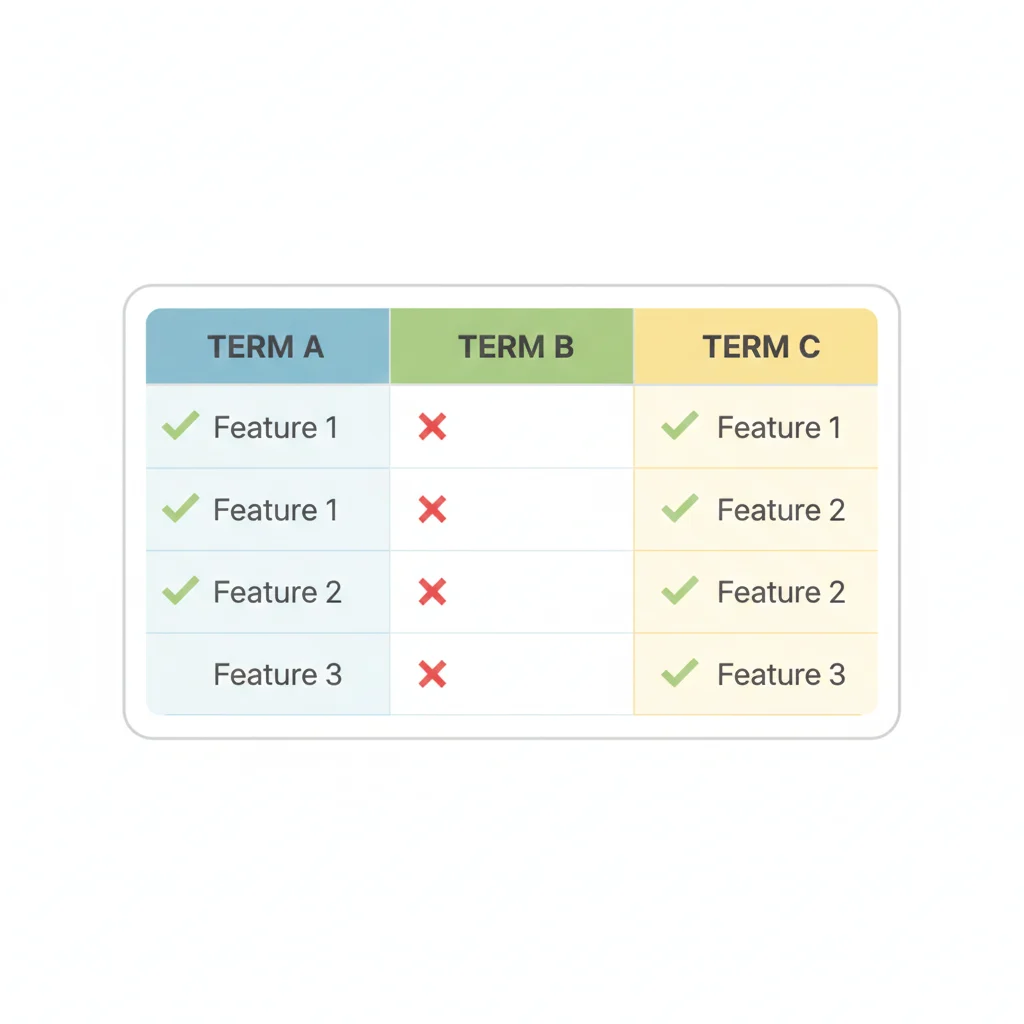
Comparison Table
Feature “Legos” (Common US Usage) “LEGO Bricks” (Official/UK Preference) “Legoes”
Status Informal, common plural noun Formal, correct adjective-noun pairing Generally incorrect
Region Predominant in US & Canada Preferred in UK, EU, Australia Very rare, non-standard
Example “My Legos are all mixed up.” “This model uses over 1,000 LEGO bricks.” Incorrect spelling.
Grammar Treated as a countable common noun LEGO is an adjective describing the bricks. Archaic or mistaken plural.
Which Spelling Should You Use?
Your choice depends on your audience and context.
For a Global or Formal Audience (Reports, Articles, Professional Work): Always use the official form: LEGO bricks, LEGO sets, LEGO products. This shows precision and respects trademark guidelines. This is the safest choice worldwide.
For an American Audience (Informal Speech, Social Media, Blogs): Using “Legos” is perfectly acceptable and will be understood by everyone. It reflects how the language is actually used in everyday life in the US.
For a UK/Commonwealth Audience: Avoid “Legos.” Stick to “LEGO” as a collective noun or adjective. Saying “play with LEGO” or “sort the LEGO bricks” is the norm.
General Advice: When in doubt, use “LEGO bricks.” It is never wrong. If you are writing informally in the US, “Legos” is fine. You should never use “Legoes.”
Common Mistakes with [Keyword]
Using “Legoes”: This is the most clear-cut error. The “-oes” ending doesn’t fit the word’s origin or standard usage.
Incorrect: I built it with many Legoes.
Correct: I built it with many LEGO bricks (or Legos in US informal).
Not Capitalizing LEGO: The word is a trademark and should always be capitalized, whether used as an adjective or in the informal plural.
Incorrect: I love playing with lego.
Correct: I love playing with LEGO.
Using “LEGO” as a Singular Noun: You cannot have “a LEGO.” You have “a LEGO brick” or “a LEGO piece.”
Incorrect: I stepped on a LEGO.
Correct (informal): I stepped on a LEGO brick (or a Lego in very casual US speech).
[Keyword] in Everyday Examples
Email (To a Colleague): “The marketing campaign for the new LEGO sets is attached.” (Formal/Professional)
News Headline: “LEGO Announces New Sustainable Bricks.” (Formal)
Social Media Post (US): “Just finished my biggest Legos build ever! #LEGO #AFOL” (Informal, common)
Social Media Post (UK): “Spent the weekend sorting all my LEGO. So therapeutic!” (Informal, collective noun)
Formal Writing/Website: “Our store offers the widest selection of LEGO products in the state.” (Official/Correct)
[Keyword] – Google Trends & Usage Data
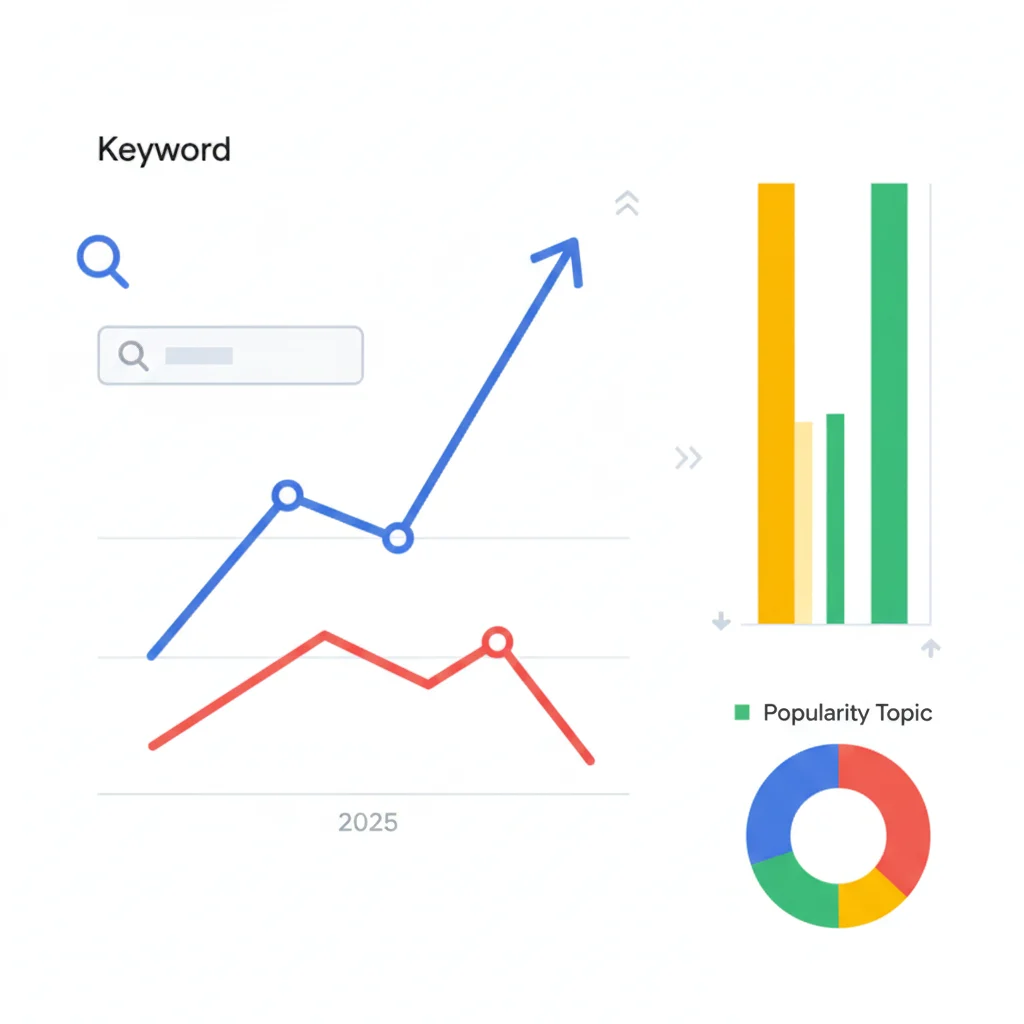
Data from Google Trends reveals clear patterns. The search term “Legos” is vastly more popular in the United States and Canada. Searches for “LEGO bricks” or simply “LEGO” are more consistent globally.
In online forums like Legos or legoes Reddit threads, the debate is frequent. Many threads see users from the US defending “Legos” as their natural speech, while international users and purists point to the official rule. On platforms like Twitter (or X), a LEGO plural tweet from a casual user saying “Legos” can sometimes attract polite corrections from brand enthusiasts.
This data shows that “Legos” is a word in the lexicon of American English, driven by popular usage, even if it diverges from the trademark holder’s preference. The global standard, however, remains the adjectival form.
FAQs: Answering Common User Questions
Q1: What is the correct plural of LEGO?
A: Officially, there is no plural. LEGO is a brand adjective. The correct phrasing is LEGO bricks or LEGO sets.
Q2: How do you say multiple LEGO?
A: In daily US talk, people say “Legos.” More formally, and elsewhere, you say “LEGO bricks.”
Q3: Is LEGO plural or singular?
A: The word LEGO itself is singular as a trademark. It describes the brand. The items themselves are plural bricks or sets.
Q4: Is Legos a word?
A: Yes, “Legos” is a recognized informal word in American English, found in dictionaries that track common usage. It is not the official term.
Q5: Is LEGO a proper noun or common noun?
A: It is a proper noun (a trademark). However, in informal American use, “Legos” is treated as a common noun.
Q6: What does LEGO stand for?
A: It comes from the Danish “leg godt” (play well). The Latin meaning (“I assemble”) is a fitting coincidence.
Q7: Why do people get so upset about “Legos”?
A: Language purists and fans note it’s incorrect per the company. For others, especially outside the US, it just sounds like an odd American quirk, similar to how brand names are often genericized.
Conclusion
So, Legos or Legoes? The journey through language, trademark law, and cultural habit gives us a clear picture. The officially correct answer is to use LEGO as an adjective for the nouns “bricks” or “sets.” The commonly accepted informal plural in American English is “Legos.” The spelling “Legoes” is not standard and should be avoided.
The key takeaway is context. For formal writing, professional contexts, or international communication, stick with LEGO bricks. In casual conversation within the US, saying “Legos” is natural and widely understood. Always remember to capitalize LEGO, as it is a proper noun. This flexible approach respects both the rules of the brand and the reality of how people actually speak. Now you can confidently build your sentences, knowing you’re using the right piece for the job.

“Margaret Oliphant, a witty wordsmith at PunsBlast, blending charm and clever humor to turn everyday moments into laugh-worthy puns.”