
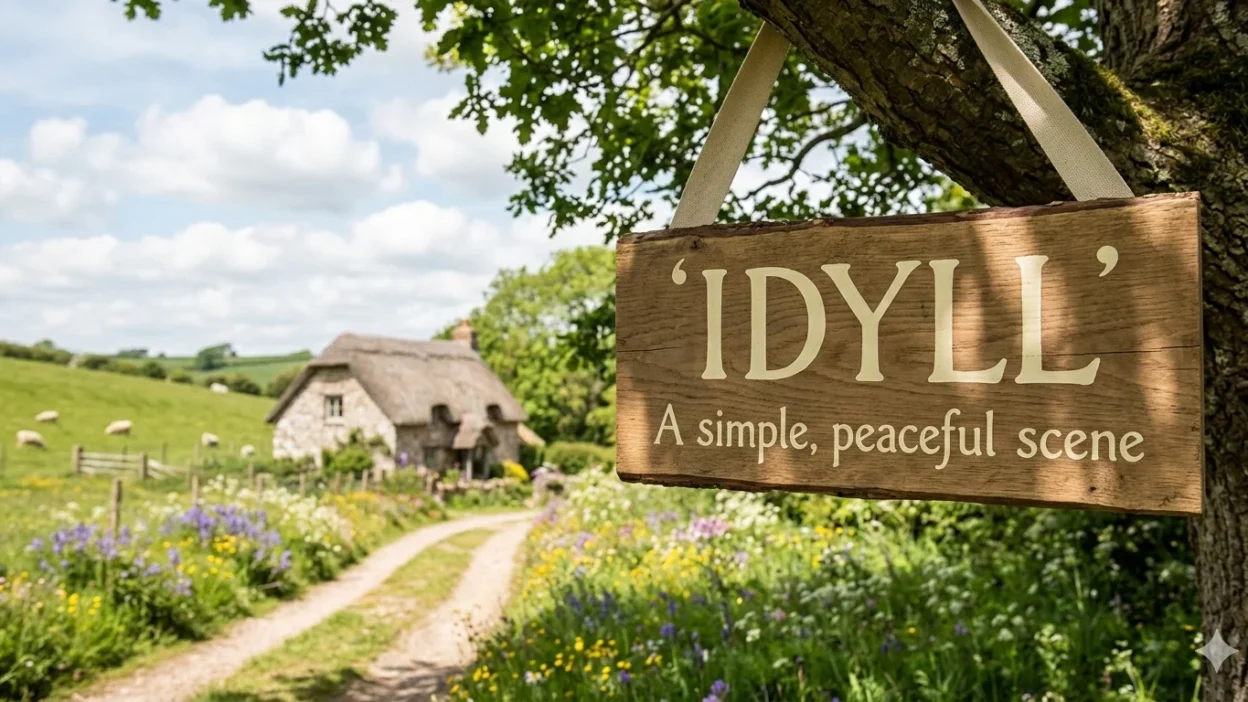
Have you ever paused while writing and wondered: “idyl or idyll — which one is correct?” You’re not alone. Many writers, students, and English learners search this question because both spellings appear online, yet dictionaries often favor one over the other.
This confusion grows when people encounter the word in literature, poetry, or social media captions describing peaceful scenes.
People search terms like Is it idyl or idyll?, Idyl meaning, or Idyll meaning in literature because they want clarity before using the word in essays, emails, or creative writing.
Some even ask questions such as What does “idyl” mean in text? or What is the meaning of Idryl? (a common misspelling).
This article solves the confusion with a quick answer, clear examples, spelling comparisons, and professional advice.
By the end, you’ll know the correct spelling, how to pronounce idyll, when to use it, and how to avoid common mistakes — all explained in simple language.
Idyl or Idyll means
The correct modern spelling is “idyll.”
“Idyl” is an older or simplified variant but is rarely used today.
Simple explanation
- Idyll = a peaceful, happy scene or period of life.
- Often used in literature or descriptive writing.
✅ Example of an idyll:
- Their village life felt like an idyll, far from city stress.
Quick examples
- Correct: The poem describes a rural idyll.
- Less common: The poem describes a rural idyl.
So, when asking “idyl or idyll meaning?” — both relate to the same idea, but “idyll” is standard English today.
The Origin of Idyl or Idyll
Understanding idyll etymology makes the spelling clearer.
The word comes from:
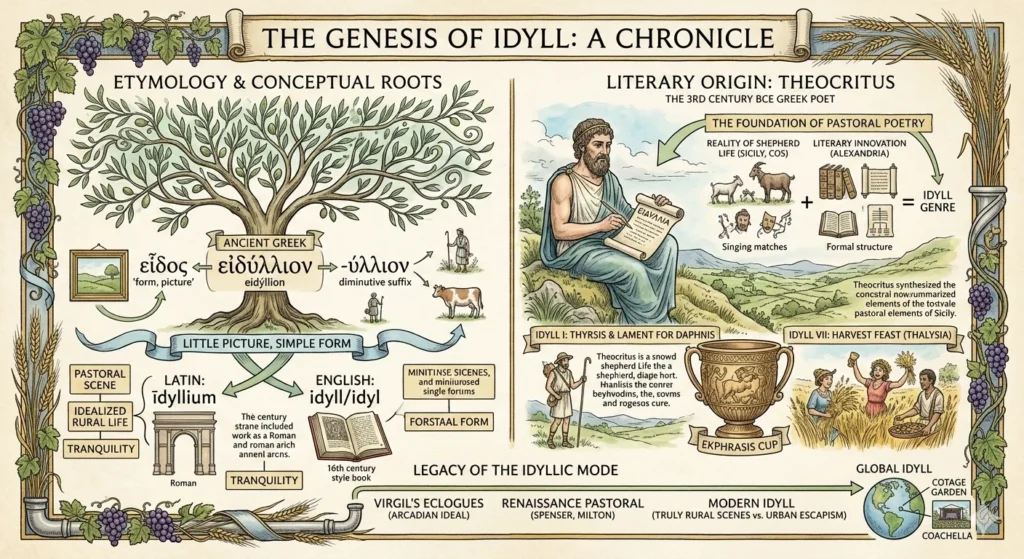
- Greek “eidyllion” meaning little picture or short poem
- Passed into Latin and then French
- Later entered English literature
Originally, the word described short pastoral poems showing peaceful country life. Over time, the meaning expanded to include any calm or perfect moment.
Why two spellings exist
Early English spelling was not fixed. Writers used:
- idyl
- idyll
Eventually, dictionaries standardized “idyll.”
Idyll in French
In French, the related word is “idylle,” meaning a romantic or peaceful relationship, which influenced English spelling.
British English vs American English Spelling
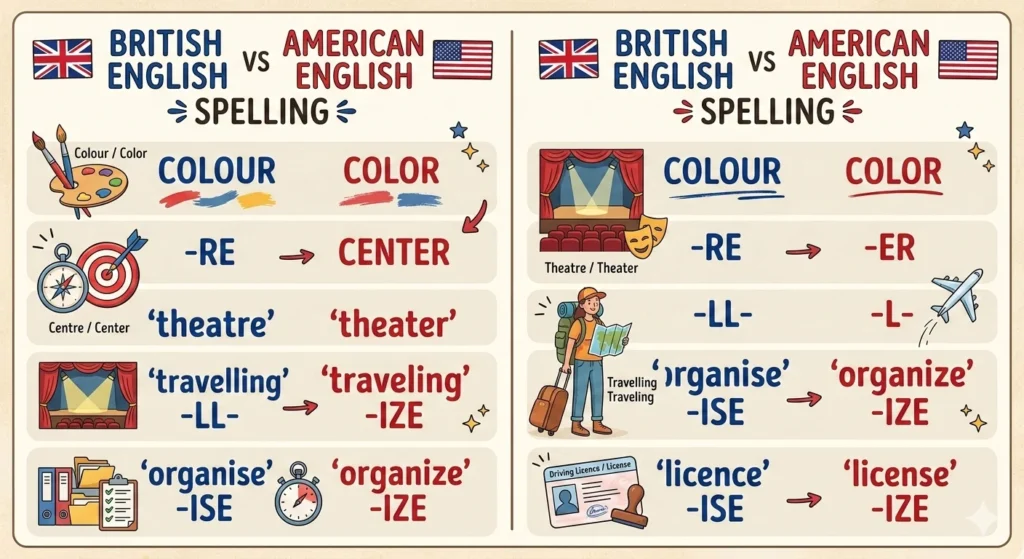
Unlike many words, this is not mainly a UK vs US difference. Both regions prefer “idyll.”
| Feature | British English | American English |
|---|---|---|
| Standard spelling | idyll | idyll |
| Alternate spelling | idyl (rare) | idyl (rare) |
| Common usage | Literature & journalism | Literature & journalism |
| Acceptance level | High | High |
Key point
This is different from words like colour/color. The spelling does not change much between regions.
Which Spelling Should You Use?
Your audience matters.
🇺🇸 For US audiences
Use idyll. It matches modern dictionaries and academic writing.
🇬🇧 UK & Commonwealth audiences
Also use idyll. It is standard and expected.
🌍 Global or online writing
Always choose idyll for clarity and SEO visibility.
Professional advice:
If you want your writing to look correct everywhere, use idyll only.
Common Mistakes with Idyl or Idyll
Here are frequent errors writers make.
| Mistake | Why It Happens | Correct Form |
|---|---|---|
| Writing idyl | Old spelling seen online | idyll |
| Confusing with ideal | Similar sound | idyll ≠ ideal |
| Typing Idryl | Spelling confusion | idyll |
| Using it incorrectly | Meaning unclear | Use for peaceful scenes |
Idyll vs Ideal
- Ideal = perfect standard
- Idyll = peaceful situation
Example:
- An ideal plan ✅
- A countryside idyll ✅
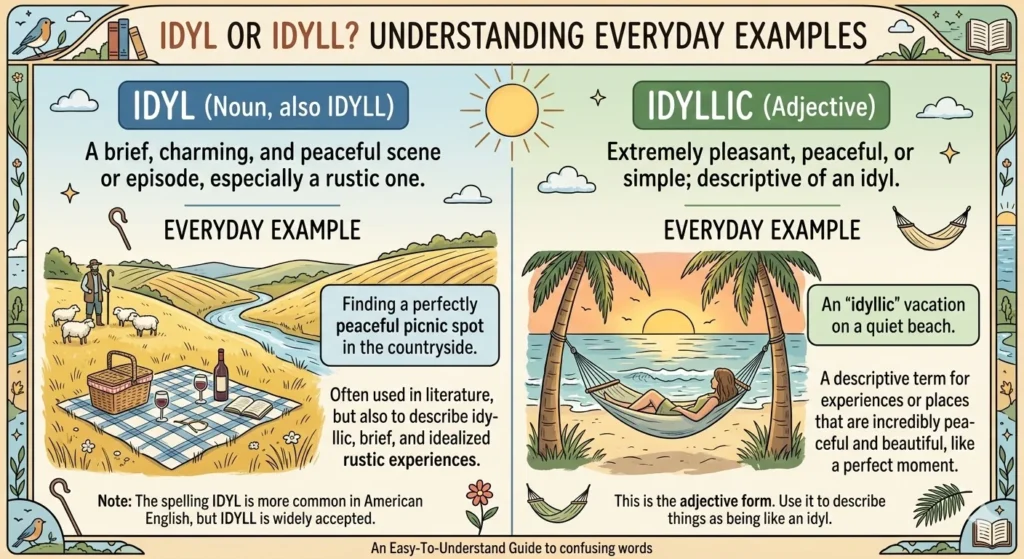
Idyl or Idyll in Everyday Examples
Here’s how the word appears in real communication.
Emails
- I hope your vacation was an idyll away from work stress.
News writing
- The island remains a tourist idyll.
Social media
- Weekend picnic = pure idyll 🌿
Formal writing
- The novel presents rural life as an idyll untouched by industry.
Idyll in a sentence (examples)
- Their farm became a summer idyll.
- Childhood felt like an endless idyll.
- The painting shows an idyllic countryside scene.
Idyl or Idyll – Google Trends & Usage Data
Search behavior shows strong preference for “idyll.”
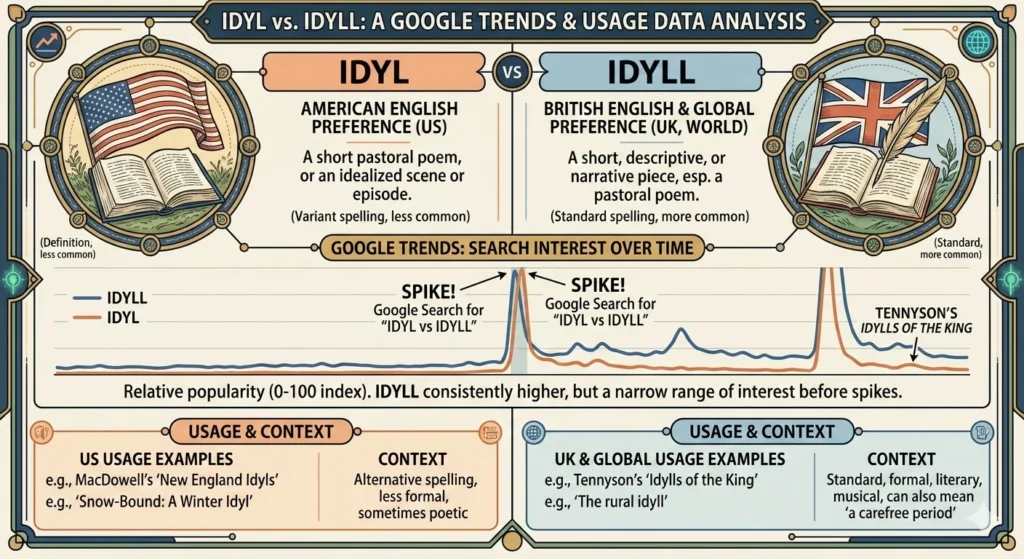
Popularity by region
- United States → “idyll” dominates academic searches.
- United Kingdom → literary and cultural usage.
- India & Pakistan → searched mainly by students studying literature.
- Europe → linked with poetry and art discussions.
People often search:
- Is it idyl or idyll?
- Idyll meaning in literature
- What is an example of an idyll?
The rare spelling idyl appears mostly in historical texts or older publications.
Keyword Comparison Table
| Term | Meaning | Usage Level | Recommended? |
|---|---|---|---|
| idyll | Peaceful scene or moment | Modern standard | ✅ Yes |
| idyl | Older spelling | Rare | ⚠️ Avoid |
| idyllic | Describing peace | Very common | ✅ Yes |
| ideal | Perfect standard | Different meaning | ✅ Yes (separate word) |
| Idryl | Misspelling | Incorrect | ❌ No |
FAQs About Idyl or Idyll
1. Is it idyl or idyll?
The correct modern spelling is idyll. “Idyl” is outdated.
2. What does “idyl” mean in text?
It means the same as idyll — a peaceful or happy scene — but the spelling is rarely used today.
3. What is an example of an idyll?
A quiet village holiday, a calm lakeside evening, or peaceful rural life.
4. What is the meaning of Idryl?
“Idryl” is a spelling mistake. The correct word is idyll.
5. How do you pronounce idyll?
Pronounced: /ˈɪd-əl/ (sounds like ID-ul).
6. What is idyll meaning in literature?
In literature, an idyll is a short pastoral poem or an idealized peaceful setting.
7. Is idyll the same as ideal?
No. Ideal means perfect. Idyll means peaceful or picturesque.
Conclusion
The confusion between idyl or idyll comes from historical spelling changes, not regional English differences. Today, “idyll” is the correct and widely accepted spelling across American, British, and global English. It describes peaceful moments, romantic settings, or calm rural life — especially in literature and descriptive writing.
Understanding the word’s Greek roots and literary history explains why older forms like idyl still appear occasionally. However, modern writers, students, and professionals should consistently use idyll to avoid errors and improve clarity.
Remember the key distinction: idyll describes a peaceful scene, while ideal describes perfection. Using the correct spelling strengthens credibility and helps readers understand your meaning instantly.
If you want safe, professional usage in emails, essays, or online content, choose idyll every time. Clear spelling leads to clearer communication — and better writing overall.

“May Sinclair, a playful wordsmith at PunsBlast, turning clever puns and witty humor into daily laughs that brighten readers’ days.”