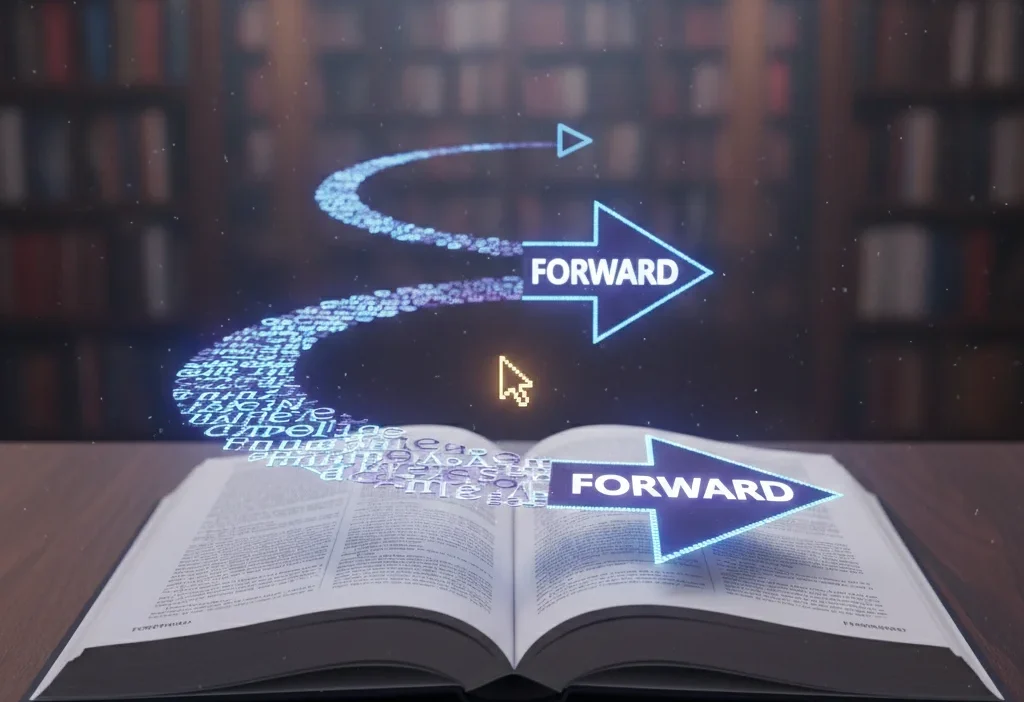
You’re typing an email and pause: are you “looking forward to the meeting” or “looking foreword”? You’re finishing your manuscript and need that introductory section: is it the “forward” or the “foreword”?
If this hesitation sounds familiar, you’re not alone. Thousands of people search for “forward or foreword” every month, trapped by a classic homophone confusion.
These two words sound identical but have meanings worlds apart. One is about direction and progress; the other is a specific part of a book. Mixing them up can make your writing look unprofessional, whether in a simple note or a published work.
This article solves that confusion once and for all. We’ll break down the meanings, origins, spellings, and uses. You’ll get clear rules and simple examples. By the end, you’ll never second-guess your choice again. Let’s move forward and demystify the foreword.
Forward or Foreword – Quick Answer
Forward (without the ‘e’) is a common word with several related meanings. It primarily describes a direction ahead, a position in sports, or an attitude of progress. Think: moving forward, a forward in soccer, or being forward (bold).
Foreword (with the ‘e’) is a niche term. It refers only to the introductory section of a book, typically written by someone other than the author.
Examples:
- Forward: Please forward this email to the team. The army moved forward. She has a very forward personality.
- Foreword: The famous author wrote a heartfelt foreword for the new biography.
In short: If it’s about direction or action, use forward. If it’s about a book’s introduction, use foreword.
The Origin of Forward and Foreword
The confusion starts with their roots. Both words are Old English, but their paths diverged long ago.
Forward comes from the Old English foreweard, a combination of fore (before) and -weard (directed toward). It literally means “toward the front.” This core idea of direction expanded over time to cover physical movement (“move forward”), attitude (“forward-thinking”), and action (“forward a message”).
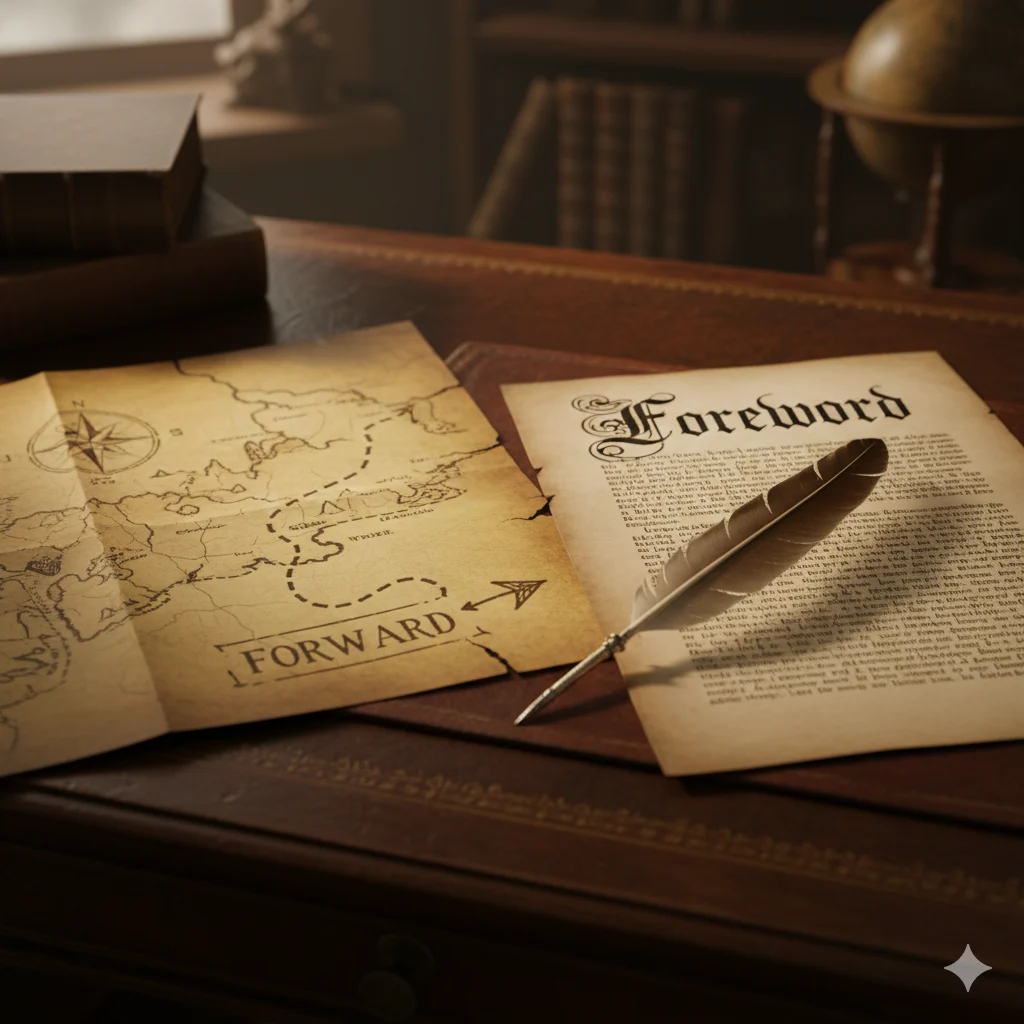
Foreword is a much younger compound. It was formed in the 19th century by combining fore- (before) and word. It means “the words before the main text.” It’s a purely structural term for books.
The spelling difference exists because they are different words, not variants of the same one. Foreword is logically the “words before” the book. Forward is about orientation. Remembering this “word” inside foreword is the key to spelling it correctly.
British English vs. American English Spelling
Here’s a key point of clarity: Unlike color/colour or organize/organise, the “forward or foreword” choice is not a US vs. UK spelling difference. It is a universal spelling distinction based on meaning.
Both American and British English use forward for direction and foreword for a book’s introduction. There is no accepted alternative spelling. The confusion is purely a homophone error, not a dialectal variation.
However, it’s worth noting a related spelling: Foreward (with an ‘a’). This is always a misspelling. It likely occurs because people blend “forward” and “foreword.” It is incorrect in all forms of English.
Spelling Comparison Table
| Correct Spelling | Meaning | Used In | Example Sentence |
|---|---|---|---|
| Forward | Direction, action, attitude, position. | All English Varieties | We need to think forward to succeed. |
| Foreword | Introductory section of a book. | All English Varieties | The foreword gave useful context. |
| ~~Foreward~~ | Incorrect. A common misspelling. | — | ❌ He wrote the ~~foreward~~. |
Which Spelling Should You Use?
Your choice depends entirely on your audience and context, not geography.
- For a US or Global Business Audience: Use forward 99% of the time. It’s for emails (“I look forward to your reply”), project updates (“moving the plan forward”), and general communication. Use foreword only if you work in publishing, writing, or are specifically discussing a book.
- For a UK/Commonwealth Audience: The same rule applies. The spelling distinction is identical. Whether in London or Sydney, you forward an email and cite a book’s foreword.
- For Authors, Editors, and Academics: Precision is critical. You must know and use foreword correctly when referring to a book’s front matter. Misusing “forward” here is a glaring professional error.
Global Rule: Let meaning guide you. Are you talking about a book’s preface? If yes, it’s foreword. For every other meaning, it’s forward.
Common Mistakes with Forward and Foreword
- Using “Forward” in a Book Context: This is the most common error.
- Incorrect: The book’s forward was written by the author’s mentor.
- Correct: The book’s foreword was written by the author’s mentor.
- Misspelling “Foreword” as “Foreward” or “Forword”:
- Incorrect: *I read the interesting foreward. *
- Correct: I read the interesting foreword.

- Confusing “Foreword” with “Preface” or “Introduction”:
- While all are introductory sections, a foreword is specifically written by someone other than the author. A preface or introduction is written by the author.
Forward and Foreword in Everyday Examples
In Emails:
- “I am looking forward to our meeting next week.” (Correct)
- ❌ “I am looking foreword to our meeting.” (Incorrect)
In News Headlines:
- “Government Pushes Forward with New Climate Policy.” (Direction/Action)
- “Critic Praises Novel in Its New Foreword.” (Book Section)
In Social Media:
- “So excited! Moving forward with the new studio space! #progress” (Correct)
- “Honored to have the legendary Dr. Smith write the foreword for my book. Out next spring!” (Correct)
In Formal Writing:
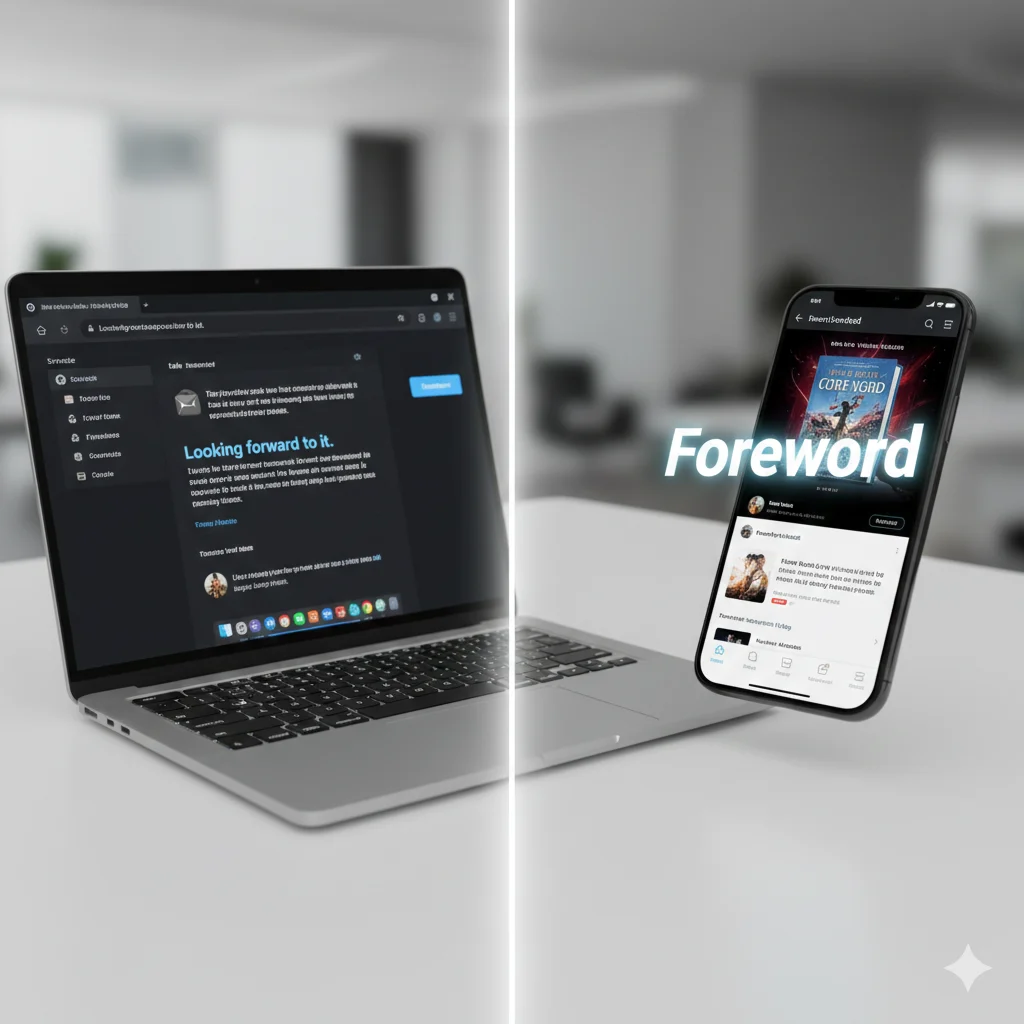
- “The study proposes a forward-looking framework for economic analysis.” (Attitude)
- “As noted in the foreword by Professor Lee, this work challenges longstanding paradigms.” (Book Section)
Forward or Foreword – Google Trends & Usage Data
Data shows that “forward” is searched vastly more often globally than “foreword”—this makes sense, as it’s an everyday word. Searches for “foreword” spike reliably in English-speaking countries during academic periods (September, January) and around major book release seasons, tied to students and writers. The phrase “forward or foreword” sees consistent search volume year-round, highlighting the persistent confusion. The United States, United Kingdom, Canada, Australia, and India are the top regions searching for this clarification, proving it’s a universal English language hurdle, not limited to one dialect.
Frequently Asked Questions (FAQs)
Q1: Is it a forward or a foreword for a book?
A: It is always a foreword (with the ‘e’) when referring to the introductory section of a book.
Q2: What is the means of forward?
A: Forward has several meanings: 1) directed toward the front (move forward), 2) to send something on to another destination (forward an email), 3) a position in sports (hockey forward), 4) bold or presumptuous (a forward remark).
Q3: How do you spell forward of a book?
A: The correct spelling for a book’s introduction is F-O-R-E-W-O-R-D. Remember it as the “words that come fore” (before) the main text.
Q4: Is it ‘looking forward’ or ‘looking foreword’?
A: It is always “looking forward.” This phrase means to anticipate something positively. “Looking foreword” is incorrect.
Q5: What is a foreword synonym?
A: Common synonyms for foreword include preface, prologue, and introduction. However, in publishing, these have subtle differences. A “foreword” is specifically by another person.
Q6: Foreword vs forward pronunciation – is there a difference?
A: No. Forward and foreword are perfect homophones. They are pronounced exactly the same way: /ˈfɔːrwərd/.
Q7: Can you give a clear foreword example?
A: “The 2023 edition of ‘The Climate Crisis Handbook’ features a powerful foreword by renowned activist Greta Thunberg, who contextualizes the work’s urgency.”
Conclusion
The “forward or foreword” dilemma is solved by understanding one simple distinction: meaning over sound. Forward is your workhorse word for direction, progress, and action. It’s for emails, sports, and daily life. Foreword is a specific literary term for a book’s introductory note written by another person. The memory trick is foolproof: a foreword is the “words before” the book. Whether you’re in the US, UK, or anywhere else, this rule holds firm. By applying this guide, you can write with confidence, avoid a common professional pitfall, and ensure your communication—from casual messages to formal manuscripts—is precise and correct. Now, you can truly look forward to writing that perfect foreword without a second thought.

“Margaret Oliphant, a witty wordsmith at PunsBlast, blending charm and clever humor to turn everyday moments into laugh-worthy puns.”