Few words cause as much delicious confusion as “chef.” Is it spelled with one ‘f’ or two? Searches for “chef or cheff” spike as home cooks, students, and professionals alike second-guess themselves.
This common mix-up isn’t about fancy cooking techniques; it’s about simple, correct spelling. People search for this keyword to quickly resolve doubt before writing a resume, a menu, a blog post, or a formal email.
They want to know: what is the right way, and why is there confusion? This guide cuts through the clutter. We’ll provide the quick answer, explore the word’s origin, and clear up the “cheff” vs. “chef” mystery for good.
Whether you’re discussing a Chef Coat, sharing a chef kiss moment, or buying new chef cookware, using the correct spelling matters. Let’s settle the debate and ensure your writing is as precise as a chef’s knife skills.
Chef – Quick Answer
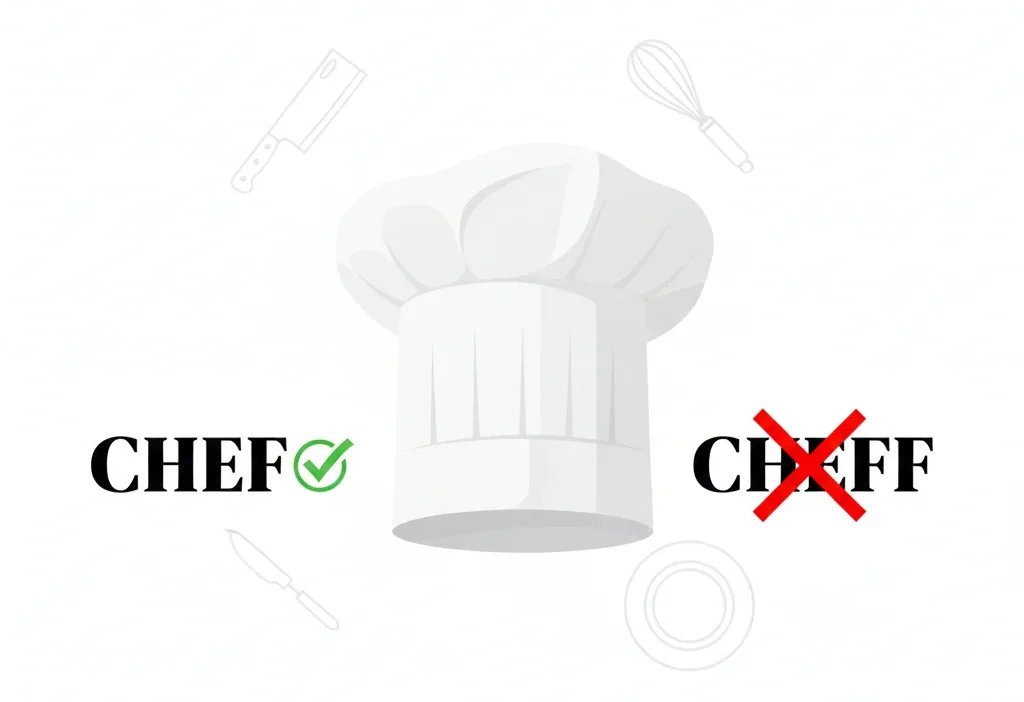
The correct spelling is CHEF. It is always spelled with one ‘f’. “Cheff” is incorrect.
Examples of correct usage:
- “Gordon Ramsay is a world-renowned chef.”
- “I need to buy a new chef knife.”
- “That meal was perfect – chef kiss!”
The word “chef” comes from the French phrase chef de cuisine, meaning “head of the kitchen.” The double ‘f’ error (“cheff”) likely comes from over-applying English spelling rules, like in words such as “staff” or “cliff.” But in this case, the standard and only accepted spelling in both American and British English is chef.
The Origin of Chef
The word “chef” has a rich history that explains its spelling. It is borrowed directly from French, where chef means “head” or “chief.” The full title, chef de cuisine, literally translates to “head of the kitchen.” This term entered the English language in the 19th century as professional kitchens became more formalized and hierarchical.
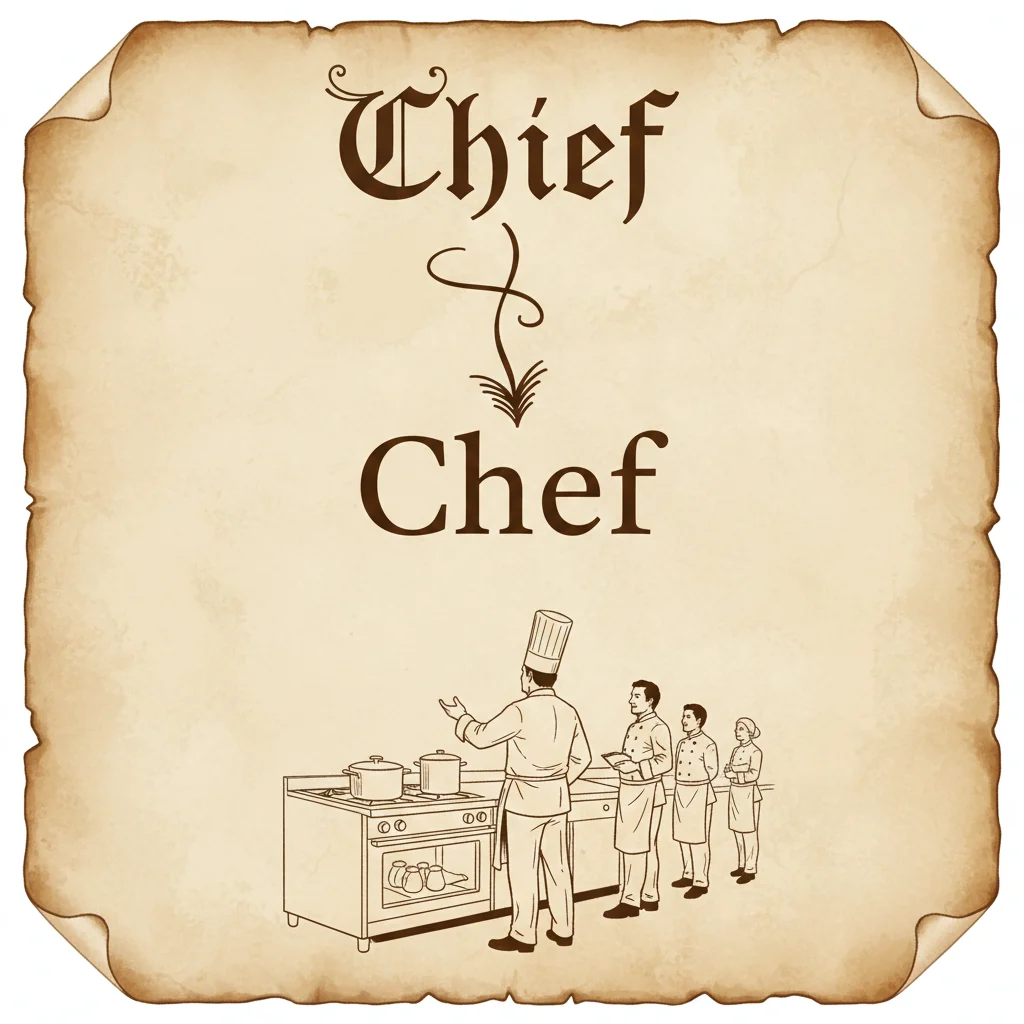
Why does the spelling difference (“cheff”) confusion exist? English has many words where a short vowel sound is followed by a double consonant, like “egg,” “add,” or “puff.” When people hear the short ‘e’ sound in “chef” (/ʃɛf/), they might instinctively think it needs a double ‘f’ to follow that pattern. However, “chef” is a loanword, and its spelling was fixed when it was adopted. It retains its original French form with a single ‘f,’ much like other French borrowings such as “brief” or “belief.” Understanding this origin helps cement the correct spelling in your mind.
British English vs American English Spelling
For many words, American and British English have famous spelling divides: color/colour, organize/organise. However, for the word chef, there is no difference. Both dialects uniformly accept and use “chef” with one ‘f’. “Cheff” is considered a misspelling everywhere.
The confusion often arises around related words or different grammatical forms. For instance, the past tense of the verb “to chef” (a less common usage) could be “cheffed,” but the base noun remains “chef.” The primary comparison isn’t between two correct spellings, but between the correct one and a common error.
Here is a comparison table for clarity:
| Term | Correct Spelling | Common Incorrect Spelling | Notes |
|---|---|---|---|
| Head Cook | Chef | Cheff | Correct in all English dialects. |
| Informal Verb (to work as a chef) | Chef (e.g., “He chefs there.”) | Cheff | Verb form is rare; “cook” is more common. |
| Action (to prepare food professionally) | Cheffing / Cheffed | Cheffing / Cheffed | While “cheffed” uses double ‘f’, it derives from the noun “chef.” |
| Gesture of Excellence | Chef’s kiss | Cheff kiss | The idiom is derived from the correct spelling. |
Which Spelling Should You Use?
The advice is straightforward: always use “chef.”

- For a US Audience: Use “chef.”
- For a UK/Commonwealth Audience: Use “chef.”
- For Global or Formal Writing (menus, culinary textbooks, professional profiles): Use “chef.” This is the international standard in the culinary world. Whether you’re reading about Chef Pillai, the famous Indian chef, or shopping for a cooking chef appliance, the spelling is consistent.
The only time you might encounter “cheff” is as a proper noun (e.g., a brand name or a surname). In all common nouns and standard writing related to the culinary profession, “chef” is the only correct choice. Using “cheff” can make your writing appear unprofessional or careless, especially on a resume or in a business context.
Common Mistakes with Chef
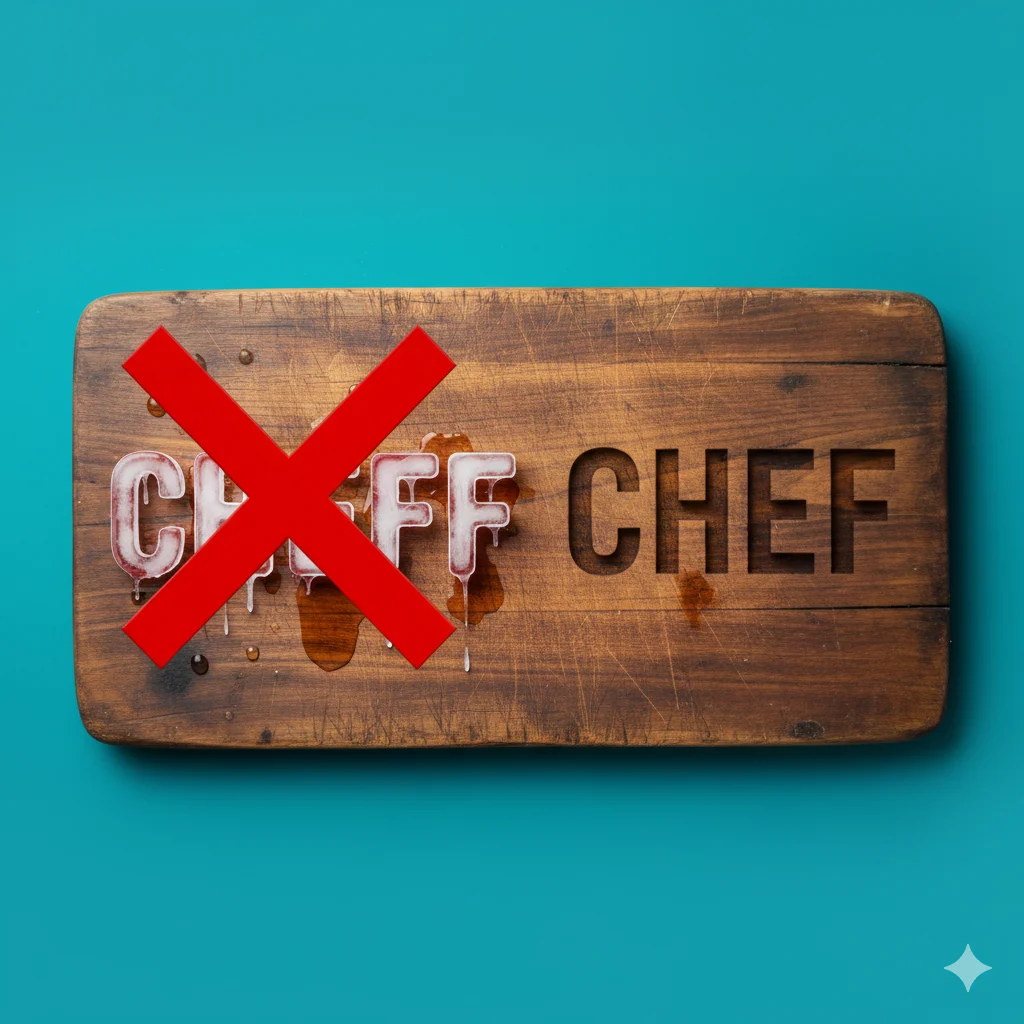
- Adding an Extra ‘F’: The most frequent error is writing “cheff.”
- Incorrect: “She is the head cheff at the new restaurant.”
- Correct: “She is the head chef at the new restaurant.”
- Misusing the Capital ‘C’: Capitalizing “chef” when it’s not a formal title.
- Incorrect: “I spoke to Chef about the menu.” (Unless “Chef” is being used as a direct title/name, like “I spoke to Chef Smith”).
- Correct: “I spoke to the chef about the menu.” or “I spoke to Chef Anand.”
- Confusing “Chef” with “Cook”: While related, they are not always interchangeable. A chef implies a trained professional, often in a leadership role. A cook is a broader term for anyone who prepares food.
- Incorrect: “The short-order chef flipped the pancakes.” (This is likely a cook).
- Correct: “The executive chef designed the new tasting menu.”
Chef in Everyday Examples
- Email/Professional:
- “Dear Chef Rodriguez, Please find attached the proposal for the new chef cookware line.”
- “All kitchen staff must wear a clean chef coat during service.”
- News Headline:
- “Local Chef Wins Prestigious Award for Sustainable Cuisine.”
- Social Media/Casual:
- “Just tried making pasta from scratch. Not perfect, but definitely a chef kiss from me! #homecooking”
- “How my chef bestie plates food vs. how I do. 😂 #culinarygenius”
- Formal Writing (Website/Brochure):
- “Our culinary team, led by Executive Chef Maria Lopez, sources ingredients locally.”
- “The course covers everything from basic knife skills to the responsibilities of a sous chef.”
Chef – Google Trends & Usage Data
Google Trends data clearly shows that searches for the correct spelling “chef” are overwhelmingly more common worldwide than for the incorrect “cheff.” Interest in the term “chef” is consistently high in countries with strong culinary traditions and media, such as the United States, the United Kingdom, Australia, and India.
Searches often spike around lifestyle events (New Year’s resolutions to cook, holidays) and popular culture moments (like the release of a new cooking show or a viral chef kiss meme). The data also shows related searches like “chef pronunciation” (it’s /ʃɛf/, sounding like “shef”) and “how do you spell chef or cheff?” confirming the widespread nature of this spelling doubt. The term “cooking chef” is often used by people searching for appliances or instructional content, further cementing the dominance of the single-‘f’ spelling in common use.
FAQs
1. How do you spell chef or cheff?
The only correct spelling is chef. “Cheff” is a common misspelling.
2. What does cheff mean?
“Cheff” has no standard meaning in English. It is an incorrect spelling of “chef.” In rare cases, it could be a surname or brand name, but it does not refer to a culinary professional.
3. Who is called a chef?
A chef is a trained professional cook, typically one who is in charge of a kitchen or a specific station (e.g., sous chef, pastry chef). The term implies a level of expertise, training, and leadership beyond a general “cook.”
4. Is chef with a capital C?
Only capitalize “Chef” when it is part of a formal title directly preceding a name (e.g., Chef Gordon Ramsay, Executive Chef Lee). Do not capitalize it when used as a common noun (e.g., “I asked the chef for the recipe”).
5. Cheff or chef which is better?
Chef is correct and therefore “better” in all contexts. “Cheff” is incorrect and should be avoided in writing.
6. What does “chef cook” mean?
This phrase is somewhat redundant but is often used to emphasize the professional capacity of the person. It means a cook who holds the rank of a chef. More commonly, people refer simply to a “chef” or a “professional cook.”
7. How do you pronounce chef?
Chef is pronounced /ʃɛf/. It rhymes with “eff” and starts with a “sh” sound, not a “ch” sound. It is not pronounced like “chef” in “Chicago.”
Conclusion
The journey from confusion to clarity is simple: the correct spelling is always chef. This single, elegant word carries the weight of French culinary tradition into our modern kitchens, from a home cook’s chef cookware to the pristine white chef coat in a fine-dining restaurant. Remember, “cheff” is a misspelling, born from overthinking English patterns. Whether you’re praising a dish with a chef kiss, following a recipe from Chef Pillai, or discussing the role of a cooking chef, consistency and correctness matter. By using “chef” correctly, you show attention to detail—a quality every great chef appreciates. Let this be your final guide: one ‘f’ for the win, in every English-speaking kitchen around the globe.

“Witty McGiggles, PunsBlast’s resident pun master, spins clever wordplay and playful humor to turn every moment into a laugh.”