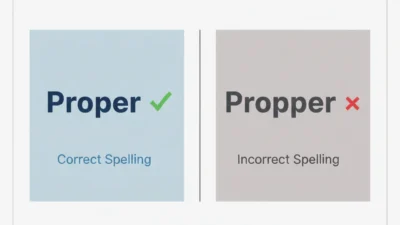
Have you ever paused while typing, unsure whether to use “bright” or “brite”? You are not alone. Every day, thousands of people search for guidance on this common spelling puzzle.
This article directly addresses that confusion, providing a clear, final answer. The search for “bright or brite” typically stems from a need for accuracy in writing, whether for a school assignment, a professional email, or a social media post. People want to know the correct form to appear educated and avoid mistakes.
This keyword search solves a simple but persistent problem: it clarifies the standard spelling versus the informal variant, explains regional differences, and demystifies why alternative versions like “brite” appear in brand names and casual contexts.
By the end of this guide, you will have a confident grasp of when and how to use each term, empowering your communication in any setting.
Bright or Brite
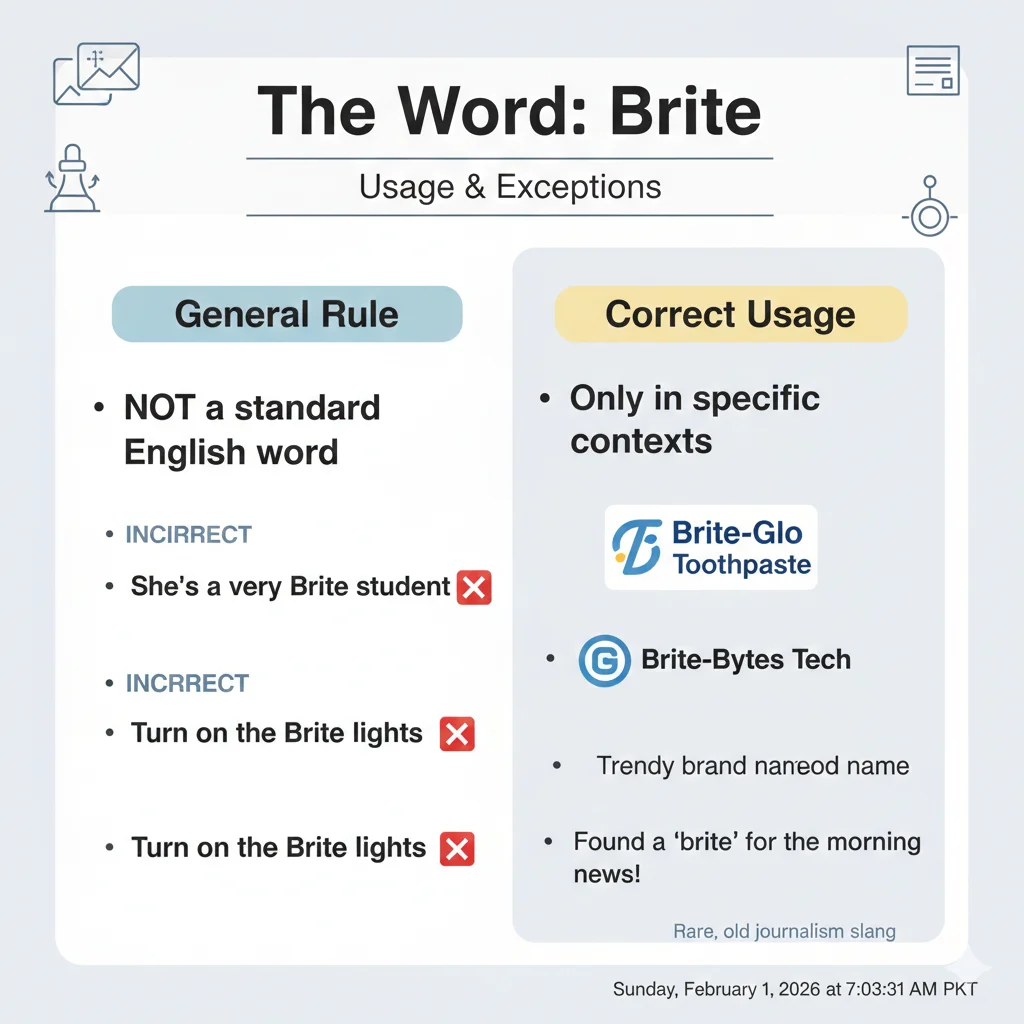
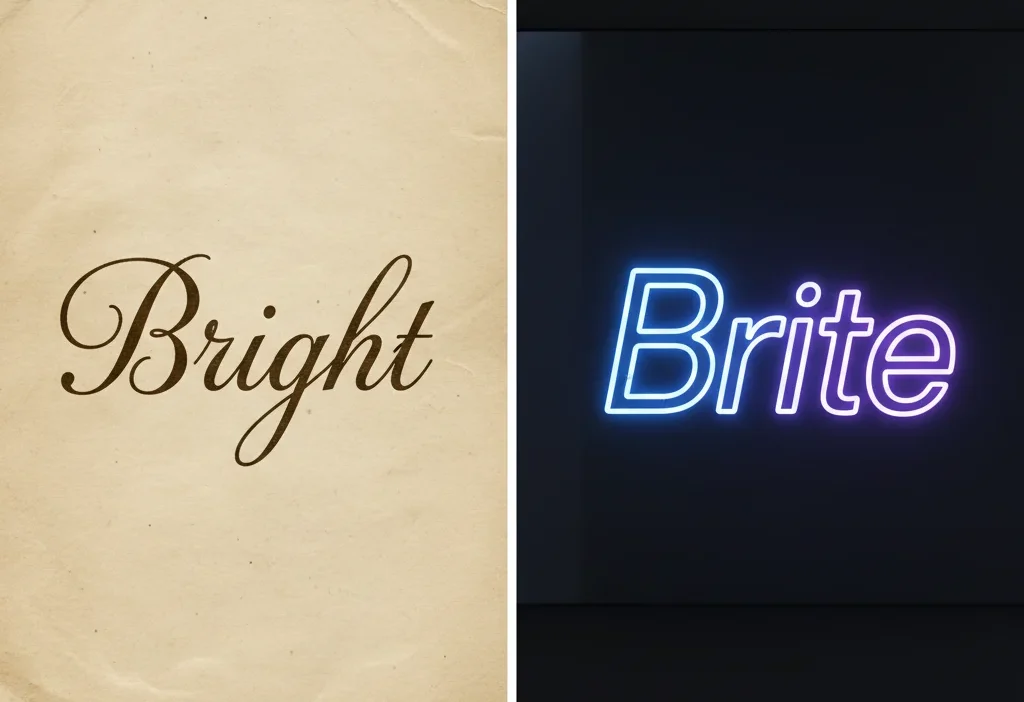
The quick answer is that “bright” is the correct standard spelling in modern English. It is used as an adjective, a noun, and sometimes informally as an adverb. “Brite” is generally considered an incorrect spelling in formal writing. However, “brite” is often used deliberately in brand names, product titles, and casual contexts to appear catchy, modern, or cool. For example, a cleaning product might be called “Brite & Shiny” to stand out. In all formal writing, academic work, and standard communication, you should always use bright.
Examples:
- Correct: The bright sun filled the room.
- Correct (as a brand): I bought some Brite laundry detergent.
- Incorrect (in formal writing): She has a brite future ahead of her.
The Origin of Bright
The word “bright” has deep roots in the history of the English language. It originates from the Old English word “beorht,” which meant shining, brilliant, or clear. This word is itself derived from a common Germanic ancestor, “berhtaz.” Over centuries, through Middle English, the spelling evolved into “bright,” reflecting shifts in pronunciation and writing conventions.
So, why does “brite” exist if it’s not the standard form? The spelling “brite” is a modern invention, a phonetic respelling. It represents how the word sounds in casual American speech. This simplified spelling became popular in 20th-century advertising and branding. Companies found that “brite” looked shorter, snappier, and more memorable on a product label than the traditional “bright.” This trend gave us brand names like Brillo, Britek, or BriteWhite. It’s a deliberate stylistic choice, not a historical evolution of the word. The existence of “brite” is a classic example of marketing and informal culture influencing how we see words, while the dictionary and formal writing retain the original, correct spelling.
British English vs American English Spelling
Interestingly, for this specific word, both British and American English use “bright” as the correct spelling. There is no transatlantic divide on this term like with “colour/color” or “centre/center.” The confusion with “brite” is not a regional spelling difference but rather one of formal versus informal/corporate usage.
However, understanding general spelling rules can help. American English often favors simplified spellings (like color, honor), which might make “brite” seem like a potential American variant. But “bright” is already the simplified form from its Old English root. The “-ight” pattern (light, night, fight) is standard in both language versions.
Here is a comparison table for clarity:
| Term | Standard Spelling (US & UK) | Informal/Branding Variant | Common Usage |
|---|---|---|---|
| Bright/Brite | Bright | Brite | “Bright” is the only correct spelling for formal writing. “Brite” is for brands (Brite detergent) or very casual text. |
| Similar Pattern: Light/Lite | Light | Lite | “Light” is correct for illumination and weight. “Lite” is for low-fat/calorie products (Miller Lite, Lite salad dressing). |
Which Spelling Should You Use?
Your choice depends entirely on your audience and context:
- For a US Audience: Always use “bright” in any formal, academic, or professional writing. Use “brite” only if you are intentionally referencing a known brand name or writing in a very informal, stylistic manner (e.g., a creative blog title trying to be edgy).
- For a UK/Commonwealth Audience: The rule is identical. Use “bright”. The variant “brite” is understood as an Americanism, primarily through branded products, and is not used in correct writing.
- For Global or Business English: The international standard is “bright”. Using “bright” ensures clarity, professionalism, and correctness across all English-speaking regions. Avoid “brite” in business communications, reports, or international correspondence.
Simple Rule: When in doubt, always choose “bright.” You will never be wrong using the standard spelling.
Common Mistakes with Bright
The most frequent error is using “brite” in a formal context where “bright” is required.
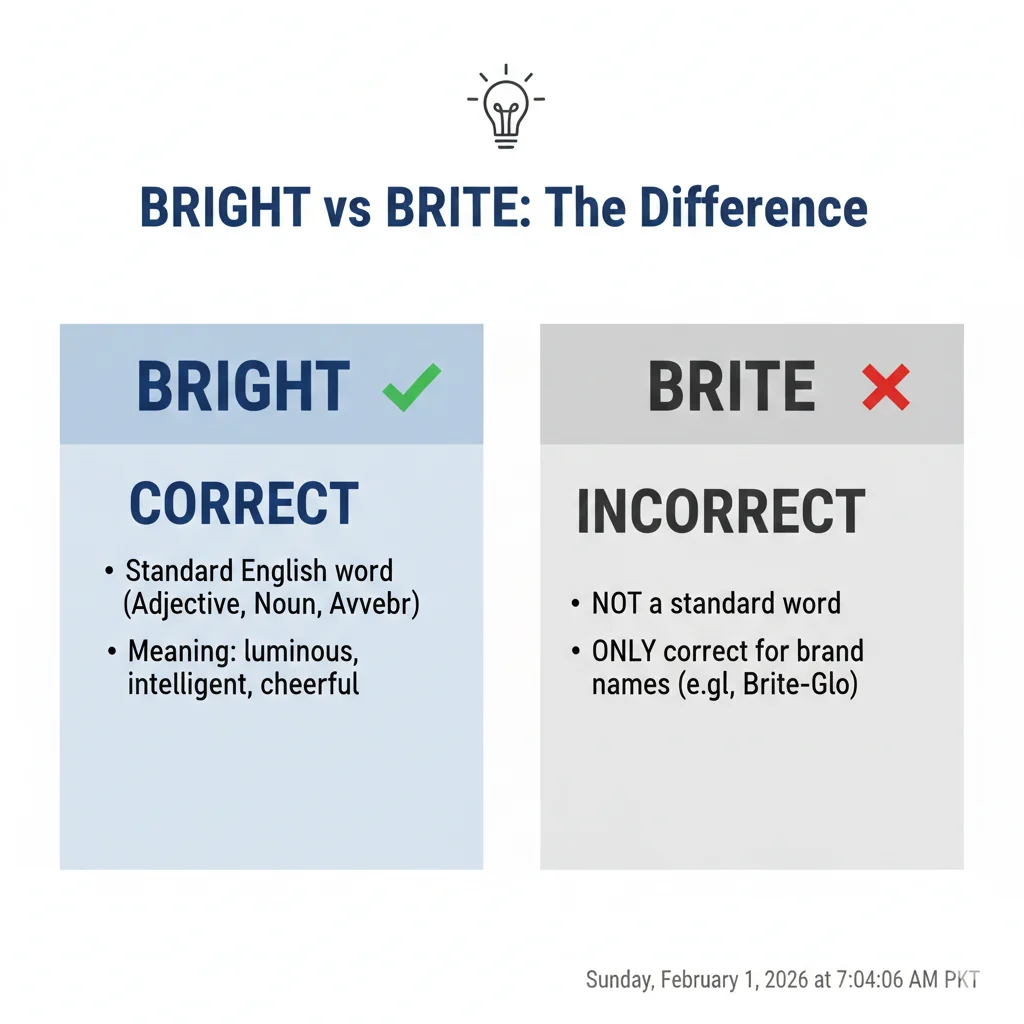
- Incorrect: He is a brite student with a promising future.
- Correct: He is a bright student with a promising future.
Another mistake is misspelling related forms:
- Incorrect: The light shone brightly (correctly spelled!).
- Incorrect: She has a certain brightness about her (correctly spelled!).
- Note: The adverb of bright is brightly. The noun form is brightness. There is no “britely” or “briteness.”
Also, avoid confusing “bright” (adjective) with a similar-sounding word like “brittle” (meaning fragile).
Bright in Everyday Examples
Let’s see how “bright” functions correctly across different contexts:
- Email (Professional): “Thank you for your bright ideas during the meeting. Let’s move forward with your proposal.”
- News Headline: “Economist Forecasts a Bright Outlook for Q4 Tech Sector.”
- Social Media (Casual): “What a bright and beautiful morning! ☀️ #MondayMotivation”
- Formal Writing/Academic: “The study concluded that exposure to bright light significantly improves circadian rhythm regulation.”
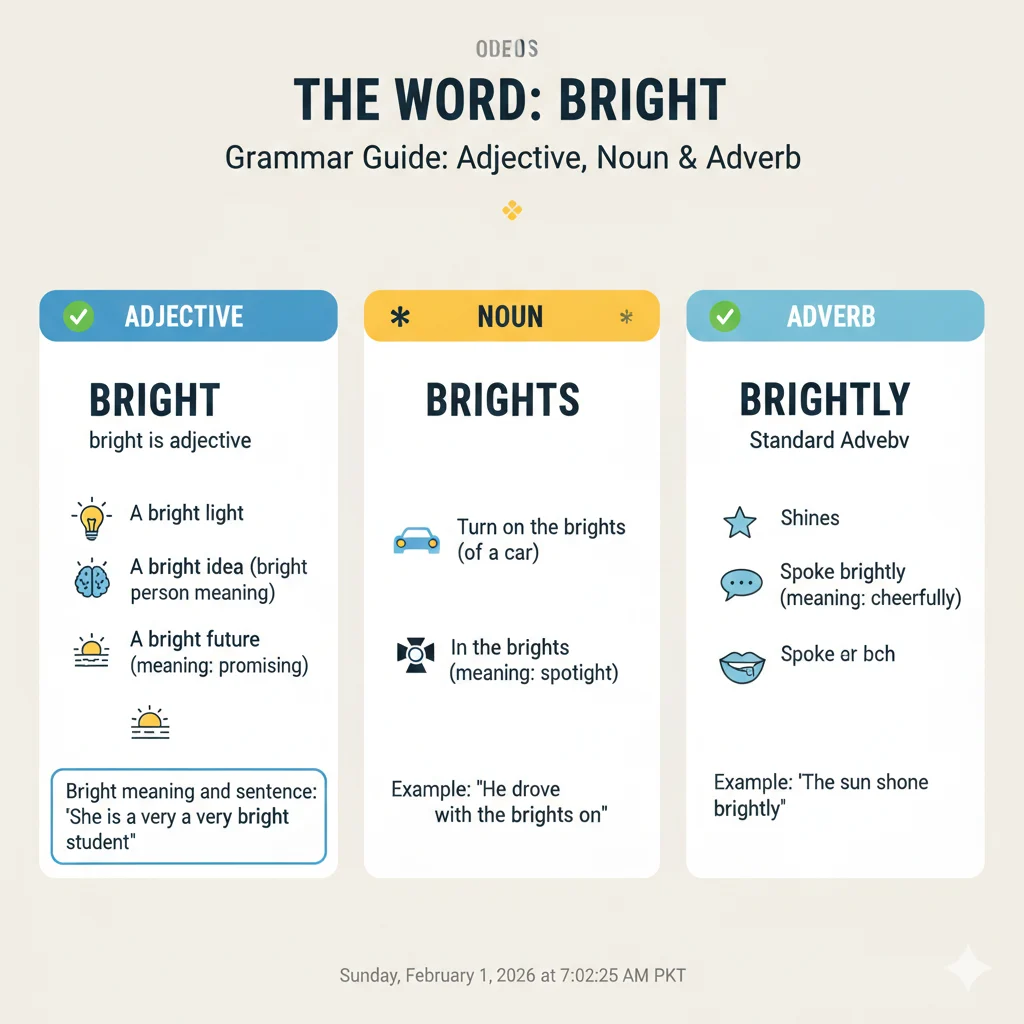
- As a Noun: “The painter used the brights and darks to create dramatic contrast.”
- Bright person meaning: This refers to someone who is intelligent and quick to learn. (e.g., “We need a bright mind to solve this complex problem.”)
Brite definition journalism: In very rare, informal journalistic slang, “brite” can sometimes refer to a short, cheerful, or amusing news item—a “bright” story. However, the standard term is “news bright,” and this usage is highly specialized and fading.
Bright – Google Trends & Usage Data
Analysis of search data clearly shows that “bright” is overwhelmingly more common than “brite” worldwide. Searches for “bright” consistently score 100 in popularity, while “brite” remains near zero in comparison. Interest in the word “bright” peaks predictably during periods associated with light—for example, in winter months in the Northern Hemisphere, possibly related to discussions about Seasonal Affective Disorder and bright light therapy.
Geographically, searches for the spelling “bright” are dominant in all English-speaking countries. Spikes for “brite” are almost always tied to specific product searches (like “Brite stain remover”) rather than the conceptual word. This data solidly confirms that “bright” is the universal standard for the meaning of shining, intelligent, or vivid, while “brite” is a niche commercial variant.
Keyword Comparison Table
| Variant | Part of Speech | Standard/Formal | Informal/Brand | Example Sentence |
|---|---|---|---|---|
| Bright | Adjective | YES | YES | She wore a bright red dress. |
| Bright | Noun | YES (e.g., lights) | NO | The brights of the city were stunning. |
| Brite | Adjective | NO | YES (Brand only) | I need to buy more Brite laundry pods. |
| Brightly | Adverb | YES | NO | The stars shone brightly. |
| Brightness | Noun | YES | NO | Adjust the screen’s brightness. |
Frequently Asked Questions (FAQs)
Q1: What is the meaning of Brite?
A1: “Brite” does not have a separate dictionary definition. It is an informal, phonetic spelling of “bright,” almost exclusively used in brand and product names to create a catchy, modern feel.
Q2: What is the correct form of bright?
A2: The correct form for all formal writing is B-R-I-G-H-T. “Bright” is the correct adjective, and it can also be used as a noun.
Q3: How do Americans spell bright?
A3: Americans spell the word bright, just like British and all other English speakers. The spelling “brite” is not a standard American variant but a commercial and informal one.
Q4: What is Brite?
A4: “Brite” is most commonly a brand name for various consumer products, from cleaning supplies to light bulbs. It is not the word you should use when writing in standard English.
Q5: What is a synonym for bright?
A5: Synonyms for bright (as an adjective) include: brilliant, vivid, shiny, intelligent, smart, cheerful, and luminous. The choice depends on context (e.g., a bright color vs. a bright child).
Q6: Can ‘bright’ be an adverb?
A6: While “bright” can sometimes be used informally as an adverb (e.g., “The sun shines bright”), the standard and correct adverb of bright is brightly (e.g., “The sun shines brightly“).
Q7: Does ‘bright is adjective’ mean?
A7: Yes, “bright” is primarily an adjective. It describes nouns (a bright day, a bright idea). It can also function as a noun (e.g., “the bright of the eye”) and has standard adverb (brightly) and noun (brightness) forms.
Conclusion
In the journey to understand “bright or brite,” the path is now clear. “Bright” is the unequivocally correct spelling for expressing light, intelligence, or vividness in any formal or standard context. Its history is long and rooted in Old English. “Brite,” on the other hand, is a modern creation—a tool of advertising and informal style with no place in proper writing. Remember, while you might shop for “Brite” detergent online or see a café called “Brite Lite,” your writing should always reflect the standard form. Whether you are in the US, the UK, or anywhere else in the world, using “bright” ensures accuracy and professionalism. So, go forward and write with confidence, letting your correct word choice shine brightly.

“Sylvia Townsend, a witty humorist at PunsBlast, crafting clever puns and playful wordplay that bring smiles to readers everywhere.”