Have you ever paused while writing and wondered: “bale or bail — which spelling is correct?” You’re not alone.
Thousands of people search phrases like “Is it bail or bale on someone?”, “Is it bail out or bale out?”, or “What is bale in English?” because these two words sound exactly the same but mean very different things.
This confusion happens because bale and bail are homophones — words that sound alike but have separate meanings and uses.
One relates to leaving, escaping, or legal release, while the other refers to bundles of materials or specific objects, including farming and jewelry terms. Mixing them up can change the meaning of a sentence completely.
This guide clears up every doubt about bale or bail meaning, spelling rules, real-world usage, and when to use each word.
Whether you’re writing emails, social media posts, news content, or formal documents, you’ll learn the correct spelling quickly and confidently.
Bale or Bail means
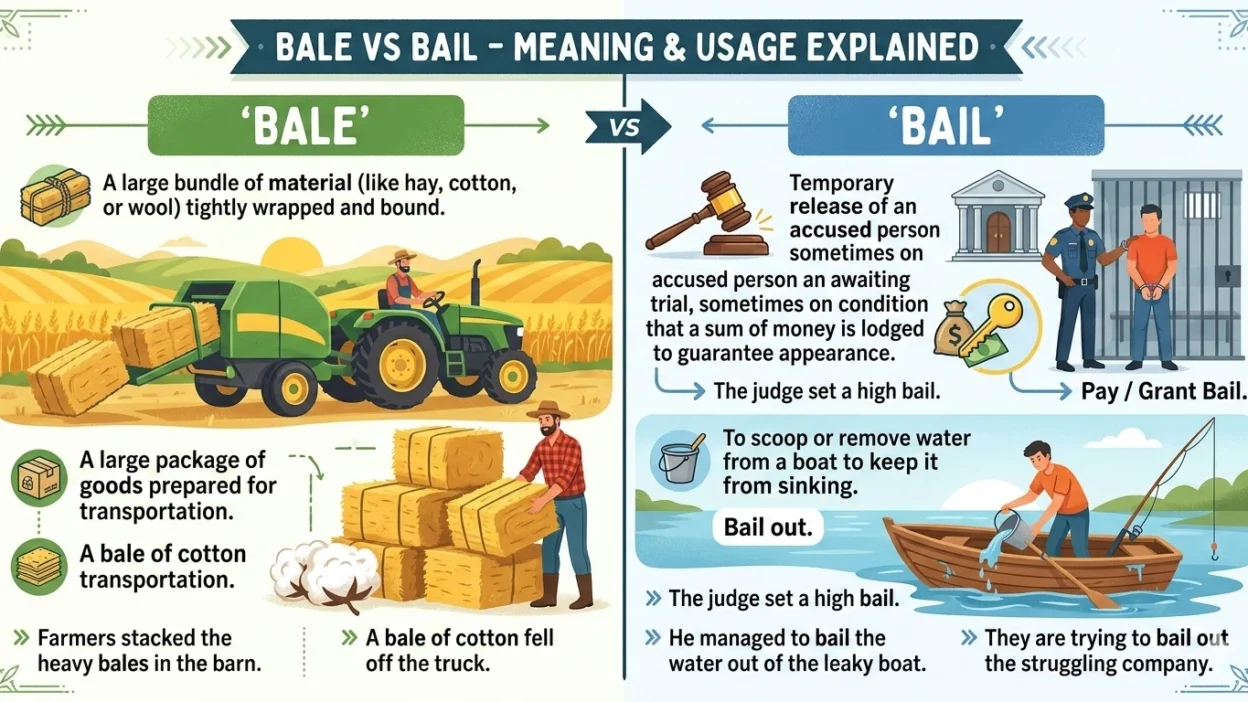
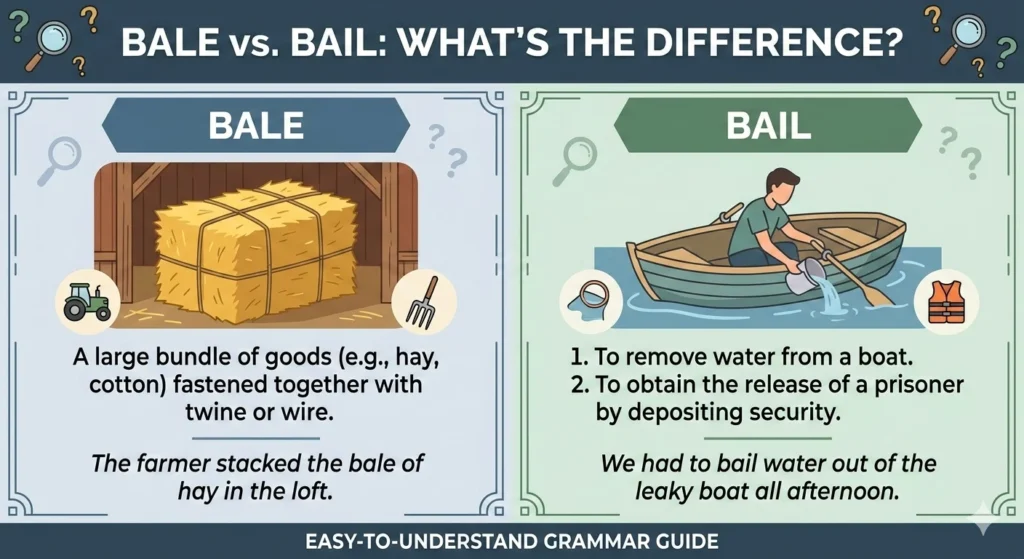
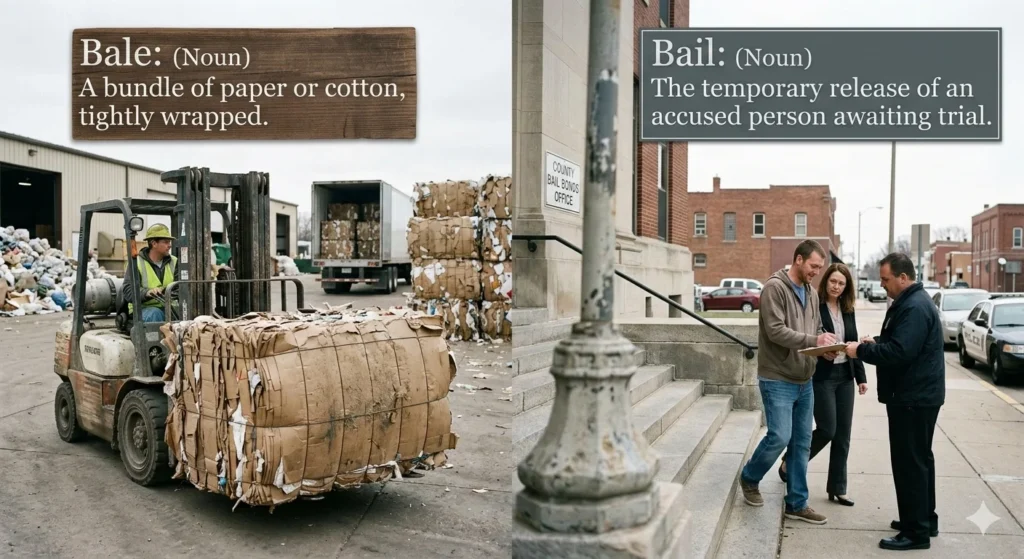
Bail = to leave, escape, or release someone (legal or informal meaning).
Bale = a bundle of goods or materials, or a specific object name.
Examples
- ✅ I had to bail on plans (leave early or cancel).
- ✅ The farmer stacked a bale of hay.
- ✅ She paid bail to leave jail.
- ✅ The necklace has a gold bale holding the pendant.
So if you’re asking:
- Is it bail or bale on someone? → ✔ Bail
- Is it bail out or bale out? → ✔ Bail out
- Does bale mean to leave? → ❌ No.
- What is bale in English? → A tied bundle or a jewelry connector.
The Origin of Bale or Bail
Understanding history makes the difference easy.
Bail — Origin
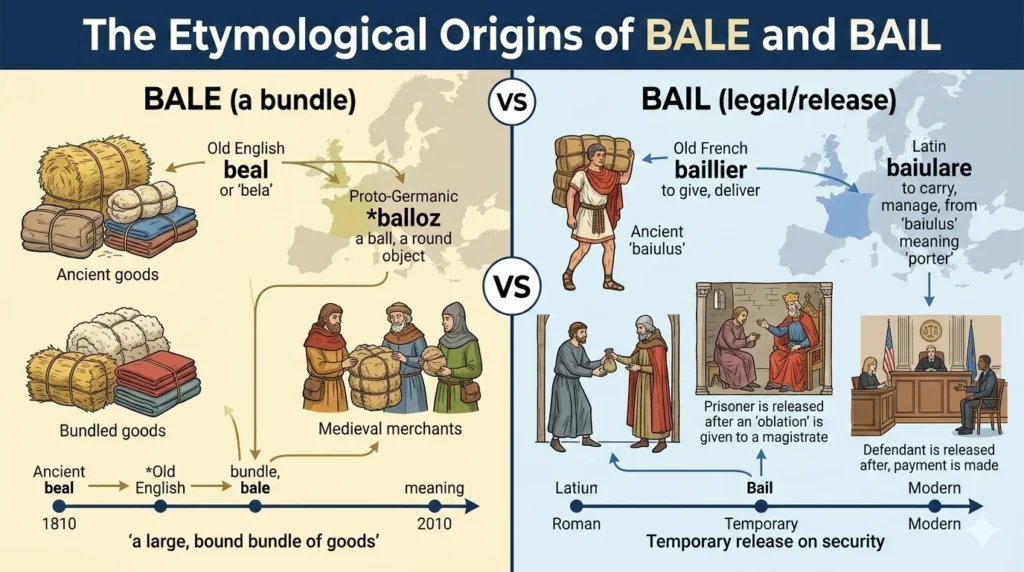
- From Old French baillier meaning to deliver or hand over.
- Later used in law for releasing someone from custody.
- Modern slang: to leave quickly or cancel plans.
Bale — Origin
- From Middle English bale, meaning bundle or pack.
- Used mainly in farming, shipping, and manufacturing.
- Later adopted in jewelry design terminology.
The spelling difference exists because the words developed from different languages and meanings, even though pronunciation became identical over time.
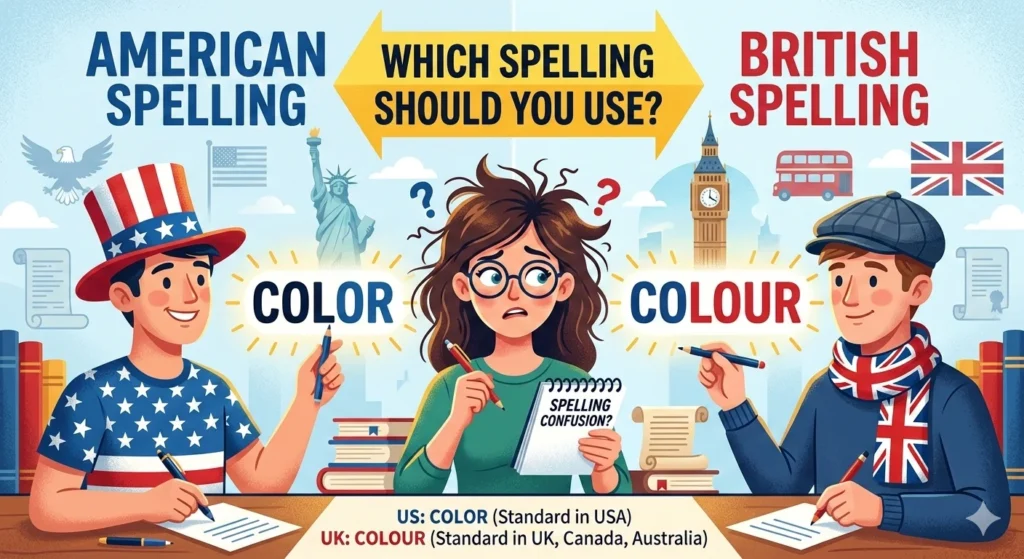
British English vs American English Spelling
Good news: this is not a UK vs US spelling issue. Both regions use the same spellings because meanings differ.
| Usage | Correct Word | British English | American English |
|---|---|---|---|
| Leave plans | Bail | ✅ | ✅ |
| Escape situation | Bail out | ✅ | ✅ |
| Bundle of hay | Bale | ✅ | ✅ |
| Jewelry connector | Bale | ✅ | ✅ |
| Legal release | Bail | ✅ | ✅ |
Unlike color/colour, bale or bail in English depends on meaning, not country.
Which Spelling Should You Use?
Choose based on context:
🇺🇸 US Audience
Use bail for:
- bail out
- bail on plans
- bail on someone
- legal writing
🇬🇧 UK & Commonwealth
Same rules apply:
- bail = leaving or legal release
- bale = bundles or objects
🌍 Global or Business Writing
Ask yourself:
👉 Are you talking about leaving or escaping? → bail
👉 Are you talking about a bundle or object? → bale
Common Mistakes with Bale or Bail
Here are frequent errors people make:
| Incorrect | Correct | Why |
|---|---|---|
| I will bale on plans | I will bail on plans | Leaving = bail |
| Bale out of the project | Bail out | Escape meaning |
| Bail of hay | Bale of hay | Bundle meaning |
| Bail jewelry connector | Bale jewelry | Object name |
| Bale water from boat | Bail water | Remove water |
Many searches like “bale or bail water” happen because pronunciation causes confusion.
Bale or Bail in Everyday Examples
Emails
- Sorry, I have to bail on plans tonight.
News Writing
- The court granted bail to the accused.
Social Media
- I might bail out early today.
Farming Context
- Farmers stored hay bales for winter.
Jewelry Writing
- The pendant bale connects the charm to the necklace chain.
Common searches explained:
- necklace bale or bail → ✔ Bale
- pendant bale or bail → ✔ Bale
- jewelry bale or bail → ✔ Bale
Bale or Bail – Google Trends & Usage Data
Search data shows two clear usage groups:
“Bail” Searches (Higher Volume)
Popular in:
- United States
- Canada
- Australia
- UK
Common contexts:
- slang (bail on plans)
- law (pay bail)
- emergencies (bail out)
“Bale” Searches
Popular in:
- agricultural regions
- crafting communities
- jewelry design markets
Common queries:
- hay bale or bail
- bale or bail jewelry
- bale meaning
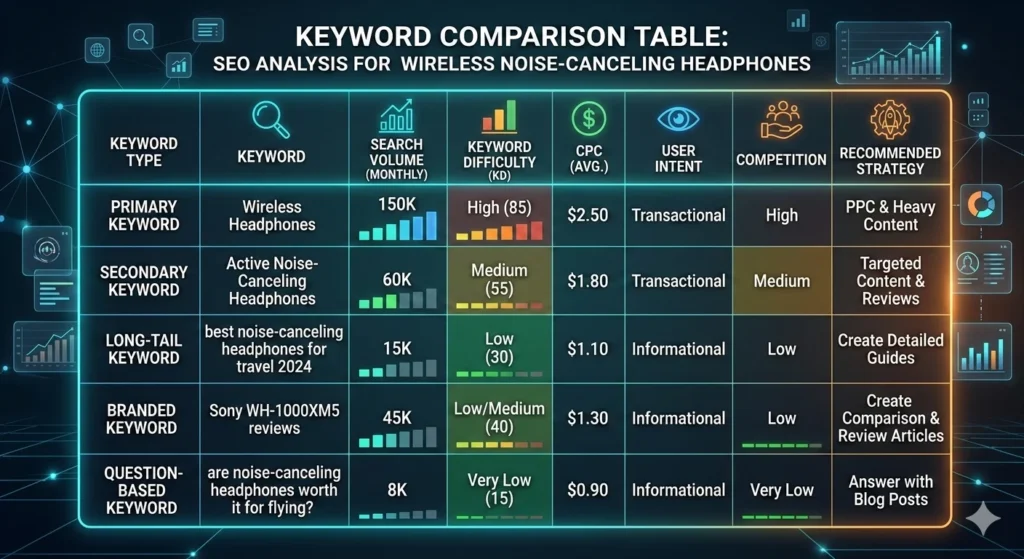
Keyword Comparison Table
| Phrase | Correct Spelling | Meaning |
|---|---|---|
| Bale or bail out | Bail out | Escape/leave |
| Bale or bail on plans | Bail | Cancel plans |
| Bail or bale of hay | Bale | Farm bundle |
| Bale or bail water | Bail | Remove water |
| Bale or bail jewelry | Bale | Pendant connector |
| Bale or bail meaning | Depends | Context decides |
| Bale on plans | Incorrect | Use bail |
FAQs About Bale or Bail
1. Is it bail or bale on someone?
It is bail on someone because it means leaving or abandoning.
2. Is it bail out or bale out?
Correct phrase: bail out.
3. Does bale mean to leave?
No. Bale refers to bundles or jewelry parts.
4. What is bale in English?
A bale is a tightly wrapped bundle (hay, cotton) or a jewelry connector.
5. Is it bale or bail of hay?
Correct: bale of hay.
6. I have to bale or bail — which is right?
Use bail when you mean leaving.
7. Bale or bail in jewelry — which spelling?
Always bale in jewelry terminology.
Conclusion
The confusion between bale or bail comes from pronunciation, not spelling rules. Both words sound identical, but their meanings are completely different. Bail relates to leaving, escaping, canceling plans, removing water, or legal release. Bale, on the other hand, refers to bundled materials like hay or specialized objects such as jewelry connectors.
If you remember one rule, make it this:
Action = bail. Object or bundle = bale.
This simple distinction solves nearly every question, whether you’re writing bail out, bail on plans, bale of hay, or discussing jewelry parts. Choosing the correct spelling improves clarity, professionalism, and search accuracy in writing.
Next time you hesitate and ask, “is it bale or bail?” — check the meaning first, and the right spelling becomes obvious.

“George Gissing, a humor-loving writer at PunsBlast, crafting witty puns and playful word magic to make readers laugh every single day.”