Many people search “allowed or aloud” because these two words sound the same but have different meanings. This makes them homophones. When writing emails, articles, or social media posts, it is easy to confuse them.
People often ask questions like “When to use aloud or allowed?”, “Is it allowed or aloud?”, or “Am I allowed is correct?”. The confusion happens because both words are pronounced almost the same. But their meanings are very different.
If you use the wrong one, your sentence may sound strange or incorrect. For example:
- ❌ She read the rule allowed.
- ✅ She read the rule aloud.
This article explains the allowed or aloud meaning, grammar, pronunciation, and examples in very simple language. You will learn:
- The quick difference between the two words
- Their origin and spelling rules
- Common mistakes people make
- Real everyday examples
- Usage trends and popular searches
By the end, you will clearly know when to use aloud or allowed in any sentence.
Allowed or Aloud means
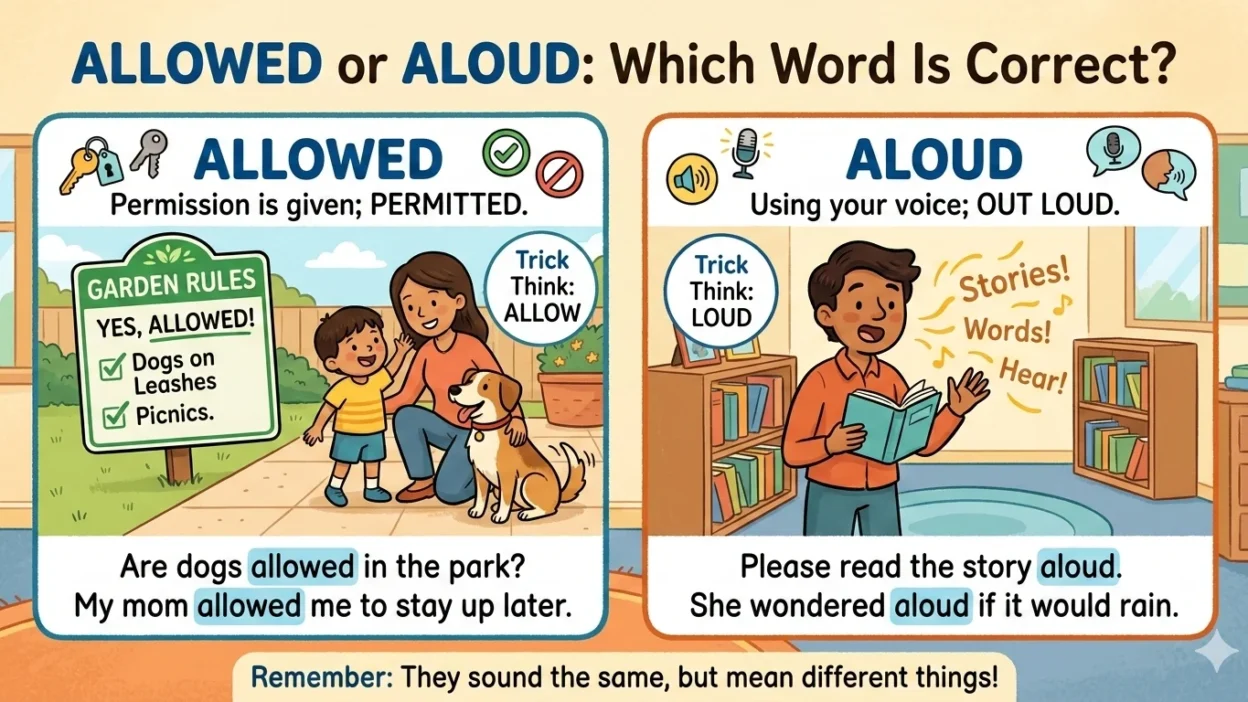
The words allowed and aloud sound the same but have different meanings.
| Word | Meaning | Example |
|---|---|---|
| Allowed | Permitted or given permission | Students are allowed to leave early. |
| Aloud | Spoken out loud so people can hear | She read the story aloud. |
Simple examples
Allowed examples
- You are allowed to enter the room.
- Phones are not allowed in class.
- Am I allowed to go outside?
Aloud examples
- He laughed aloud.
- The teacher asked her to read aloud.
- She spoke aloud during the meeting.
So if you mean permission, use allowed.
If you mean speaking out loud, use aloud.
The Origin of Allowed or Aloud
Understanding the origin helps explain the spelling difference.
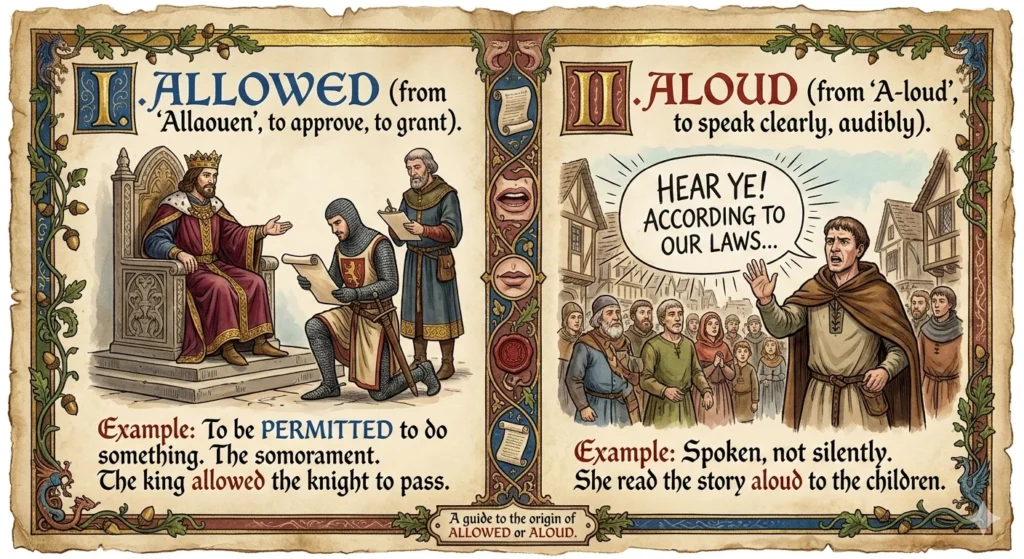
Allowed
The word allowed comes from the verb allow.
It means to give permission.
Old meaning:
- To approve
- To accept
- To permit something
Example:
- The manager allowed employees to work from home.
Aloud
The word aloud comes from old English words meaning “out loud” or “with voice.”
It was used when someone spoke words so others could hear them.
Example:
- He read the letter aloud to everyone.
Why spelling differences exist
Even though the words sound the same, they developed from different root words. That is why the spelling is different but pronunciation is similar.
British English vs American English Spelling
For allowed or aloud, the spelling is the same in both British English and American English. There is no difference.
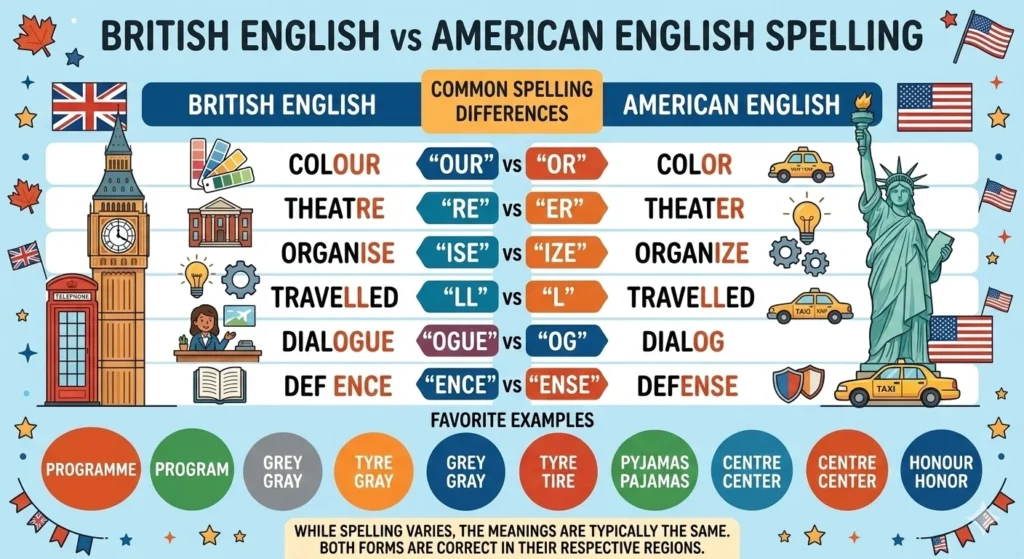
But spelling differences often happen in other words like:
| American English | British English |
|---|---|
| Color | Colour |
| Favorite | Favourite |
| Organize | Organise |
However, allowed and aloud stay the same everywhere.
Pronunciation comparison
| Word | Pronunciation | Meaning |
|---|---|---|
| Allowed | uh-LOWD | Permission |
| Aloud | uh-LOWD | Spoken clearly |
This identical pronunciation is why they are called homophones.
Which Spelling Should You Use?
The correct spelling depends on your meaning, not your country.
Use Allowed when talking about permission
Examples:
- Students are allowed to bring laptops.
- Am I allowed to join the meeting?
- Dogs are not allowed in the park.
Use Aloud when talking about speaking
Examples:
- Please read the paragraph aloud.
- She laughed aloud at the joke.
- He thought but did not speak aloud.
Simple rule
Permission → Allowed
Speaking → Aloud
This rule works for US, UK, Canada, Australia, and global English.
Common Mistakes with Allowed or Aloud
Many people mix these words in writing.
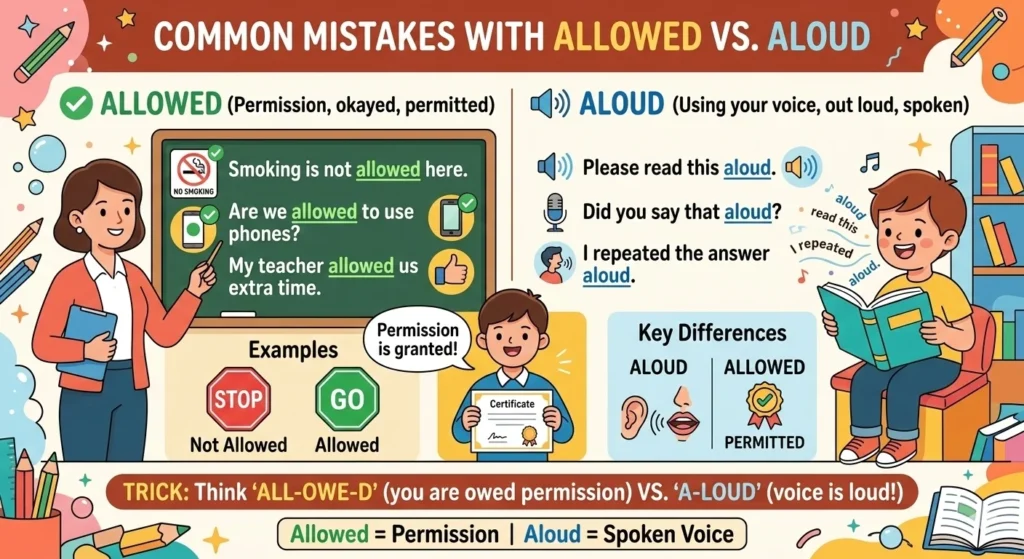
Mistake 1
❌ He read the message allowed.
✅ He read the message aloud.
Mistake 2
❌ Phones are not aloud in class.
✅ Phones are not allowed in class.
Mistake 3
❌ Am I aloud to enter?
✅ Am I allowed to enter?
Grammar explanation
- Allowed = verb (past tense of allow)
- Aloud = adverb (describes how something is spoken)
This answers the question:
“What type of word is ‘aloud’?”
👉 It is an adverb.
Allowed or Aloud in Everyday Examples
Here are real-life examples of how both words appear in daily communication.
Email examples
Allowed:
- Employees are allowed to work remotely on Fridays.
Aloud:
- Please read the instructions aloud during the meeting.
News examples
Allowed:
- The city allowed restaurants to stay open late.
Aloud:
- The witness read the statement aloud in court.
Social media examples
Allowed:
- Are we allowed to post links here?
Aloud:
- I just laughed aloud at this meme.
Formal writing
Allowed:
- Only authorized staff are allowed to access this area.
Aloud:
- Students must read the passage aloud during the test.
Allowed or Aloud Google Trends & Usage Data
Search data shows that “allowed or aloud” is a common grammar question.
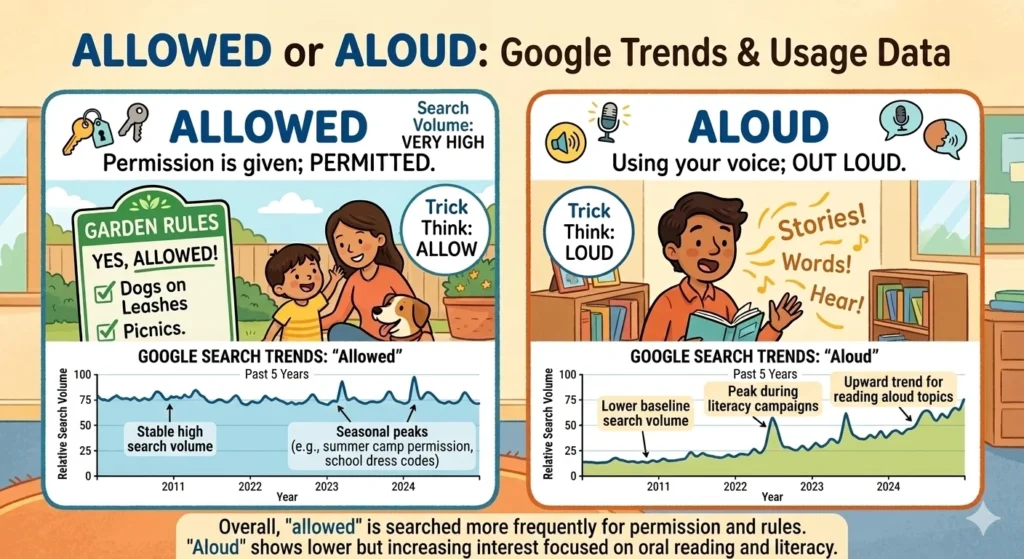
People often search:
- When to use aloud or allowed
- Is it allowed or aloud
- Allowed or aloud meaning
- Allowed or aloud grammar
Where searches are most common
High search interest appears in:
- United States
- United Kingdom
- Canada
- India
- Australia
This happens because English learners often struggle with homophones.
Allowed vs Aloud Comparison Table
| Feature | Allowed | Aloud |
|---|---|---|
| Meaning | Permission | Spoken out loud |
| Word Type | Verb | Adverb |
| Example | You are allowed to enter. | She read the story aloud. |
| Usage | Rules, permission | Speaking, reading |
| Pronunciation | uh-LOWD | uh-LOWD |
What Are 10 Examples of Homophones?
Homophones are words that sound the same but have different meanings.
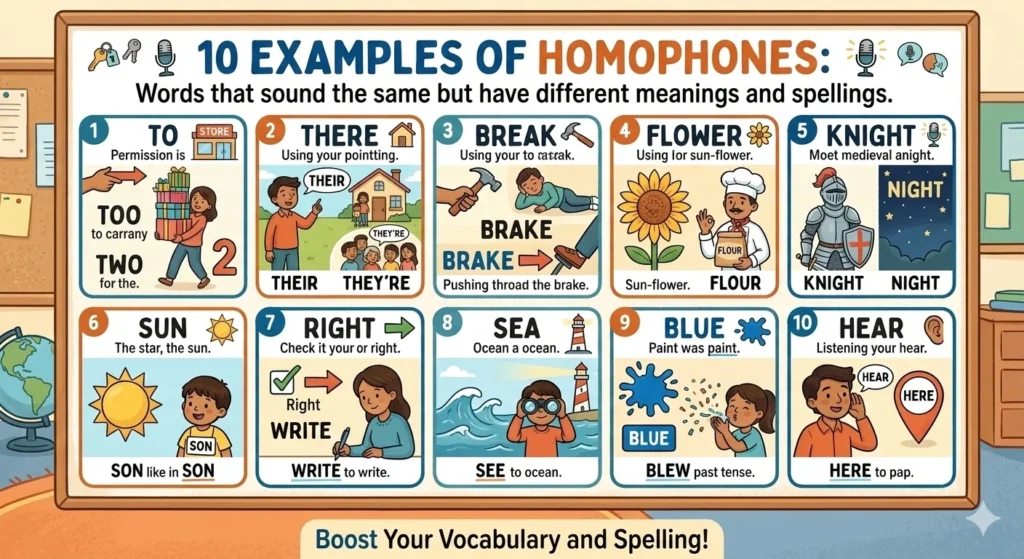
Examples:
| Word 1 | Word 2 |
|---|---|
| Allowed | Aloud |
| Their | There |
| Two | Too |
| Right | Write |
| Flower | Flour |
| Meet | Meat |
| Sea | See |
| Sun | Son |
| Buy | By |
| Brake | Break |
Aloud allowed homophones sentences
- She read the rule aloud because phones were not allowed.
FAQs
When to use aloud or allowed?
Use allowed when talking about permission.
Use aloud when talking about speaking out loud.
What is the homophone of allowed?
The homophone of allowed is aloud.
Both sound the same but have different meanings.
Am I allowed is correct?
Yes. “Am I allowed?” is grammatically correct.
Example:
- Am I allowed to enter the room?
What type of word is “aloud”?
Aloud is an adverb.
It describes how something is spoken.
Example:
- She read the poem aloud.
What is the meaning of allowed?
Allowed meaning:
Something that is permitted or approved.
Example:
- Visitors are allowed after 5 PM.
What is the pronunciation of allowed and aloud?
Both words have the same pronunciation:
uh-LOWD
This is why they are easy to confuse.
Is it allowed or aloud?
Choose the word based on meaning:
- Allowed → permission
- Aloud → spoken voice
Conclusion
The words allowed and aloud sound the same but mean very different things. They are classic English homophones, which is why many people search “allowed or aloud meaning” or “when to use aloud or allowed.”
The easiest way to remember the difference is simple.
Use allowed when talking about permission or rules. For example, Students are allowed to use laptops. The word comes from the verb allow, which means to permit something.
Use aloud when talking about speaking so others can hear. For example, She read the poem aloud. This word acts as an adverb, describing how something is spoken.
Even though both words have the same pronunciation, their meanings are clear once you understand the context. Remember the quick rule:
Permission → Allowed
Speaking → Aloud
By using this simple rule, you can avoid common grammar mistakes and write more clearly in emails, articles, and everyday communication.

“May Sinclair, a playful wordsmith at PunsBlast, turning clever puns and witty humor into daily laughs that brighten readers’ days.”